Showing posts with label motherhood. Show all posts

Saturday, April 25, 2026

The Priority—a Cultural Question

me with the family in the mid-90s; me being grandma in 2012

I want to talk about things I’m thinking about, trying to understand changes in culture, while still holding on (not necessarily clinging bitterly) to traditional principles. This is about what is expected of women. And of men.

It is my assertion that feminism has worked to turn women into bad men, and maybe as a side story also turn men into weaker creatures.

This touches on economics, family, education, and a whole lot of things.

Where to begin?

There was a Jordan Peterson lecture, quite a number of years ago, in which he looks at the societal change of women in the workplace, men and women working together, and saying we haven’t worked that out yet: how to behave toward one another, how to become simply professional coworkers, in a world in which men and women find each other attractive, or not, or maybe want to have friendships with the people they work with but don’t know how to navigate that. He pointed out that half a century is not nearly enough time to navigate such a dramatic societal change.

That’s just a piece of it. What I’d like to start with is the current expectation that women are in the workplace—not at home raising children.

Chances are, you had some kind of reaction to that last sentence, and it was based on a whole lot of unfairness that has been pointed out to you in media of all sorts, and in education, and probably some personal experience—just everywhere.

Somewhere underneath the surface is a change from family economic units to individual economic units. It has been a seismic societal shift in a relatively quick few decades.

To read the full article, follow LINK TO SUBSTACK.

Thursday, May 6, 2021

What Matters Most

I spent a chunk of time this week listening to testimony in the Texas legislature. It’s all streamed live online, and archived later. We’re in the final week for bills to be heard in committee hearings and still have any chance at all of getting through the remaining bill stages.

Wednesday I was listening to testimony on a couple of abortion bills. One was a heartbeat bill, similar to those already passed in other states. It would make abortion illegal after a heartbeat is detected—around 8 weeks gestation. It doesn’t, however, acknowledge that the baby growing in the womb was human life before that heartbeat-detecting moment. I also learned recently that it is fairly easy for an abortion technician—getting paid to be part of the abortion-performing act—to either find a heartbeat or fail to find a heartbeat at will. So, while the supporters of this bill are well-meaning, I don’t think it goes far enough.

Another bill in the hearing conferred personhood on the unborn, which I think is the appropriate way to go. There were plenty of opponents, of course. One of them struck me, this week coming up on Mother’s Day, as dystopian.

The woman told her story. Several years ago, she was running for her seat (I think in the Texas Senate, but it might be in the House), and hadn’t announced yet that she was pregnant. But she was ghastly sick with “morning sickness,” which wasn’t confined to morning; it was all day every day. She had a condition called “hyperemesis gravidarum,” which is severe nausea and could be life-threatening because of loss of fluids. As she tells it, people used to die from that condition. I’ve actually known a couple of people who went through this. Both were hospitalized for significant portions of their pregnancies. Fluids may need to be given intravenously. Antiemetics may help, but not enough.

I don’t know what this woman had to do to survive throwing up twelve times a day. But she not only survived; she was able to successfully run for office.

She claims that, knowing she had options—and she means the option to kill her baby, whom she now claims to love and be grateful for—was what got her through. Just knowing that, if it got too rough, she could kill the baby. Now, the bill in question has an exception when the life of the mother is at stake; if the attempt to save both lives is not possible, the doctor prioritizes saving the life of the mother. The subtext of what she’s saying then is, if it’s harder than she bargained for, she wanted to have the “right” to kill the other human being experiencing that pregnancy.

She told of another woman who had a similar condition and already had a toddler running around. She made the choice to abort, because she wasn’t physically able to care for her existing child otherwise. I wonder if, in later years, she will lovingly say, “I killed your baby brother, because you were too hard to care for.”

I know I sound unsympathetic. But I’ve been through some pretty challenging pregnancies—none of which I could have survived while running for office.

I’ve lost a child born premature. I’ve spent months bedridden (three months with my oldest, six with each of the other two). I’ve done it with a toddler running around, and I couldn’t get up to manage him. My husband was gone all day to work. I managed part of days, with a little one bringing me diapers so I could change them from the couch where I lay. I was a huge burden on friends and church congregations—who amazingly seemed to love me more because I needed their help.


That's me, mothering from the couch, for most of 1987

When you can't get up to feed your 2-year-old,
he will somehow find a way.

It wasn’t convenient. It wasn’t easy. The last one, I came to a point I thought I couldn’t endure, when I’d gone several months unable to sleep more than 3-4 hours before waking for the next miserable 24-36 hours before I needed to try to sleep again. You get close to hallucination when that sleep deprived. At the point I thought I couldn’t go on, about nine weeks early, I was asking when we might need to induce so I would survive. But I had a spiritual blessing at that time that eased my burden from that day onward, and I endured. She was born on her due date, a beautiful, healthy 9 lb. 14 oz., 22 ½-inch baby. And I learned that God is there for me, to carry me through when I’m not strong enough on my own.

For me, abortion was never an option, because I always knew I was dealing with a beautiful, innocent, human life.

Last week Andrew Klavan spent much of his podcast talking about dystopian stories. He went through parts of 1984, Brave New World, The Giver, The Stepford Wives, and a story called “Those Who Walk Away from Omelas.” And he drew some conclusions. First, this short observation about The Stepford Wives:

What’s really interesting is the children in Stepford become happy when the women are dedicated to them. One of the points of it is—it’s not a totally feminist book. It’s sort of saying, “Yes, homemaking is a sacrificial act.” Being a homemaker is, in some sense, a sacrificial act. You’re pouring yourself into other people. That is what—that’s to me what makes it so beautiful.  

In this story, of course, if women don’t want to do it, they turn them into robots. So, about dystopian societies in general, he says,

The dystopian novel, the dystopian story, in order to be a story, depends on you having those values. It depends on your having the moral understanding that, in order to achieve this perfect world, something terrible has been done.

He illustrates with The Giver, the scene where The Giver, the older man mentoring the boy, Jonas, who is the main character, shows the boy his father euthanizing an infant. Here’s the dialogue from the clip:

Jonas: That’s death.

The Giver: He doesn’t know what he’s doing.

Jonas: Doesn’t know what he’s doing? He killed him.

The Giver: But he doesn’t know what it means….

Jonas: How can he not see the baby isn’t moving? Doesn’t that tell him something is wrong?

The Giver: The young and the old are killed. Your friend Fiona—she will soon be trained to release as well.

Jonas: That’s a lie. She’d never do that. If Fiona understood—

The Giver: We are the only ones who understand it.

Jonas: Then it’s our fault—you and me, and all the receivers back and back and back and back and back. There has to be a way to show them, to give them the memory so they can understand. Because, if you can’t feel, what’s the point?


Scene from The Giver
screenshot from Andrew Klavan's podcast

Klavan’s response to this is,

It’s only a dystopia to the people who understand what they are doing. The people who “know not what they do,” like the people who kill Christ, think they’re doing the right thing. They think they’re living in utopia. It’s only a dystopia because of our moral impulses. Right?

It’s just like abortion. Abortion works. Abortion frees women of the responsibilities of the—and the consequences of having sex. Abortion does make their life easier. Abortion does make it so that they don’t, you know, get raped or make a stupid decision and wind up with a baby for life. It works. The only reason it doesn’t work is if you have the moral sense to know that it’s killing. If they can talk us out of our morality, dystopia becomes utopia. You can slaughter your way to perfection.

Someone has been doing the lying, telling people not to value that human life. Not to value motherhood, or parenting, or nurturing, or self-sacrificing at all.

We ought to be telling young people—young women in particular—the truth, that there is nothing she can do that will be more meaningful than giving life and nurturing that child. (If she knew how important it was, she wouldn’t be risking it for sex with a man who isn’t committed to her in marriage. But we’ll save that for another day.)

Jordan Peterson had a conversation with Patrick Bet-David on his Valuetainment podcast. Bet-David showed a clip from a conversation they had together in July of 2019, and then asked him about it. This is Jordan Peterson from that clip:

Little children pay you back immensely, if you have a good relationship with them, you know, if you’re on their side and encourage them, because they’re an unconditional source of joy and love. [long standing ovation]

You know, the other thing I noticed that you should all know is that, as you get older, your family—the family you’ve produced—becomes more and more important.

We teach young women in particular that the fundamental goal of their life is going to be their career. And, you know, first of all, most people don’t have careers; they have jobs. And those are very different things. But you’re not a very happy camper, so to speak, if you’re 45 and you have no one, and it doesn’t go upwards after that.


Patrick Bet-David, left, and Jordan Peterson
screenshot from here

Later in the podcast Peterson refers back to this clip, and shares some more about what makes him happy. He talks about the joy he’s had from touring and talking with people. And then this:

You know, what makes me most happy right now is when my family gets together. So that’s my immediate family: my wife, my kids, and their spouses. And there’s no— There’s nothing buried underneath the rugs. And everyone’s joking and laughing and playing. And that’s— And it’s peaceful. It’s truly peaceful. And that does happen.

He talks about spending time with his son’s family—who live just up the street, and with whom they have a deep and rich relationship, and they have a peace-filled home. And there’s a grandson there.

Their little boy is laughing. He’s playing with laughing. We had some people over for Easter dinner, my son and his wife and a couple of friends of theirs. And they had a little baby named Florence, and she was also the same age, and she was playing with laughing. So she would go “Ha ha ha!” And then this little—my grandson Elliot, would go “Ha ha ha!” And then all the adults would laugh, because these two infants were actually having a conversation with each other—a proto-conversation with laughter. That lasted for about 10 minutes, and everyone was laughing about it. And, well, there isn’t anything better than that.

C. S. Lewis quote image found on Pinterest
Why don’t we tell young people? There isn’t anything better than that. There’s a lot to life, to using our interests and talents and abilities, and making a living. But that making a living, it has a purpose beyond itself. As C. S. Lewis put it,

Homemaking is surely in reality the most important work in the world. What do ships, railways, mines, cars, government, etc. exist for except that people may be fed, warmed, and safe in their own homes?... The homemaker’s job is one for which all others exist.

This is not to say you can’t be happy if you can’t have children. But to think that children are a burden, instead of the very thing that nurtures you into adulthood and gives you reason for living beyond yourself—you simply don’t understand what life is for. All creatures take joy in “filling the measure of their creation” and take joy in their offspring. But only humans have the capacity to understand what that means. When we forget that, we are less human.

It’s not easy. And while I’ve seen some friends who appear to me to be perfect at it, no one actually is. But with God’s help, what you do as a mother can be enough.

One of my favorite speakers, who speaks so many words of encouragement, is Jeffrey R. Holland. He was President of Brigham Young University when I was working on campus many years ago, and I used to pass him and wave hello on my way to my office as he was walking to his. Anyway, he said this:


If I’ve passed on any message to my children, I hope it is that they know I love them and think they were worth any sacrifice I could manage. And, even though I was imperfect at it, I trust that God filled in the differences. He does that in our lives, because He is the ultimate loving parent.

Happy Mother’s Day to all those who know what that means.

Monday, August 26, 2019

Civilization Values, Part VII: Family Perpetuates Civilization


Family is the basic unit of civilization. That's our starting premise.

What did we do on our summer vacation?
Hung out with grandkids.


We’re in a series on the values of civilization, which are to value God, life, family, truth, and property ownership. The earlier parts of this series include:

·         Part I: Life
·         Part II: Truth
·         Part III: Property Ownership
·         Part IV: God and Freedom of Religion
·         Part V: Civilizing Religion
·         Part VI: Repenting as a Civilization

Today we begin talking about family.

God and family are taking larger places than the others, simply because they are the values undergirding all. Our rights either come from God—they do—or they are extended by earthly government and repealed at will by government. If you’re subject to the whims of government, whose views and powers change according to the opinion of whoever has power, you’re under tyranny. But if you have rights granted by God, government’s role is either to protect them or use unrighteous dominion to try to deprive human beings of those God-given rights.

Next to God in importance is family, because this basic unit of society is how we transfer all the values from generation to generation.

The first six parts of this series drew from the Spherical Model website article "Civilization vs. Savagery." Family is big enough to have its own separate article, “Family Is the Basic Unit of Civilization.”

Today we’ll cover the basic introduction, which is why family is important. It’s both a micro-civilization in itself, when it’s fully functional, and it’s a way to perpetuate civilization. And then, more on family values in the next post.
__________________________

Civilized societies value family as the most important and basic unit of governance. Alternatively, a hallmark of totalitarian regimes, which are savage, is the replacement of the family with the state. Totalitarianism resents loyalty to any societal unit other than itself. And it is this absolute weakness that will always prevent a totalitarian state from offering true Civilization as you’d find it in a free strong-family society.
This is particularly important to know for people living in a sub-civilized society. As long as families are allowed to live among themselves (children are under the care of their own parents), it is possible to have a civilized society that is just one family in size. Then, if that family can find additional similarly civilized families to associate with, their society grows. If it could grow to the size of a village or township, all the better. The goal of the founding fathers was to have that civilization spread through the United States (and if that experiment worked, have other sovereign states adopt the plan). But a family doesn’t have to wait until the world changes; the family can live the laws of civilization and enjoy many of the benefits, at least within the walls of the home.
Families have the responsibility to safeguard women and children for the greatest benefit of both current and future generations. Families provide food, shelter, clothing, education, spiritual guidance, and training in how to live a civilized life in a civilized society. Elderly are honored for their wisdom. Youth are honored for their potential. Women are honored for giving and nurturing life, among their other abilities. Men are honored for providing and protecting, among their other abilities. Families are the main economic force, as well as the very means whereby civilization can perpetuate. Civilized societies therefore protect The Family as sacred.
Mr. Spherical Model, has been doing dad work
for more than three decades so far

A hallmark of civilized society is the importance of marriage as the only acceptable place for sexual relations. Every society that decides to try devaluing fidelity in marriage eventually (and often quickly) sinks into decadence. Sex within marriage not only provides offspring, it cements the bond between the two parents, so that the child will grow in a home of love and protection and guidance. No other situation is even remotely as beneficial for a child.
Humans being mortal, there will be incidents where some children will be raised without both parents. Ideally, there should never be divorce (a necessary evil in response to decidedly uncivilized behavior). But there will be death, which is inevitable. Nevertheless, in a healthy, peaceful society the abundance of intact, healthy families can help compensate for the few homes that don’t have the child’s two living parents.
It is probably possible to quantify what percentage constitutes a critical mass of functional families that can compensate for a smaller percentage of problem homes without an undue toll on civilization. But, in general, the more family health, the more civilized the society.

Over the years, on the blog, I covered some of the benefits of fathers and mothers, and families, often close to Father’s Day and Mother’s Day, plus a few other times. It has added up.

·       Honoring Fathers, June 17, 2011
·       Building Better Families, June 20, 2011 
·       Dad Rules, June 18, 2012 
·       Fathers, June 15, 2014 
This little guy is about to turn seven already.
·       Being a Dad, June 22, 2015 
·       Depend on Dad, June 27, 2016 
·       Mother Joy, May 8, 2014 
·       The Good Part, May 8, 2013 

·       Home Making, May 6, 2013 
·       The Motherhood Study, May 6, 2011 
·       Another Word about Life, January 30, 2013 
·       Family Superpower, July 29, 2013 
·       That Decision Mothers Make, November 3, 2014 
·       Motherless Princesses, June 17, 2013 

Just to sum up today, here’s a quote for fathers and one for mothers:

Imagine a world in which every lonely, confused adult going down the wrong road had had a dad that filled the role—maybe not perfectly, but with love, tenderness, and an unending will for the child’s life to go well. Not all the world’s problems would be solved; people still have free will, so some will just choose badly. But so many more will know what a good choice looks like. The holes in so many children’s hearts would be filled, and ready to pass that love along.
—(quoting myself from “Being a Dad.”)

If you were the grand designer, and you wanted to place certain people in charge of protecting, preserving, and passing along the ideas of civilization, for the happiness and well-being of all, you would design individuals with passion, who would pass along those ideas out of love to their young charges, believing that happiness in the present and future for those young charges was more important than any personal concerns. You couldn’t hire such caregivers. You couldn’t assign an institution to do it. You would have to create—mothers. Indeed, that is what the Grand Designer did.
—(quoting myself from “The Motherhood Study.”)

Thursday, May 9, 2019

Mothers Matter

Words name things, sometimes people. Words include the way to bring to mind an idea. It’s a symbol of what the word means. Without the word, we don’t have a way to convey the meaning from one person’s mind to another’s.

I love being Mom to these characters.
This was in Idaho in 1992.

There’s a song our Primary kids—the children at church from ages 3-12—sing around Mother’s Day. It’s starts out, “I know a name,” and eventually reveals “it is the name of Mother.”

About a week ago, I saw a piece regarding the erasure of the word mother: “Why Eliminating The Word ‘Mother’ Eliminates Motherhood Itself,” by Libby Emmons, for The Federalist. The title, and that concept, struck me. 

Emmons tells us it’s happening in laws around the world that are trying to replace motherhood with something more generic, to placate the LGBTQ community. A small, sometimes miniscule minority that denies the reality that each person is made up of the DNA of a male and female parent is trying to erase the concept of mother.

In the UK, it’s self-ID laws. In order to accommodate transgenders, they allow pretend (transgendered) “male” persons who have given birth to identify themselves as “father” on the baby’s birth certificate. Meanwhile, “mother” on the form is left blank. In other words, “mother” isn’t necessary to the birth of a baby.

In France, school districts do away with fathers and mothers, and just identify them as parent 1 and parent 2—leaving it to the male and female (or whatever) to decide who gets designated first.
In the piece, Libby Emmons says,

When we use the term mother, we invoke a shared perspective on what that word means, what it represents, what it looks like. Whether our mother was brilliant or rotten, loving or cruel, we can envision a shared ideal of a mother precisely because we have a shared history of the concept of mother.
Then she asks the question,

If we don’t have the word for mother, will the concept still exist? If so, for how long?
Do enough people understand the danger of a world without the idea of motherhood?

our boys, getting acquainted with sheep, at San Diego Zoo, 1989
This past Sunday I was teaching Sunday School, considering some things about lambs and sheep in John chapter 10. As part of that I shared a talk from the early 90s, by Jayne B. Malan, called “Summer of the Lambs.” Worth hearing again. I think it was once published in written form in Reader’s Digest. Anyway, Jayne, as a 12-year-old, had been assigned, along with her 14-year-old brother, to care for several hundred motherless lambs. It was hard work. They lost about two-thirds to starvation or predators. The most vulnerable were those that wandered off and got separated. Most of them would have grown up safe, if their mothers had been there.

That’s the way with lambs. And the way with children. They need mothers. And fathers too.
We’re about to celebrate mothers, this Sunday. It can be a hard day for mothers, who feel so much pressure to meet the “shared ideal of a mother,” simply because they love their family and believe they deserve that perfection, while mothers are also keenly aware of their own mortal limitations.
In honor of Mother’s Day, a couple of years ago, I compiled a Motherhood Collection of blog posts I’ve written. I think that’s still worth sharing: here. 

In hopes of helping mothers feel like they are enough, I’d like to share this video from The Church of Jesus Christ of Latter-day Saints, called “You Are Enough.”


Thursday, May 11, 2017

Motherhood Collection

Mother’s Day is coming up Sunday. It does that every year. Sometimes I write about it; sometimes I don’t. But I thought maybe it was time again. And now I’m not sure I can add much. Maybe I should just collect those pieces and wish all the women out there a Happy Mother’s Day!

I will say, first, that women who look at motherhood today as something they may or may not want, don’t understand the decision. It’s not like deciding whether or not to adopt a dog. Maybe it will fun, but maybe too much trouble and mess. I’m all for adopting dogs. But becoming a mother is about much more.

When you become a mother, you understand love in a way you didn’t before—even if you are in a very strong, loving marriage. If you want to know what God feels for you as His child, let yourself feel the full, natural love that suddenly fills up your life the day your child is born.

You thought it was about bringing up children, but if you want to become the best person you can become—patient, kind, long-suffering, unselfishly joyful for the success of others, humble, learning, caring, loving—your best, transformational school is your home as you raise your children.

Your life in a career will not bring you this training. This is not to say no woman should have any career but raising her children; always do what God leads you to do with your talents, capabilities, and passions. But if you want to become the best you, let your children teach you.

Five years ago today, my baby girl (my only girl) Social Sphere got married. She’s an example of a mother who takes delight in mothering. And just recently announced baby #2 on the way. The photo is Little Social Sphere, in his (almost everyday) Captain America outfit, about to get a sidekick.

Little Social Sphere
is going to get a sidekick


And here is the Motherhood Collection from this blog:

·         Mother Joy, May 8, 2014 
·         The Good Part, May 8, 2013 
·         Home Making, May 6, 2013 
·         The Motherhood Study, May 6, 2011 
·         Another Word about Life, January 30, 2013
·         Family Superpower, July 29, 2013      
·         That Decision Mothers Make, November 3, 2014 
·         Motherless Princesses, June 17, 2013

Monday, October 5, 2015

The Having-It-All Myth

In today’s post, the data is from my observation, from which I’m extrapolating an opinion. More often I prefer data from broader and deeper sources, from which drawing conclusions is more or less inescapable. Data I use about the family as the basic unit of society, and the importance of mothers and fathers in raising children, comes to mind.

While I think my opinions today will also be accurate, they’re more my impressions than conclusions of social science.

Recently I attended a dinner with a number of colleagues of my husband, people who are expert in their field. They range in age from mid-thirties to mid-fifties (Mr. Spherical Model is at the upper age range, and also among the most experienced in the specialized field). Around thirty people attended. I think there was one other spouse besides me. I counted five men; the rest were women.

After accounting for various factors, I decided to assume the field as a whole is about 25% male and 75% female.  When Mr. Spherical Model was in graduate school, women were well represented, but men still accounted for at least half of his class. So there has been movement in the past several decades. It is an education field, and women are well represented (a heavy majority) in other areas of education. So this shift isn’t surprising.

Among the group of thirty or so, most of the men were married; one or two others had children, but not all. Most of the women were not married. In fact, from what I think I observed, most had never been married. The very nice lady seated next to me had been married for a couple of years, but had lived with her husband for seventeen years. No children. And I’m guessing the time of opportunity has passed.

I was an anomaly in their world. I had been acquainted with their field from before I met Mr. Spherical Model; I was an educational technical writer for people in his professional specialty. In fact, he went to the graduate school recommended by my boss. So I’m more familiar with the field than these colleagues knew. But they were so unfamiliar with my lifestyle that they couldn’t find questions beyond how many kids and grandkids. I don’t mean to say they were rude or exclusionary. I’m simply saying that my world was unfamiliar to them, although they probably imagined that they totally knew what it was about.

From those I know in this professional field, some have wanted to marry. They liked the idea. But it just never happened. When they were young, in their twenties, they were in school, then graduate school, with maybe a stint in elementary or secondary education in between. And then they were focused on the first job and getting a career underway. Sometimes travel was involved. And long hours.

They believe they would have been open to the right relationship, if it had come along at the right time. In their thirties they tried several failed relationships, and may have tried various dating services. But now, in their forties, family isn’t likely to happen. So career is their life. Plus a few outside interests. (Several considered themselves wine aficionados. Some knew the best restaurants in the most traveled cities.)

I also observed—not judging, just curious—that very few of the women wore makeup. They do their hair, often colored and stylishly cut. They may do their nails. But not their faces. Their clothes were what you’d expect at a business casual event. I think they have gotten to a point in their lives that looking good enough is important, but beyond that, they would just rather not fuss. So, no makeup.

I’m not joining them in that. I don’t know if it has to do with the invisibility of going through my career years as a stay-at-home mom, or if it’s a quirk of my personality. But, even though I don’t wear a lot of makeup (I skip foundation and eye shadow), when I don’t wear makeup I get asked if I’m ill. Or I’m not noticed at all. I’ll be introspectively thinking about this detail.

Back at the office where Mr. Spherical Model works, among people in his field as well as other assignments, several more women are married. But divorce is common. And one or two children is about the limit. If a woman gets to her early thirties without marriage, chances are she’ll miss out on family.

This is much less likely to be true of men, who often marry in their twenties or early thirties, and have a rich and full family life in addition to their career.

So, the question is, is it because society is sexist and intrinsically unfair? That’s what feminism would say. But that’s not what I’m seeing.

I’m seeing more women with opportunities than men. Women get paid as much in this field as men do, for the same work. Women are as likely, maybe more so, to get into consulting and be their own boss. The business treats them at least equally well. But women don’t easily multitask when it comes to career and family.

When I look more broadly at society, that seems like it can’t be true. More women work than not. Most women eventually have children. There’s huge financial pressure for women to work. And there’s huge societal pressure for women to assert their feminist rights by working. Family becomes incidental. But I think I’m observing that women in successful careers are more likely to be unmarried than men are. (I’m thinking of Condoleeza Rice, for example. Carly Fiorina is a high-caliber businesswoman and married, but didn’t have children of her own.)
I saw this Rodin sculpture a couple of weeks ago,
Premiere Impression d'Amour,
or First Impression of Love,
at the Smithsonian Gallery of Art.
My photos were inadequate; this one found here.


To a woman who becomes a mother, a child is not an incidental nice thing to have, like a pet, or maybe a recreational boat. A child become a raison d’être. She doesn’t work for her personal fulfillment anymore; she may work because she must, but she’s focused on that child. And she might wish to be home with that little one. This means she might choose a less demanding career, or just a predictably limited job, or maybe part-time work.


She doesn’t have a “wife” at home, to see to the cooking, cleaning, grocery shopping, laundry, and family scheduling. She can’t just come home and spend a good hour or two with the child before bedtime. She has to do it all. And doing it all is exhausting.

Are there situations with stay-at-home dads with career moms? Yes. They’re functional in their own way. They’re certainly not immoral or wrong for the child. But they’re rare. One of the main reasons is physiological. Having a baby is a physical strain. A woman might decide ahead of time that she’ll be one of those strong women, who exercise all the way up to the final couple of weeks of pregnancy, believing that will give her energy to work right up until the end.

But she might not know that her pregnancy will include a whole lot of nausea, with accompanying exhaustion, and an overwhelming desire to just put her feet up and rest, and not think—no matter how disciplined and energetic she was before. And she might not have the physical ability to go through pregnancy as if it’s no more than a slight inconvenience. She might not have planned on how much this baby would become an overwhelming love and focus, with career seeming less vital.
Women are the ones who have babies. And breastfeed them, because their bodies are made to do those miraculous things.

If a life is centered on a woman’s career, it can’t also be focused on family. Focus is singular—the one point at which everything is clear.

I’m not saying that no woman can have a successful career and be married and raise children. That happens. I’m saying it’s a lot harder to do, for very natural reasons, than the feminist movement would lead you to believe. It has been a lie, that women can “have it all.”

You can do some things. You can possibly do some things really well. You might do several things somewhat well—which is the reality for most women, out of necessity. But you are not likely to do it all well, and enjoy it, all at the same time.

If you decide to focus on career all the way through your twenties, because, once you’re established, you can always add in family later, you are very likely to remain focused on career through your thirties, and then your forties. Careers build. There doesn’t seem to come a time when you can set it on the back burner and work less hard. You won’t have available time. And you won’t have available men to choose from, because they’ve gotten married while you were busy.

A woman who chooses a career can do good in the world, and can be self-sufficient. If that is her greatest desire, she should be free to choose such a life. But if a woman chooses to focus on her family, even as a stay-at-home mom if she can, she contributes to perpetuating civilization, and she does it because of love beyond what she previously knew she was capable of.

As C. S. Lewis says, "The homemaker has the ultimate career. All other careers exist for one purpose only....and that is to support this ultimate career."

Image found here

This past weekend during the LDS Church’s semi-annual general conference, one of our apostles, Elder Jeffrey R. Holland, spoke about motherhood as a metaphor for the love of Jesus Christ. He said, “No love in mortality comes closer to approximating the pure love of Jesus Christ than the love a devoted mother has for her child.”

Elder Holland also said, “God bless you. You are doing better than you think you are.”


If we are to restore and sustain civilization, it will be because women choose to be mothers—good, nurturing mothers—who combine with good fathers to civilize the children they love.

Monday, November 3, 2014

That Decision Mothers Make

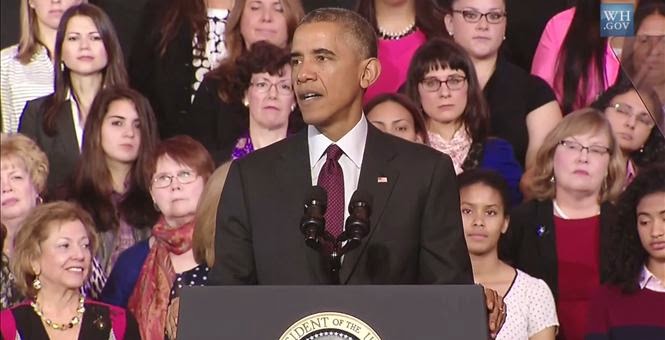
Our president said something better not said—no surprise. But sometimes these misspeaks (accidentally) reveal what he truly believes, so they’re worth looking at. Here’s what he said last week at Rhode Island College on women and the economy: 

Obama speech on women and the economy
at Rhode Island College


Sometimes, someone, usually Mom, leaves the workplace to stay home with the kids, which then leaves her earning a lower wage for the rest of her life as a result. That’s not a choice we want Americans to make. [full speech here]
We could get rid of some of the indignation here if we assume he misspoke and meant to say, “That’s not a choice we want Americans to have to make.” In other words, if you take some years off to care for children, you face the reality of a lower wage, and he thinks that’s unfair.

That does in fact seem to be what he means, because he goes on to offer the solution of governmental institutional daycare—to solve the problem of women having to leave the workforce at all, which leads to what looks like uneven pay.

But he is, in fact, saying it’s a bad decision to choose to stay home and raise your kids. It’s bad because it could cost you the wage level rise you would presumably get if you didn’t take time off to raise those bothersome children. He doesn’t want you to make that wrong choice. That’s revealing.

We might be better off if we had a president who offered this in a speech instead:

The homemaker has the ultimate career. All other careers exist for one purpose only—and that is to support the ultimate career.—C. S. Lewis
Or there’s this, from the last paragraph of historians Will and Ariel Durant’s The Lessons of History about perpetuating civilization:

If a man is fortunate he will, before he dies, gather up as much as he can of his civilized heritage and transmit it to his children. And to his final breath he will be grateful for this inexhaustible legacy, knowing that it is our nourishing mother and our lasting life.
And let’s add this bit of wisdom:

Women who make a house a home make a far greater contribution to society than those who command large armies or stand at the head of impressive corporations.—Gordon B. Hinckley
The president seems to misunderstand what life is about. Certainly he misunderstands what civilization is and how to get there and then stay there.

The purpose of life is not to achieve some arbitrarily defined world equity by earning money for yourself that is equal to whatever anyone else can earn. It is not even to earn a valuable life by doing paid work. A mother, who dedicated her career years to raising children who have grown into successful contributing members of society and gone onto provide her with grandchildren to love—can you imagine this woman, in the wisdom of age, on her deathbed saying, “If only I’d spent more time at the office! If only I hadn’t wasted my career years on children—the government could have handled them, and then I would have made an equivalent amount to the men in my career!”

Life is bigger than that. We want to live a life we can enjoy with those we love and want to be with, through the good times and trials. There isn’t a better way to live than in a marriage and family, raising children in love. Family is the basic unit of civilization—in which people thrive, and in which social capital is built and passed on. It is possible to live a life otherwise, but civilization only happens when a critical mass live in functional families.

There is an interrelated economic component. We need income for housing, food, shelter, and all the other things needed for raising and educating our children. But the most economically sound way for that to happen is in a family with a mother and a father. No government program works as well. It isn’t a matter of tweaking policy, or getting the right leaders. It is a matter of allowing families to do the work of caring, providing, and civilizing—work that families are brilliantly designed by God to do.

If you care about civilization, you will consider the value of a parent, probably the mother, doing the long-term daily work of caring for them. Anyone who has done it knows it’s a lot more than feeding, clothing, and managing the children in a way that keeps them from wandering into the street or other dangers. It’s about loving them, responding to them as valuable human beings with their own personalities, gifts, and potentials. No daycare—no matter how well run—can offer a child what an abundance of time with a loving mother offers.

Not all women get to offer that. Some can’t make it financially without working. Some feel called to do a specific life’s work in addition, and choose to balance the mothering and other career. I do not want to demean any woman who makes a choice to work when she has children. But it is absolutely unconscionable to shame women for choosing to mother at home. It is especially wrongheaded to demean her choice by turning it into a math equation about earnings she’s expected by the state to work for.

It’s also wrong to blame natural economic laws that reward continuous years of work in a particular career more than fewer disconnected years in that career. And it’s more than wrong to claim government can or should override this economic natural consequence by taxing people more to institutionalize our children at younger and younger ages.

Did the president make yet another speaking gaffe? Yes. But we can make good progress even with a president who lacks speaking skills. Moses lacked speaking skills and still managed to free the Israelites from enslavement. Speaking skills are helpful (see Reagan for many examples). But what is better is good thinking—and believing the right and true things.

What we need is not a president who manipulates power to control women’s choices. We need a president, along with the rest of government, who appreciates the value of mothers and fathers working together to raise their own children—and gets out of their way.


Stop holding us down with variations of tyranny, poverty, and savagery. And let us move up to freedom, prosperity, and civilization.

Thursday, May 8, 2014

Mother Joy


I’m at the stage of life that I no longer require the annual (or more frequent) reminder that motherhood is worth doing. And maybe even better, I’m past the guilt of wondering whether I’m a good enough mother. So today’s blog, ahead of Mother’s Day, is meant to help younger mothers get greater joy out of their mothering, which is what I think God intends for them.
Being Grandma is the dessert of motherhood.
Point one: Just being a mother, in an age that has skewed what it values, is honorable. You’re doing it; your kids are alive. Yay! Here are some words of wisdom in support of the wonderful thing you’re doing for civilization: 

“The righteous woman's strength and influence today can be tenfold what it might be in more tranquil times... Other institutions in society may falter and even fail but the righteous woman can help to save the home, which may be the last and only sanctuary some mortals know in the midst of storm and strife.”—Spencer W. Kimball 


“The homemaker has the ultimate career. All other careers exist for one
purpose only—and that is to support the ultimate career.”—C. S. Lewis 
 

“Women who make a house a home make a far greater contribution to society than those who command large armies or stand at the head of impressive corporations.”—Gordon B. Hinckley 


“For this child I prayed; and the Lord hath given
me my petition which I asked of him.”
—Hannah, mother of Samuel, 1 Samuel 1:27 (KJV)
 

Point two: You’re not in this alone. Not only is there a daddy working alongside you (I hope), these children in your care belonged to God first. He is especially fond of them. He wants them back home with Him, after this growing, earth life adventure. You don’t have to be perfect at the job. God entrusted you; trust His judgment. You don’t have to meet some unreasonable level of super-mom-hood before you qualify to ask for help. “Ask, and it shall be given you” (Matthew 7:7, KJV).  It may be true that parenting is harder today than when we were children. It might seem perilous. This is no reason for despair; it is reason to “pray always, and be believing, and all things shall work together for your good” (from a Mormon scripture, Doctrine & Covenants 90:24). 

“Imperfect people are all God has ever had to work with. That must be terribly
frustrating to Him, but He deals with it.”—Jeffrey R. Holland 

“Parents today wonder if there is a safe place to raise children. There is. It’s called a gospel centered home.”—Boyd K. Packer
 

Earnestly Striving + Christ’s Atonement = Enough
—Linda Nuttall 

That last one is mine. I’m sure others have had the same  idea, but it came to me as something I needed to remind myself. So I wrote it on the little message board on my refrigerator, and made a post for it on Pinterest.
 

Point three: Live with joy. There was a time this was particularly difficult. My children were small, and I was just discovering some chronic illnesses that were making things more challenging than I had expected. Like having constant infections, and never getting back up to better. Meanwhile, kids had their illnesses, including ear infections. But I knew in my heart it shouldn’t feel like a miserable burden to take care of my own children that I loved.
So in my prayers I literally asked for the ability to take delight in my children.
The physical challenges didn’t really go away—still working on that. But when I look back on the child-raising years, I know I truly did delight in my children. What wonderful, bright, funny, delightful children I got to raise!
Let me add just a note about the homeschooling decade we spent. You know how in the early years, you get so excited when your child learns a new thing? First step, saying “Mama.” We think it sort of goes away after those first few years—but it doesn’t. When you’re the homeschool teacher, you get to be there for those other discoveries: how to do the quadratic equation, the ability to read music, loving a book you always wanted to share with them. A child gets something new—and you’re there to see it!
If that’s not what you feel called to do, fine, don’t stress over it. But just know that, even though it’s exhausting, it’s a joyful way to live. Note: there were bad hours many days, and sometimes just bad days. But there was also a huge accumulation of really worthwhile living I am so grateful I had. 

"I think you will find, my young friend, that in life most of the work in the world is done by people who aren't feeling very well."—Russell LeBaron Briggs, Dean of Harvard Law School, 1995 

“Wherefore, be not weary in well-doing, for ye are laying the foundation of a great work. And out of small things proceedeth that which is great.”—Doctrine & Covenants 64:33 

Point four: Endure well. Endure is one of those words heavily weighted with suffering. But it doesn’t have to be. It can be just staying on the path, correcting slight straying, and just doing what it takes to make the journey. So advice on this point is, again, not meant for guilt, but for increasing joy.
Love yourself. Love your husband. Love your children. Accept yourself the way you are, encouraging yourself to be the best you who is still you. Accept your husband the way he is, encouraging the good, and never shaming whatever might not be perfect/more-like-you or less-like-you. Accept your children the way they are, encouraging growth, encouraging their natural goodness, and never shaming whatever might not be perfect/more-like-you or less-like-you.
If any of these things seem overwhelmingly hard, ask for help. Ask God first. If you need more help, He will lead you to it. He plans for you to succeed, and He’s very good at accomplishing His plans. You’re his daughter, and you’re a mother—know that He loves you. 

“The way we talk to our children becomes their inner voice.”—Peggy O’Mara 

“If you have a bad thought about yourself, tell it to go to hell because that
is exactly where it came from.”—Brigham Young 

“Ordinary people who faithfully, diligently, and consistently do simple things that are right before God will bring forth extraordinary results.”—David A. Bednar 

“As you create a home, don't get distracted with a lot of things that have no meaning for you or your family. Don't dwell on your failures, but think of your successes. Have joy in your home. Have joy in your children. Have joy in your husband. Be grateful for the journey.”―Marjorie Pay Hinckley, wife of Gordon B. Hinckley