Monday, November 4, 2013

Angels of Death


There’s an update since Friday’s post on the Texas abortion law ruling. The 5th Circuit wasted no time; they have lifted the injunction imposed by Judge Yeakel, and have set an expedited schedule to hear the case as soon as January. Already there is a wailing and gnashing of teeth, with the closing of nine Planned Parenthood clinics (about 25% of facilities statewide) that have not met the requirement of having doctors with admitting privileges. No word on why their doctors do not get those privileges to meet the requirement. My guess is that the quick move to lift the injunction means my assessment of error in the ruling, outlined in the Friday post, is probably on track.
Writing that post required me to spend some time thinking about abortion—always unpleasant. It’s one of the most uncivilized acts in a savage society.
Much of that post was about the part of the law concerning abortion doctors, who had been required by the new Texas law to get hospital admitting privileges, like all other ambulatory surgeons. So I was thinking about these doctors, wondering why they choose to do what they do.
For comparison: I have a longtime friend who became a doctor, eventually specializing in gastroenterology. She always planned on med school, but she didn’t start out in life thinking a gastroenterologist what she wanted to be, so I asked her how the decision came about. It was during the rotation process (of a residency program?), and gastroenterology was one of the specialties in the rotation. It wasn’t expected to be a favorite. Problems with that part of the body tend to be—unpleasant. But she found that the expected unpleasantries weren’t that bad to her; she wasn’t bothered by smell or sight or feces or gastric juices. In fact, the functioning of that portion of the body fascinated her, and she thought she could help a lot of people in that specialty. Which she has successfully done in the ensuing decades. Her decision process makes sense to me.
So I picture the decision process for a doctor specializing in abortion. What goes into that decision? They study many of the same things as an OB-GYN, and in fact might have qualified as an OB-GYN specialist. But they have not chosen to help with women’s reproductive challenges, nor help with the miraculous and beautiful process of bringing new babies into the world. Instead, they choose surgery to dispose of life that qualifies—by DNA, shape and growing form—as human. They have managed to get over the innate ickiness of that, have desensitized themselves to the repeated taking of life.
I don’t know that I’ve met an abortion doctor in person. I’m imagining a conversation with such a person at a neighborhood barbecue or school parent meeting.
Me: So, what do you do for a living?
Abortion Doctor: I’m a doctor.
Me: Oh, really. What kind?
Abortion Doctor: Um. I’m in women’s reproductive health.
Me: That’s great. Cindy, over there, was just telling me she thinks she’s pregnant and asking if I had any recommendations for an OB-GYN. Are you taking new patients?
Abortion Doctor: Um. No. It’s not that kind of practice.
Me (looking puzzled, not pursuing the conversation further)
There’s pretty much zero chance that such a person would show up in my civilized society and simply blurt out that he/she aborts babies for a living. That would sound worse than, “I have a meth lab in my basement so I can distribute at low cost to the local high school clientele.” Silence, stares, and moving away from such a person would ensue.
purchase option for abortionist fans
Maybe in Sen. Wendy Davis’s circles, such an announcement could be made, and the response would be, “Thank you for your service; someone has to do it—for the sake of healthy families.” But it’s hard to imagine. Still, there are apparently such circles of savagery.
For reasons that mystify me, Facebook suggested a piece it thought I would be interested in, about the insidious effort to shut down women’s reproductive options. (Yet more evidence that metadata is misinformed about me.) Now that I’ve actually read it, I’m afraid Facebook will send more my way.
I’m still wondering, how does a person get into the dirty job of abortionist? One would think there must be other options for someone capable of graduating from medical school and adding a specialty. So why, with those abilities, would a person choose to abort babies? Even in those weird Wendy Davis social circles where there is approval, there wouldn’t be disapproval for choosing any number of other specialties.
I was talking this over with my son Political Sphere, and he said the reason is simpler than I’m trying to make it: They like to do it.
They have what he referred to as an “angel of death” kind of psychosis; they convince themselves they are doing good by taking human life. They can tell themselves, “It’s because the mother deserves the choice,” or “No unwanted child should be brought into this world,” or “This world is so terrible that I’m doing a favor to anyone whose birth I prevent.” But, however they may justify it, it’s not very different from the pathology of an angel-of-death serial killer, the kind that shows up on Criminal Minds, for example.
So I asked, “You mean every abortion doctor is in fact a psychopath?” Yes. Yes, they are.
We worked through the numbers. You shouldn’t compare the number of abortions to the number of OB-GYNs. They don’t turn to aborting babies because they are OB-GYNs; they go through the OB-GYN training so that they can abort babies.
I wasn’t able to get exact data on the number of abortion doctors. There are, however, 1793 abortion clinics (the main providers) as of 2008 (most recent numbers I found), which had remained essentially stable since 2005. In 2008 there were approximately 1.21 million abortions performed by those 1793 clinics, so about 675 per clinic. I don’t know how many doctors work per clinic, but let’s estimate 1-2 so we can round off to about 3000 total abortionists.
So, if we estimate there are 3000 abortionists in the US, out of a population of over 300 million, that’s a relatively small 1 in 100,000. A demographic we might not notice, especially if they only associate with people who approve of their behavior while the rest of us only associate with “normal” people who are disgusted and distressed by the killing of little humans.
Maybe they start out as an assistant in a clinic, and find that, because of their belief system or whatever reason, it’s not that hard to desensitize themselves to the taking of life that appears human. They not only aren’t bothered by it, they choose to keep doing it. Good or better money would be available to them in other specialties, so it’s not the money. They convince themselves they are doing good for society by taking human life—they’re angels of death, by definition.
When we apprehend a serial killer who stalks elementary school children and kills them with the belief they are doing the victim a favor, it’s pretty clear we’re dealing with a psychopath who must be stopped. Abortionists might appear more normal, and they get paid to do what they do. But they’re doing it nevertheless because they choose to. It requires a certain warping of the mind to come to believe savagery is a positive lifestyle choice.
I’m quite certain I’ll never find one teaching Sunday School at my church. But I wouldn’t want to find one coaching my child’s Little League team either. Or even handing out candy on Halloween. Sometimes there’s good reason a person is considered a pariah.

Friday, November 1, 2013

Texas Abortion Ruling


In Texas this week, some of the news included a federal judge ruling on the changes in abortion law voted on by the Texas Legislature in special session this summer. The ruling was mixed. [Entire ruling here.]
There was nothing related to prohibiting abortions after 20 weeks that was found problematic. This part is consistent with many other states, and is in line with recent scientific evidence of pain in the fetus after that gestational age. That part of the bill is set to go into effect September 1, 2014.
Monday’s ruling mainly focused on the requirement that abortion doctors have admitting privileges at a hospital within 30 miles of the clinic. If doctors do not seek and receive such privileges, then 13 abortion clinics in the state could be closed—and that was set to be enforced this past Tuesday, so the judge’s ruling agreed with an injunction against enforcement.
As the Houston Chronicle reported, US Federal District Judge Lee Yeakel “said the requirement for admitting privileges was unconstitutional because it poses an undue burden on women seeking an abortion and has no ‘rational relationship to improved patient care.’”
My son Political Sphere is looking at the case from a lawyerly point of view. It appears the case was ruled on using the wrong basis—strict scrutiny rather than undue burden, and probably based on burden on the wrong person. I don’t understand the terms as well as he does, but I’m going to attempt to describe the ruling and what went wrong, in lay terms that I understand.
A finding of lack of rationale does not necessarily lead to an undue burden ruling. But if there is a rationale, the law must be considered constitutional unless there is a significant and certain undue burden. In this case, the judge ignored rationale and decided that any burden was “undue.”
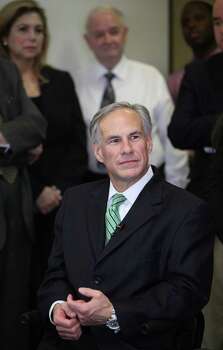
Texas AG Greg Abbott
defendant in the case
photo from Houston Chronicle
There was no actual citation of a case, no plaintiff, where a woman was caused an undue burden; the law had yet to go into effect. But the law itself imposed no burden directly on women; it imposed a requirement on doctors. Yet there was also no case of a doctor attempting to meet the requirements of the law and being unable; that may have happened, but there is no such plaintiff in this case. The plaintiff is Planned Parenthood and affiliates against the State of Texas (technically against Attorney General Greg Abbott), simply claiming the law could conceivably cause an undue burden on women seeking an otherwise legal procedure.
All of this was discussed during the legislative hearings, but one of the main points of the legislation is that currently there is an exemption for abortion clinics that is not available for all other ambulatory surgical centers, which do require doctors to have hospital admitting privileges. For the sake of women’s health, is there a reason for exempting only abortion clinics? The legislature could not find such a reason. On the other hand, the legislature could see a rationale for upgrading abortion clinics to bring them in line with similar medical providers.
For comparison, let’s say a surgical center that specializes in hand surgery has a problem with a patient during the procedure. Let’s say it’s something like unexpected bleeding where a transfusion is needed, or a negative reaction to anesthetic causing cardiac arrest or breathing difficulties. The doctor would rush the patient to the nearest hospital, where he would continue as the primary doctor, get the patient admitted without stopping for paperwork (because the doctor has all the information on the patient), and the doctor continues to treat the patient with the additional help of equipment and specialists available at the hospital.
Note that there is no handoff at the hospital door at which time the patient ceases to be that doctor’s patient and is now a new emergency patient at the hospital, with new doctors quickly having to familiarize themselves with the patient, assessing what has happened and what should be done. Continuity with the doctor is a plus for the patient in these rare circumstances, and that is why it is required of ambulatory surgeons.
It’s similar also to a regular OB-GYN, who sees the patient repeatedly at an office or clinic during the pregnancy and then meets the patient at the hospital they’ve agreed upon when it’s time for the delivery. Some OB-GYNs have birthing centers, where most deliveries can be done. But if there is a rare but severe emergency, the hospital where the doctor has admitting privileges is the backup plan. The doctor who knows the patient continues as the primary physician—with the additional help the hospital offers. Again, continuity with the doctor is a plus for the patient, and that is why admitting privileges are required.
It’s different for paramedics, who give limited emergency medical care and then turn the patient over to a hospital emergency team. The paramedics have a preliminary job—to care for the patient until the hospital can take over. They are likely to go to whichever hospital is most convenient. The paramedic doesn’t need admitting privileges, because the paramedic will not serve as the primary physician once the patient has been turned over to the hospital for care. Nor was the paramedic a doctor engaging in a surgical procedure the led to the emergency need for care.
In the abortion ruling, Judge Yeakel seems to have based his decision on testimony from an emergency room doctor from Houston:
Jennifer Carnell, an emergency room physician at Ben Taub Hospital in Houston, Texas, testified that she has never had an occasion to consider whether an incoming patient’s physician has admitting privileges at the hospital. Additionally, she would not have treated any patient differently if she were aware of that fact. [ruling, p. 11]
What this testimony described was a handoff—as in the case of a paramedic, rather than an admission as in the case of an ambulatory surgical emergency. The testimony is irrelevant—unless you’re questioning the legitimacy of asking any ambulatory surgeon to have admitting privileges, which was certainly beyond the scope of the case. All the other types of doctors continue caring for their patient after admittance to the hospital. Abortion doctors do not. There is no reason given for why they are not expected to continue care for their patient. Why are they the exception to the rule? Is it better for the woman’s health to have the care of their doctor cut off when they reach the hospital? The judge’s ruling says yes.
On the radio, after the ruling, the top of the hour news kept repeating the statement that the injunction against implementing the law was given because it was found that doctor admitting privileges “weren’t shown to improve health for the mother and the baby.” That’s right—the statement included the health of the baby. Let’s be clear: the purpose of the abortion was to kill the baby, but the ruling was reportedly partially based on whether the baby’s “health” would be improved by having doctor admitting privileges.
Ironically, if the abortion doctor were to continue care of mother and child in the hospital, that could lead to worse health outcomes for the child than being handed over to an emergency room—because the doctor’s purpose is to see to the death of the child.
Note, however, that the ruling itself does not include any mention about the health of the fetus, baby, or child—only mention of the mother’s health. So that was just a reporting error.
Back to strict scrutiny as opposed to undue burden. If I understand correctly, strict scrutiny is a higher standard, and it is being required of the state, rather than the plaintiff, to prove not only that there is rationale for the requirement, but also to prove that there are no cases in which a single person could be deprived of a legal right. The undue burden level would be lower; the state could simply show that there is a rational reason for the requirement, and that alternatives remain for those seeking abortion services.
When there is no case of any actual person being harmed, making the ruling the way Judge Yeakel did is probably both the wrong approach and the wrong standard.
The next step is the 5th Circuit Court of Appeals; they previously overturned Yeakel’s ruling against Texas’s requirement for a sonogram to be shown prior to an abortion. AG Greg Abbott believes, however the 5th Circuit rules, the case will be appealed to the US Supreme Court.
My opinion is that Texas did not overstep its bounds by requiring abortion clinic doctors to comply with the same rules as other ambulatory surgical centers; there is a rationale, and not all options are eliminated.
While hospitals set their own standards about who gets admitting privileges—and therefore it is possible some abortion doctors could be prevented from meeting the requirement—there is no evidence yet of a doctor trying to comply and being unable. There is only the hue and cry that the law might make getting care less convenient for some hypothetical abortion seeker.
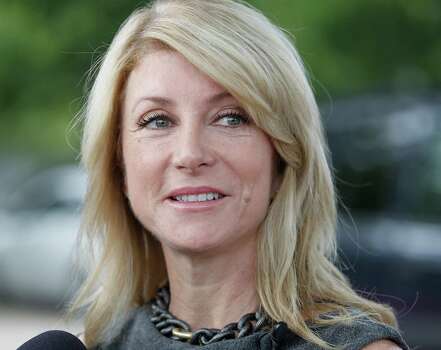
Sen. Wendy Davis, from Houston Chronicle
State Sen. Wendy Davis, who filibustered the bill in the first special session back in June, which led to its easy passage in a second special session, carefully avoided mention of “abortion” in her response. She said, “Texas families are stronger and healthier when women across the state have access to quality health care.” That is liberal-speak. Women, particularly women in families, have many many options for health care.
Women seeking abortions are rarely in families, and since families include children but abortions snuff out the life of children, Davis’s statement is pretty much a lie to cover up the ugly baby-killing facts of abortion. She also went on to say, “I would rather see our tax dollars spent on improving our kids’ schools than defending this law”—completely missing the irony that, if the law hadn’t been attacked, no money would have to be spent defending it, so she ought to connect Planned Parenthood with unnecessarily using up state funds, because the state is required to defend its laws.
Davis is running for governor—based solely on her notoriety following the abortion filibuster. She has no other experience to recommend her to the top executive job in one of the biggest states. Yet she is afraid to say the word. In an odd way, I find that comforting after a bad day in the courts.

Wednesday, October 30, 2013

Redistribution


In the conservative world, we’re fairly used to looking at wealth redistribution, and refuting any arguments for it. Because we believe in the basic economic/freedom principle that the person who earns the money should be the person who decides how to spend that money. (Milton Friedman argued the point decades ago.)
We’re a little less practiced at talking about, or even looking at, other forms of redistribution.
A few years ago there was a story going around about an economics teacher who arranged to “redistribute” grades in the class. The A students would “share” with the lower-grade students, to even things out—to be fair. Everyone would receive the class average. On the first test, everyone got a B. On the second test, everyone got a D. On the final, everyone failed. Why should anyone work, if the result was going to be squandered on those who didn’t put in the work? It was, of course, a comparison to socialism. And the final summary was this:
When half of the people get the idea that they do not have to work because the other half is going to take care of them, and when the other half gets the idea that it does no good to work because somebody else is going to get what they work for, that is the beginning of the end of any nation.
I’m not sure of the origin, whether there actually was such an economics teacher. But the story caught on, and various college students took on the challenge of making videos of people being asked to sign a petition about GPA redistribution. (George Mason and Carthage, for example.)
So that was about equal opportunity for success based on grades. For some reason, hard-working students, even liberal ones, are reluctant to assume it’s unfair to lazy people for them to work hard and thus have greater opportunity to graduate/get good jobs.

Similar assertions about opportunity redistribution are used in affirmative action. The argument is, if there is racism, then there is an unfair advantage to favored races (Asians and whites, typically) and unfair disadvantage to non-favored races (namely African-Americans and Hispanics). If so, the argument goes, then there should be some “redistribution” of opportunity based on race—take from the advantaged races and give to the disadvantaged races, as if people are less individuals and more representatives of groups that share their skin color.
There was an satirical illustration of this concept, in the form of an affirmative action bake sale, done on some college campuses (Bucknell and Berkeley), and followed up in a mall by John Stossel. It got the conversation going, and even those getting the advantage saw the system as demeaning. However, it’s hard to tell whether the point got across, or whether the very subject of race was so taboo that discussion was shut down. But that’s a subject for another day.
I saw a somewhat unbelievable poster online, advertising a panel that would be discussing getting rid of all advantageous opportunities—evening things out. The panel theme is “No More Success Stories.” Why? Because for every 1 in a million success story, there are 999,999 left behind. Not kidding. Pretty sure this is not satire.
So, the question is, should differences in opportunity be evened out? Should opportunities be redistributed?
The concept behind Obamacare answers those questions with a loud yes. It is a simple fact that some people are healthier than others, and true that these healthier people can get by with paying less for health care, sometimes even opting to go without health insurance, or getting only a catastrophic protection policy. Others—the no-longer-young, the elderly, the already ill or injured—don’t have the luxury of going without health insurance coverage, or may have to pay more to get it. They are disadvantaged by less than peak health.
So Obamacare attempts to “redistribute” through financial measures the financial health advantages particularly of the young and healthy demographic, and make them pay more so that the older and less healthy demographics can supposedly pay less than they would. In reality, you’d be hard pressed to find anyone in any demographic paying less for whatever coverage they had before the law, but that’s a discussion for another day. The point today is that the law was designed to “redistribute” good health advantages. And it is true that pretty much every single young healthy person will be required to cough up significant income that they wouldn’t otherwise have spent.
This isn’t a surprise. It was part of the discussion before the Supreme Court; it’s in the transcripts. (I wrote about the ruling before and after.) The law is a tax on healthy people intended to subsidize the less healthy.
One major problem with “redistribution” of any opportunity is that it uses some distant, powerful overseer (tyrant) to make decisions best made by individuals. Most young people are not as financially well off as most older people, nor as well off as they will be later in their lives. They are paying student loan debts, getting started in their careers. If there is a time to risk doing without comprehensive health insurance, they’re at the best time of their lives to do it. Maybe a catastrophic policy would be wise, if they can afford one. But chances are in their favor that their money is better spent on something else—and that’s why so many of this demographic have chosen to spend less on medical coverage.
Obamacare, in essence, forces young healthy people to impoverish themselves for a product they don’t need in order to help pay a subsidy for that product to people at the culmination of their career and lifetime of wealth building who can better afford to pay the higher costs. In the first year or two, paying the penalty/tax is a lower burden than paying for the actual product. It’s just money into a black hole, though—no actual benefit to the young healthy person being extorted.
On top of it all, the failure of the Obamacare website is just a little too much to believe. Here’s the summary: young people are forced to buy a product they don’t want, don’t need, and can't afford to help buy that product for those who are already affording it—and this tech savvy demographic is supposed to voluntarily sign up for this servitude on a website that doesn’t work.
Yes, that is centrally planned “redistribution” at its finest. Welcome to tyranny.

Monday, October 28, 2013

Beanie Baby Economics


I have long maintained that Economics is the fun science (for example, 8-29-2011, 8-30-2011, 11-4-2011, 3-21-2012, 3-21-2013).  And I thought we needed a little fun on a Monday. We'll be reviewing how Beanie Babies fit in to the economic picture.
This was part of the lecture for last Monday’s Hillsdale College Economics 101 online course. The title for lecture 5 is “The Role of Profit.” [These courses are free, but you may need to sign up for a course to get access.]
Before we get to the economics of Beanie Babies, we need to cover a few preliminary concepts.
·         Profit is revenue minus costs.
·         Economic profit includes opportunity costs when subtracting costs from profit.
Our teacher, Gary Wolfram, describes economic profits this way:

We want to include all the opportunity costs of all the resources that are being used up. Now, generally the opportunity cost of a resource is its price, but for some things it might not be included. So, for example, suppose you’re running a t-shirt shop in Hillsdale, and at the end of the year your accountant says, wow, you made $20,000. You might think that you earned economic profits of $20,000, but an economist would say, “Wait a minute. You might’ve earned $30,000 being the manager of the local Burger King.” So you have to include your opportunity cost of $30,000 when looking at total cost. So, to an economist your economic profit would actually be negative because, although you earned $20,000 in your revenue minus your cost in your t-shirt business, you could have made $30,000 being the manager at the Burger King.
So we often hear that firms make zero economic profit in a competitive market, at least whenever we take a Principles of Economics class, and you might say, well, gee, why is it that the firms are still making things if they’re making no profit? It’s because when we say they’re making zero economic profit, it means that they’re making exactly what those resources could have made in their next best alternative. You couldn’t have been doing better somewhere else. And so, economic profit just includes in the total cost all the cost including the opportunity cost of the people that are running the firm and all the labor and other inputs that are being used up.
Professor Wolfram explains that economic profit affects attraction to the market. When economic profits are positive, more firms are willing to enter that industry in hopes of making good use of their resources. He uses the e-reader market as an example.  First there was an innovator. Then others see high prices and growing demand, so they enter the industry. Soon you have Kindle, iPad, Nook, and others, providing choice as well as lower prices for consumers.
What’ll eventually happen is the price will fall and more will be produced. So, economic profit attracts new firms into that industry. Shifting the supply curve to the right, driving prices down, increasing the quantity, and we generally observe that. If we observe a firm that’s making economic profit because it introduced a new product, the price is generally high, not too many are sold, other firms enter, compete against them, driving that supply curve out, driving down prices, increasing quantity.
The opposite can also happen. Once demand is low enough that economic profits become negative, firms leave the industry. This is where the Beanie Babies example comes in, when there’s a loss of consumer demand at any price. Here’s the slightly technical part that makes sense with the chalkboard chart:
Gary Wolfram teaching Hillsdale's Econ 101 class, lecture 5
If firms are making economic losses, they’ll exit the industry. As they exit the industry, because an economic loss says they’re making less with those resources than they could be making somewhere else. As those firms exit, we get a shift in the supply curve now to the left: price will rise to P2, and quantity will fall to Q2.
He makes several other good points in this half hour lecture. Here are some samples (some are paraphrased rather than exact quotes):
·        Now, there are a number of things to observe about economic profit. First is that economic profit is a celebration. Firms must be doing what? They must be producing something of greater value than what the opportunity costs of those resources were.

·        So, the net of this is that we don’t have a minister of culture, or we don’t have a production czar that says, “Producers, you need to do something because consumers’ demand has changed, increasing or decreasing.” The price system and the attraction of profits moves the resources from those industries where consumer demand is declining to those industries where consumer demand is increasing. That’s why markets are so dynamic. That’s why it instantly responds to changes in what your preferences might be.

·        Economic profit is a celebration. Firms must be producing something of greater value than what the opportunity costs of those resources were. Rather than thinking of profit as a sign of exploitation, we should think of profit as a celebration, as saying that this firm made more with those resources than any other way of using those resources.

·        Monopoly is only a problem when it’s something you are forced to buy (very few things—electricity, phone, for example) and there’s a barrier to entry into the industry. Usually a barrier to entry is caused by government regulation, or government choosing how many (often one) entities may be in the market. “Normally when we look at a barrier to entry, it’s because government created that barrier to entry.”

·        Innovation is someone is thinking about what we are going to want three years from now—when we don’t even know yet that we’re going to want that—but when the time comes and we want it, the product will be there. Not good enough to do unto others what you want others to do unto you. You have to do unto others what they have no idea yet they will want done for them.

·        Innovation requires risk; profit is incentive to take the risk.

So, what happened with Beanie Babies? Demand at any price decreased, such that it was no longer a profitable industry, and the product stopped being made. In some cases, such as vinyl records, demand increases to a point that the product gets made. But in some cases, demand never resurfaces (8-track tape players, for example), and we don’t get the product anymore.
This is an ongoing problem for me, because I tend to like specific products and lack enough fellow consumers to keep companies making them. Mr. Spherical Model requests that I stop insisting that this is the entire consumer industry pinpointing what I like so they can purposely stop production of those things just to spite me.
But I do not feel that way about Beanie Babies. We had a few, back in the day. Mostly the tiny ones given away with kids’ meals, plus a few received as gifts. I didn’t understand how a toy could be valuable only if you left the tag on it and didn’t play with it. Eventually the rest of the world caught on.
Now that you understand the economic profit concepts behind Beanie Baby, you’re ready to more fully enjoy this “real life” Beanie Baby scene. Studio C started as a college campus improv group that developed into a TV comedy sketch show—in its third season on BYUtv (available on various television services) and also online, a sketch at a time. Enjoy.


Friday, October 25, 2013

Concerns, Part II


We started this two-part post about concerns, in Part I, with a look at The Book Thief, a novel about a young girl in Nazi Germany in the early 1940s. The main questions we’re looking at are:
How does a free, civilized people become subject, in a rather short time-frame, to undeniable tyranny? And how many in the population are willing to submit before even the unwilling are also subjected?
Today we’re looking at America, present day, concerned about what's happening, because we ought to know better.
* The other day I referred to a Bill Whittle Afterburner video. About halfway through, Whittle says this:
Now, some people have said that Obama is being petty and adolescent by deploying the new gestapo, that Smoky the Bear hat wearing National Park Service, as his primary weapon in making things hurt for the American people. It’s not just barricades erected by supposedly furloughed rangers in order to keep the American patriots that kept this country free from freely walking through the monuments erected to their dead friends and to they themselves. It’s things like keeping people on buses to keep them from even taking photographs of the national parks that we the people, not King Obama, actually own. It’s things like removing the handles from taps on hiking trails so that people can’t get a drink, and a list of shameful, shocking, eye-opening jackboot tactics to make sure his pain is felt—not allow it to be felt, but to make it be felt—goes on and on and on. And of all the things I’ve seen that have worried, depressed, and angered me since this hope and change huckster came to the Oval Office, nothing has disgusted and worried me so much as the willingness, the ease—in fact, in many cases the relish and the joy—at which formerly innocuous seeming people like park rangers have taken to kicking the American people in the groin. I will never forget this—not ever. And while I used to wonder where a dictator’s private army would come from among formerly free people—well, I wonder no more.
That use of regular, friendly neighborhood park rangers—who are willing to do as they’re told when they’re asked to do something obviously wrong—is disturbing. It’s a concern. No panic yet. We’re not expecting park rangers to beat any of us for sharing bread with a hungry stranger. But how far would they go, just doing what they’re told, before saying, “No, I won’t do that?” We don’t know.
photo from here
* Here’s another story that is cause for concern. Police took a flag from a veteran during a visit to the WWII Memorial. It looks like the veteran carrying the flag was in a wheelchair. But was he waving it, possibly risking hitting those around him? According to this report, no: he wasn’t doing anything but holding it. So police, who in pretty much my whole lifetime, have been considered the friend of law-abiding citizens, look here like recruits of an anti-freedom tyrannical overlord. At this point just the DC park police, and maybe only some specific bad apple. Still, cause for concern, though not yet panic.
* Here’s yet another puzzling piece: Veterans are being told that someone who doesn’t know them, some unknown Veterans Administration government bureaucrat, will determine their mental/emotional/physical competence. If this stranger determines you are not competent, you may be deprived of your ability to make your own financial decisions, and/or you may no longer have your second amendment right to own/purchase/use guns and ammo. The link will lead you do an actual letter sample. There have been thousands sent out. Some of the recipients can guess that it is because they sought help for PTSD, or temporary depression, or something else they sought help coping with. But these aren’t individuals who consider their problem disabling—or even still currently relevant. And many recipients can’t identify any conceivable reason for the notice. Their being a veteran seems to be the only contributing factor.
I know you can’t always believe everything you find on the internet (even here, despite my efforts at finding and revealing truth). But when I look at this story, it appears credible. The piece is written by Michael Connelly, Executive Director of the United States Justice Foundation, who writes a blog and teaches on constitutional issues. At this point I haven’t evaluated the reliability of the story. But if it is true, and it’s kept quiet so we aren't told elsewhere, this is more than just a minor concern. It’s the kind of thing a conspiracy theorist would come up with: government is determined to disarm the very citizens best trained and experienced in defense against enemies foreign and domestic.
* Another story this week was about a woman working for the government, taking calls to help people navigate the impossibly flawed (“glitchy”) Obamacare website. She had the misfortune of taking a friendly call from Sean Hannity from his radio show. He was kind to her and thanked her for how nice she was. But she apparently made a fatal error by admitting (in a job where she takes complaints) that a lot of calls she takes are from people who don’t like Obamacare. She was fired. As Bryan Preston of PJ Media put it,

This firing makes Erling Davis, not Kathleen Sebelius or any of the contractors who messed up the website, the first person held accountable for any problems with Healthcare.gov. The first person held accountable by the Obama administration is a person at the very bottom of the regime, who makes no decisions that impact the implementation of the law at all.
Just let that sink in.
Who fired her? How far up the chain was the decision to fire her made? What reasons were given for her firing?
Those are among the questions that the most secretive administration we’ve ever had will never answer.
Saying something the government doesn’t approve of is enough to get you fired; messing up the finances and health care of millions of Americans is just doing the job. Sean Hannity stepped in, by the way, to offer the woman a year’s salary to get her by until she gets a job, because he felt bad for getting her in trouble.
* The president gave a speech shortly after the government reopened in which he gave this warning:
And now that the government is reopened, and this threat to our economy is removed, all of us need to stop focusing on the lobbyists, and the bloggers, and the talking heads on radio, and the professional activists who profit from conflict, and focus on what the majority of Americans sent us here to do.
Who are the villains? Well, of course lobbyists—people who sway government; the very cronies this president gives favors to but doesn’t want you to believe he’s in bed with. Then there are bloggers. He has just warned you about me; I’m not to be heeded. Neither are radio hosts, flippantly referred to as talking heads, even though on radio you don’t see their heads, while on TV news, which is much more aligned with his propaganda, you do see talking heads. Then he mentions “professional activists,” as if that isn’t the only kind of job he himself ever had. So, translate that to “evil conservative patriot activists,” like the ones the IRS targeted—not the actual paid professional ones like ACORN and subsidiaries that this president got paid to train in their tactics.
This is a little like the Wizard of Oz telling Dorothy, “Pay no attention to the man behind the curtain.” Translation: “Don’t notice evidence of truth; only notice and believe what I tell you to notice and believe.” As a blogger, my role in the story is Toto, the little dog pulling back the curtain on truth. That’s not an ignoble character to play. Even though we might not be “in Kansas anymore”—in the American freedom world we grew up assuming was our home—Toto is still perfectly capable of sniffing around and pulling back the curtain.
At this point, the president’s call for avoiding unsanctioned information sources doesn’t actually stop someone like me from posting. So his anti-conservative-voices rhetoric is a concern, but not yet a reason to panic. So far this still sounds like paranoia, but if voices like mine ever get shut down—then we’re beyond concern and into reason for panic. Just saying, while I can.

Wednesday, October 23, 2013

Concerns, Part I


It has been a while since I shared a discussion from book club. We met two whole weeks ago, but there are pieces of that book that keep coming to mind. And I think some specific things fit in with other concerns I’ve been collecting.
So, first, the book from this month’s discussion was yet another youth novel, The Book Thief, by Markus Zusak (soon to be a movie, I believe). It’s about a young girl in Nazi Germany—mostly from 1941 to 1943. This place and period can be hard to read about, because there’s so much inhumanity. One thing I liked about this book was that most of the characters were both believable and not evil, even though their surroundings were pretty tyrannical.
The girl, Liesel, is brought into a home as a foster child, shortly after the death of her little brother (and the probable imminent death of her mother, although we never learn that detail for certain). While the people she comes to call Mama and Papa are in ways difficult, they are loving and well-meaning throughout, and sometimes downright heroic. So glad I didn’t come across another story of parental failure.
The story is told from the observant point of view of personified Death. Death, in this story, is kind of tired and overworked—particularly during the war years—and sympathetic. Also poetic at times. The parts that I am now finding most memorable relate to the taking of fathers from the homes.
Liesel’s Papa is standing with her as a group of Dachau prisoners are marched through town. One is fainting, nearly dead.  Papa fails to resist the urge to reach out with a hunk of bread for the man. Both the prisoner and Papa are whipped, immediately, for the crime. And then Papa realizes his stupidity, realizing he has put the entire household in danger. The young Jewish man living in their shallow basement has to leave. And there is the sense that at any moment the gestapo could show up and punish Papa further. A few weeks later, the Nazi Party arrives. They “honor” him by accepting his request to be a party member and then drafting the 50-something man into service—clean-up work following bombings, including a lot of clearing out dead bodies, in addition to building repair. There is always the risk that bombers will return and wipe out those cleaning up; it’s a high-risk dirty job.
Parallel to this is the story of Liesel’s best friend Rudy’s family. Rudy is smart in school and gets the attention of the party by performing extremely well at a local track meet. He also happens to look blond and physically perfect. So the party comes to the parents and lets them know they have honored them by giving Rudy the opportunity to go to a special school where the party intends to raise the perfect race of Germans. But his parents look at these strangers (whose ideas don’t agree with the family, although they would never be so unsafe as to say so) taking away their 13-year-old son. And they say no thank you, as they are told they have a right to do. A short time later Rudy’s father is “honored” by being drafted into military service (he’s got nearly grown children as well as young ones, so I’m guessing 40-something).
So both families are punished for their disagreement with the tyranny by being “honored” to serve the tyranny.
Whenever you talk about Nazi Germany and then talk about conditions in our country today, you get the whole “You compared Obama to Hitler” thing, from people who forget that they actually called Bush Hitler just a few years ago. While I am comparing, literally, two situations, in order to measure and compare levels of tyranny, I do not equate the two leaders. (For one thing, Obama is ineffectual and can’t even find moving words to say to a crowd without a teleprompter, so I don’t see the ability to accomplish that much evil. See my post Long Game Players.)
I’m not concerned about the leaders so much as I’m concerned about the people. How does a free, civilized people become subject, in a rather short time-frame, to undeniable tyranny? And how many in the population are willing to submit before even the unwilling are also subjected?
In The Book Thief, the idea was that these were mostly simple working people trying to get on with their lives, with varying degrees of disinterest in the state, but a sharp awareness of the danger of lack of compliance. It’s fiction, so I don’t know if it accurately portrays the actual 1940s German people in the outskirts of Berlin. But it’s conceivable to me that they sort of got tyranny thrust upon them before they noticed. I don’t want that to happen here—or anywhere ever again.
So I’ve put together a little collection here is of things that are concerning—which we’ll cover in the next post.

Monday, October 21, 2013

Behind the Sphere


We’ve had a lot of posts recently related to current political events, and that could give a reader the wrong idea about the purpose of this blog. So today we’re stepping back and doing a little review—and maybe a bit of behind-the-scenes reveal.
 
What Is the Spherical Model
The Spherical Model concept is an alternative to the right/left way of defining things political, with the faulty assumption that middle is better than extreme at either end. At the Spherical Model we talk about a three-dimensional view, with freedom and tyranny being polar opposites. Above the equator (and preferably above the 45th parallel) is the freedom zone. It’s our goal to identify the principles that lead upward, toward freedom and away from tyranny. The best example we have of following the principles is the US Constitution, with very limited powers granted to government, strictly for the purposes of protecting life, liberty, and property.
Political Sphere
The left/right direction—the longitudinal lines—on the sphere aren’t part of the good/bad dichotomy; they simply identify the level (local-ness) of the interest, whether very local, starting with individuals and families, on up to community, city, state, nation, and, at the far extreme, global. However, it is a principle of freedom that the most local entity possible should handle any particular issue.
Down in the southern hemisphere, one quarter (the local southwestern quadrant) is the tyranny of chaos or anarchy; the southeaster quarter is statist tyranny. Both are tyranny. But most of the world’s history has involved the oscillation between these two quarters without much awareness that there’s a whole northern freedom hemisphere up above.
Using the spherical idea, we can add in economics, with the polar opposites of free enterprise and controlled economy. This overlays the political sphere, so it becomes obvious that principles that lead to freedom are likely to lead to the prosperity of free enterprise as well.
While we’re at it, we can add an overlay of social ideas on the sphere, using the polar opposites of civilization and savagery. I believe it is this sphere that lays the groundwork for the others. People who self-govern can enjoy freedom and prosperity. So living the principles of civilization are likely to lead to economic and political freedom.
These are the ideas we talk about on this blog. Almost anything fits somewhere in the ideas of freedom, economics, and civilization, so you’re somewhat subject to what interests me.
A few months ago, when we reached the 400th blog post, I put together a best-of series. If you want to better understand the Spherical Model idea, start first with the website, SphericalModel.com, about 50 pages worth on the model, and the principles related to each of the three overlying spheres. Then you can read the posts that give further evidence of the ideas, separated mainly into the three spheres:
·         Best of Spherical Model, Part I (Spherical Model basics plus Political Sphere)
·         Best of Spherical Model, Part II (Economic Sphere)
·         Best of Spherical Model, Part III (Civilization Sphere)
In addition, there are some collections you might find interesting. The collections mainly fit under the category of civilization, but can interrelate with politics and economics as well.
·         Defense of Marriage Collection (July 1, 2013)
·         Education Collection (July 24, 2013) 

Who Is Behind Spherical Model
I refer to the Spherical Model as the smallest think tank ever. It’s mainly just me, plus those I talk things over with—which happen to include my three adult children, whose interests align neatly with the three spheres, so I refer to my children in the blog as oldest son Political Sphere, second son Economic Sphere, and daughter Social Sphere. All three are married and pursuing lives we can be proud of.
Political Sphere is currently a second year law student here in Texas. He and Mrs. Political Sphere have two children—Little PS1 and Little PS2, my brilliant and adorable grandchildren. Political Sphere probably has the most influence on the blog, because he calls regularly to talk through ideas and current events with me. He has guest posted a few times, and when he’s not studying 24/7, I hope he’ll post more often.
Economic Sphere graduated with a degree in economics, and has since been in the US Army. He graduated earlier this month from the Defense Language Institute (which I wrote about), and has a few more months of specialized training before being stationed overseas for his assignment. He and Mrs. Economic Sphere lived with us during much of the first year of this blog, so I got a lot of direct economic lessons then. It helps to have him draw charts for me in person.
Social Sphere is working on a degree in a field that uses many of her talents, where she’s developing entrepreneurial ideas that are likely to benefit families in particular. She is both an idea generator and a person who makes others feel good—so she has influenced this blog more directly than can be evident to anyone but me.
I refer to myself as Spherical Model. (My actual name shows up on the website, where I own the copyright, if you’re interested enough to search that out.) Sometimes I say “we here at the Spherical Model,” but that’s mainly just me. There’s not much in the “about me” section of the blog. You can pick up details here and there by reading the blog. But today I’m finally offering a brief bio of me.
That's me, out on the Golden Gate Bridge
during our recent trip to CA
for Economic Sphere's DLI graduation
I graduated with a degree in English, specializing in writing and editing. I spent my early career years as a writer and editor, mainly in the field of education, but partly in computer documentation—way back when we used Wordperfect 2.0. (I go back far enough to have learned WordStar, in case you’re a word processor historian.) One of those jobs was at a language translation company, where I did Spanish and Portuguese quality assurance—and also Arabic, although all I needed to test there was whether the words showed up in Arabic script or got left in English. Among the education jobs were college level teacher development and support, and high-low curriculum writing (that means for higher grades, for middle school and high school, with low reading ability). I wrote textbooks and workbooks on government and biology.
I spent a lot of years, starting before the birth of Economic Sphere, as a stay-at-home mom. The most intense decade of that was 2000-2010, when we homeschooled, an adventure not to be missed. The Spherical Model idea came out of a homeschool effort to explain political ideas to my children—back in 2004. So my kids were the first to be taught the Spherical Model.
Mr. Spherical Model and I have been married for nearly 32 years. We both graduated from Brigham Young University. That does, in our case, mean that we are Mormons (members of The Church of Jesus Christ of Latter-day Saints). Both of us come from families that go back to early pioneer days. My mother used to tell me, “Don’t go off to BYU and marry some Californian who will take you away,” so I guess it was inevitable that I would do just that. After he graduated (which was well after my graduation, because he had served as a missionary, etc.), we left for graduate school in Indiana, then went to northern California for an internship and follow-up jobs, and then moved to Washington State for a decade before ending up in Texas.
San Jacinto Monument
where Texas won independence
He currently works in the oil industry, but his field is adult education and leadership training, so he has been in many industries, from telephony to nuclear power, and now oil-related energy. We came to Texas for his work about 15 years ago. While I don’t enjoy humid heat and bugs, there’s a lot about freedom in Texas that I love. If you homeschool, you can teach Texas history by going to Washington-on-the-Brazos, where the Texas Declaration of Independence from Mexico was signed; then going to the Alamo, where Travis, Crockett, and Bowie died along with everyone else, taking a stand for freedom; and then the San Jacinto Monument, where the Texians defeated Presidente Santa Ana and his armies. As people say here, “I wasn’t born in Texas, but I got here as quick as I could.”
I’ve pretty much always fit writing into my life (and often editing) in an un-famous sort of way. I have other interests as well: music, art, crafts, health, cooking, sports, and probably other things that would make for a pleasant grandma-blog, if I didn’t feel compelled to continue what I’m writing here. I’m active in a local tea party, which comes up occasionally in this blog. Recently I put my name on the ballot (for next spring’s primary) to be a local precinct chair. I’ve been a district and state delegate a few times. And I frequently write to my representatives. I’ve worked the polls and have served as a poll watcher several times. In other words, while I don’t consider myself a political activist (which holds a lot of negative connotations to me), I do try to get involved to do good where I can.
When I started writing on Defense of Marriage issues, back around 2003, I was talking with Richard Wilkins, who had come to speak to us. I’m a good note taker, and I believe I can take a number of ideas and arrange them in understandable language, so I asked him about writing, even though I had no credentials. He said it was valuable to have the viewpoint of a mother, and I should never be apologetic for that. So I’m acting on faith that what I have to say can be valuable to readers. I hope it is.
I love the Constitution. I love this country and pray for its preservation. And I love civilization. I wish the whole world would choose to live in the way that leads to freedom, prosperity, and thriving civilization.
This is probably all you really need to know about me, as the person behind the Spherical Model.