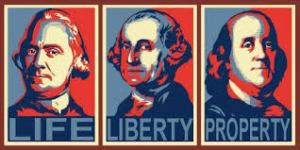
Showing posts with label life liberty and property. Show all posts

Thursday, April 23, 2020

Is the Cure Worse Than the Disease?

There have been a great many confusing things surrounding this pandemic. This was addressed with good humor in a video online by humorist Adley:


Clarity would be nice.

We have shut down the economy, taking away people’s livelihoods, which brings on many social/emotional issues that are directly related to losing a steady income. And also taking away people’s other healthcare that is deemed non-emergency. Some things can be put on hold for a week or two, or maybe a month. But non-emergencies can get more urgent as days pass. Things like cancer treatments, heart disease care, joint replacement surgery, or even impacted wisdom teeth removal.

In the face of an emergency, we can be compliant. But we want to know that there’s a darn good reason for doing what we’re being asked to do. And we reserve the right to say when enough is enough.

I thought this would be a good time to look at this basic Spherical Model axiom and see how it applies during the pandemic:

Whenever government attempts something beyond the proper role of government (protection of life, liberty, and property), it causes unintended consequences—usually exactly opposite to the stated goals of the interference.

This pandemic response is an interesting case. There’s certainly some element of the proper role of government. But there also appears to be using that as an excuse for asserting power. So let’s take a look.


Asking the Question

New York Governor Andrew Cuomo
screenshot from here
What is the stated goal of shutting down our economy, leading to 27 million unemployed and a self-imposed depression? To save people from dying from the virus. OK. But people have been confined long enough to begin asking, “Is the cure worse than the disease?” That question was actually put to New York Governor Andrew Cuomo yesterday, and here’s how that went: 

Cuomo: The illness is death. What is worse than death?
Reporter: What if somebody commits suicide because they can’t pay their bills?
Cuomo: Yeah, but the illness is maybe my death, as opposed to your death. You said they said the cure is worse than the illness. The illness is death. How can the cure be worse than the illness, if the illness is potential death?
Reporter: What if the economy failing—
Cuomo: Worse than death?
Reporter: Equals death?
Cuomo: No it doesn’t. It doesn’t equal death. Economic hardship—yes. Very bad. Not death. Emotional stress from being locked in a house. Very bad. Not death. Domestic violence on the increase. Very bad. Not death. And, not death of someone else. See, that’s what we have to factor into this equation.
But the illness doesn’t mean certain death. The illness is very close to certain survival. Except for a few with certain underlying conditions, “the odds are always in our favor.”[i] Just today a study announced that the state of New York has a 13.9% infection rate. That’s 2.7 million people statewide. Infection rate within New York City is probably 21.2%. But as an Epoch Times story reports today:

With about 15,500 current fatalities linked to COVID-19 in New York, the death rate, or mortality rate, would be 0.5 percent.
That means that in New York, the hardest hit place in the US, where the disease has killed more than most of the rest of the US combined, contracting the infection means survival for 995 out of every 1000 people. As diseases go, 0.5% fatality rate is high. Flu is about 0.1%. But 0.5% doesn’t equal death, as Governor Cuomo implies.

In fact, as we went into this society shutdown, lacking even the data we have now, we feared the disease might kill 3-5%. That still means 95-97% survival of those who contract it, but that was considered too risky. It’s several orders of magnitude higher than the flu. So we shut down the world based on that fear.

What would we have chosen to do if we had known the rate was 0.5% in our worst hit area, and maybe equivalent to the annual flu for the rest of us? We didn’t have that information, but I’m asking it hypothetically.

Does shutting down save some lives? Probably. But denigrating anyone as heartless and selfish for wanting to risk going back to work is disingenuous. We don’t shut down the world because of the annual flu, or because of car accidents. Why this particular virus, then?

In government’s basic role of protecting life, liberty, and property, can government protect life from this virus at the expense of our liberty and property without limit?


Government’s Goal

Let’s state government’s goal a little more specifically. It is to slow the spread of the virus:

·         to prevent the medical resources from being overwhelmed.

·         to buy time for development of treatments, preventions, testing, and medical resources.

People have been pretty willing to accomplish those things. The first has been accomplished in most areas. New York is past their peak. New Jersey and some other areas are still facing bad times, but so far we haven’t faced what Italy did, having to choose who had to die for lack of resources.

Governor Abbott of Texas pointed out[ii] that, while we have a number of cases in our large cities, and at places around the state, overall, we have had a death rate of 17 per million population. This is while New York has had a death rate of 989 deaths per million. The US as a whole has had 131 deaths per million.

That shows that Texas has been doing something right—or has been very fortunate.

With New York’s mortality from the virus 58 times higher than Texas, should Texas continue requiring people to stay home until New York gets to our levels? Remember, that means taking people’s liberty and property. Can that be justified when the medical resources, even in New York, are not overwhelmed, and the spread has already been delayed?

Or can we balance saving lives from coronavirus while getting back to regaining our liberty and property?

It seems reasonable, in places like Texas, to slowly start going out. As Governor Abbott explained the opening up process:

If you’re going grocery shopping or whatever the case may be, you know that you’ve gone to the store and you’ve been able to do that without spreading the coronavirus. We want people, as they begin to go to the hair salon, or as they begin to go to restaurants, as they begin going to a movie theater—whatever they may be doing as we begin to open up businesses—maintain those safe, healthy, distancing practices so that we can assure that we can open up without spreading the coronavirus.
There will be some uptick in cases as we do this. But if we can maintain a manageable level, that seems more prudent than a siege mentality that locks us in our homes until we starve or get evicted. Whatever we’ve been doing has already been keeping the death rate low. Opening gradually doesn’t mean we necessarily kill more people. It means the Governor is keeping those two “slow the spread” goals in mind and is avoiding using the crisis to grab power.

The Governor is hopeful that by fall schools can open. Most people attending schools are less susceptible to severe illness. Those who are in higher risk groups (that includes me) may need to be hypervigilant longer than young, healthy people. And we can hope that treatments are available by fall so that we can find a way to normalize post-Covid-19.

Here in Houston the public health data shows that we hit our peak around April 4th or at the latest April 9th.

Houston Daily Case Count as of April 23, 2010
provided on Facebook by Leslie Joan May

Yet I heard on news that we’ll hit our peak around the first week of May, inconsistent with the data. That’s confusing.

The county set up a temporary hospital in a stadium parking lot downtown; not a single bed was used. It is being dismantled.

Nevertheless, yesterday our county judge Lina Hidalgo announced a new requirement that everyone leaving their homes needed to be wearing a facemask, starting Monday, for 30 days. Noncompliance can result in $1000 fine and jail time.

Why now, when the voluntary social distancing we’ve been doing has done its intended work already? Where is the data showing that wearing a mask when not near people avoids spreading the virus person-to-person?

This same county judge has been attempting to let felons (including violent felons in her first attempt)  out of jail because of the virus—because the virus spreads there. So, she would like to let felons back out on the street, not with a 14-day quarantine, because—where would they quarantine if they have to find housing first? Yet if we law-abiding citizens want to walk to the park without a mask on—away from all other humans, outdoors—we are the criminals.

Something is wrong with this picture.

People have been willing to wear masks. And do all the social distancing that has been asked of us. Mostly in the name of helping others rather than ourselves, regardless of Governor Cuomo’s accusations about heartless people who want to get back to work. Most people are reasonable and considerate. If they’re going to a place with a lot of contact (grocery stores, doctors’ offices, essential work around others), they’re going to be willing to wear a mask—now that government finally admitted that mask wearing helps to prevent spread both from the infected and to the uninfected. But being coerced to wear one in places where there is no need because there is no human contact with someone who hasn’t been in our house with us all along—that’s not even reasonable.

What if someone is already recovered from the disease and is no longer either contagious or susceptible? Are they exempt? No. They are considered criminal for not wearing a mask, even in places where they couldn’t spread it regardless.

To add to the lack of credibility, Judge Hidalgo wore her mask at the press conference yesterday, at least part of the time with her nose uncovered—unclear on the concept. One would assume that she is far enough away from others at a press briefing that wearing a mask, other than for demonstration purposes, would just make her harder to understand and would contribute nothing toward safety.

In a rather embarrassing lack of attention to detail, the graphic covering the story on the news listed things you can use as “homemade masks, scarfs, or bananas,” which had social media coming up with some creative responses.

Found on Texas State Rep. Valoree Swanson's Facebook page

The question is not whether masks might be effective in preventing the spread of the virus. The question is whether coercion is a valid way for government to encourage the practice.


Threats to Life, Liberty, and Property

What does coercion do? Does it protect life? Maybe a tiny bit under some circumstances. But our goal has never been to prevent all cases, or even all deaths (although we wish we could); our goal has been to slow the spread for those two purposes listed above. Since what we’re doing has already accomplished that, why this added coercion now?

If we don’t ask the questions, then we suffer significant loss of liberty and property for the sake of some vague sense that we’re preserving life when in reality we might not even be doing that.

Government isn’t in control of the existence of the virus. In an emergency—which this seemed to be—we were willing to take some drastic temporary measures to preserve life. But even under these circumstances, when government takes away a person’s business, that relates to the “takings” clause; government can’t take that without just compensation. And because government produces nothing, that just compensation comes from taxpayers—which means workers making income; it is a finite amount made smaller by the stay-at-home orders.

Has government done the right thing to shut down? We may not know until we have hindsight and a whole lot more data.

Is government doing the right thing when it continues a suspension of our liberties and the taking of our properties in the name of saving lives? Certainly not if it can’t connect the dots between its actions and lives saved. Certainly not if there are other ways to accomplish the saving of lives (special care for the most vulnerable, for example.) Certainly not if the “cure” is worse than the “disease.”

So, about government interference. Does the purpose—saving lives from coronavirus—qualify as a proper role of government? Probably. Does saving all lives from this virus at the expense of other possible causes of death and at the expense of our liberty and property qualify? The protests we’re beginning to see show that the people say no.

Are there unintended consequences to government stepping beyond its proper role? Yes. Some of them life threatening. Most of them threatening to our liberty and property—which amount to the living of our lives. When government “saves” our life by taking our “livelihood,” preventing us from “making a living,” is that really saving our life? In a few cases out of a thousand, possibly. But in an overwhelming majority of cases, the answer is no. Maybe we’re getting to the point where sensible people can assess their own risk and act accordingly.


[i] Yes, I’m quoting from The Hunger Games.
[ii] On Glenn Beck Radio, Wednesday, April 22, 2020. Behind a paywall, here

Monday, June 3, 2019

Essentials of Freedom


The purpose of government is to protect our inherent rights to life, liberty, and property.

Life, because each human life has value. This is different from many societies throughout history that have seen some lives as more valuable than others, and some classes as sub-human and disposable.

Liberty, because that means we determine how we spend our lives—working at overcoming the natural state of poverty and ignorance. This means no slavery, no servitude without just compensation. No class is entitled to the services of people in another class simply based on their class.

Property, because it is the result of our labor, so it represents the exchange of a portion of our life—work that resulted in something useful to us. In the Declaration of Independence, we broaden this idea to the “pursuit of happiness,” which encompasses property as well as our choices in how we spend our lives to accumulate property, or wealth, or work toward any end important to us.

It is tyranny to take the life of the innocent, or to take the life of the guilty without due process of law. It is tyranny to coerce behavior, to require a person to work, not for that person’s own benefit, but for the benefit of the coercer. It is tyranny to take the property of a person without a free, fair exchange for that property.

These are the basic ideas behind the formation of our United States.

"Scene at the Signing of the Constitution of the United States"
by Howard Chandler Christy, image from Wikipedia


Setting up a government to protect life, liberty, and property—without taking on other powers that would be tyrannical—was the careful purpose of the writers of the Constitution.

The Preamble to the Constitution outlines these purposes for the Constitution of the United States of America:
·         To establish Justice.
·         To insure domestic Tranquility.
·         To provide for the common defence.
·         To promote the general Welfare.
·         To secure the Blessings of Liberty to ourselves and our Posterity.
When there are disputes that infringe—or could infringe—on one person’s life, liberty, or property, the government can help justly settle that dispute. If there are problems between one region and another—a trade issue, for example—the government sets up standards of exchange and regular trade routes. When there are threats from beyond our nation, the government can protect our borders and sovereignty. When there are issues that benefit the people as a whole, such as certain infrastructure projects, the government can promote those projects. And having all this written and codified in law brought these things about for those who wrote the Constitution as well as for each generation that has followed.

Section I, Article 8 of the US Constitutiion
Article I, Section 8

This federal government, created by the founders and ratified by the people in the individual states, has powers strictly and carefully limited to what will specifically protect life, liberty, and property. And these powers are enumerated—spelled out. They’re all in Article I, Section 8 (plus a couple of additions by amendment). That means they all come under powers of Congress—where laws are made.

The judicial branch is to adjudicate laws duly created by Congress; the judiciary—including the Supreme Court of the United States—has not been granted power to make laws.

The executive branch is to execute the laws, to enforce them, to use the budget for those purposes assigned by the lawmakers. This will include common defense functions, such as directing the military as Commander in Chief, and arguably protecting our sovereignty with and domestic tranquility functions such as the FBI. But the executive branch does not have power to create laws.

The Enumerated Powers

We’ve listed the enumerated powers before [here and here], but it’s a good idea to repeat them from time to time, because it simplifies conversations about our government. It may not simply politics, which is about persuading people to allow assertion of power—whether an enumerated power or not, unfortunately.

Here’s the list:

1.       Lay and collect taxes, duties, imposts, and excises—uniformly throughout the US, for purposes of paying debts and for the general welfare (for the good of the country as a whole).
2.       Borrow money on the credit of the US.
3.       Regulate commerce (make it possible and regular) with foreign nations, among the states, and with the Native America tribes.
4.       Establish uniform rule of naturalization (allowing people to become citizens).
5.       Establish uniform laws on bankruptcies.
6.       Coin money, regulate the value of US coined/printed money, and regulate the value of foreign money.
7.       Fix the standard of weights and measures.
8.       Provide for the punishment of counterfeiters.
9.       Establish post offices and post roads (mail system).
10.   Secure copyright and patent rights, to promote the progress of science, arts, writings, and discoveries.
11.   Constitute tribunals (courts) inferior to the Supreme Court.
12.   Define and punish piracies and felonies committed on the high seas, and offenses against the law of nations.
13.   Declare war, grant letters of marque and reprisal (license to act on the seas that would otherwise be considered piracy), and make rules concerning captures on land and water.
14.   Raise and support armies—but no appropriation of money to that use shall be for a longer term than two years.
15.   Provide and maintain a navy.
16.   Make rules for the government and regulation of the land and naval forces (military bases).
17.   Provide for calling forth the militia (National Guard) to execute the laws of the union, suppress insurrections, and repel invasions.
18.   Provide for organizing, arming, and disciplining, the militia (National Guard), and for governing any part that is in service to the US—reserving to the respective states the power to appoint officers and the authority to train the militia according to discipline prescribed by Congress.
19.   Exercise governing authority over the District (Washington, DC, an area not exceeding 10 square miles) as the seat of the government of the United States.
20.   Exercise governing authority over places purchased (by consent of the legislature of the state in which located) for erection of forts, magazines, arsenals, dockyards, and other needful buildings.
21.   Make al laws which shall be necessary and proper for carrying into execution the foregoing powers, and all other powers vested by this Constitution in the government of the US or in any department or officer thereof.
22.   Outlaw slavery and involuntary servitude (except as a punishment for crime), and enforcement of this prohibition.
23.   Sixteenth Amendment: Lay and collect taxes on income.
24.   Fifteenth, Twenty-fourth, and Twenty-sixth Amendments: Enforce equal voting rights laws across all the states.
Listed Limitations

The limitations are not enumerated. However, just for the sake of security, some of the limitations are spelled out in the Bill of Rights—the first ten amendments. So here’s a list of specifically mentioned things the government cannot do:

·         Establish a state-favored religion
·         Limit the free exercise of religion
·         Limit freedom of speech
·         Limit freedom of the press
·         Limit the right to freely assemble
·         Limit the right to petition for redress of grievances (file lawsuits over government wrongdoing)
·         Infringe on individual right to bear arms
·         Force citizens to quarter soldiers
·         Search or seize property without probably cause shown by warrant
·         Put person on trial for felony without indictment by Grand Jury
·         Put person on trial for same offence again after being found not guilty (double jeopardy)
·         Force person to testify against themselves
·         Fail to provide an accused with swift justice (speedy and public trial by jury)
·         Right to jury trial for property disputes over a certain threshold
·         Inflict excessive bail or cruel and unusual punishments
·         Construe anything in the Constitution to take any additional rights from the people
·         Assume any power not spelled out in the Constitution is left to the states and the people.
Usurpations

There are some powers that the federal government has been dabbling in—or outright taking over—that are not among the enumerated powers granted by law. This list of usurpations is not exhaustive:

·         Power to govern education.
·         Power to offer charitable services (welfare).
·         Power to force purchase of a service or product (such as health insurance).
·         Power to require payment into a retirement supplement (Social Security).
·         Power to interfere with commerce that doesn’t cross state lines.
·         Power to redefine marriage in a way that is contrary to long-standing law and tradition, and to enforce acceptance of the new definition, even when it violates personal religious beliefs.
·         Power to subsidize any industry (alternative energy, for example).
·         Power to target industries in accordance with a social agenda (gun manufacturing, automobile manufacturing, nuclear energy, oil and gas, fast food or sugary drinks).
·         Power to use taxpayer funds to support abortion.
·         Power to subsidize or control student loans.
·         Power to take over any industry (as when the Obama administration temporarily took over GM and banks).
·         Power to favor or disfavor individuals or groups for hiring, educational opportunities, or other purposes based on their race or religion.
We’ve offered this list before. Let’s add these:

·         Power to limit speech based on government’s approval or disapproval (interference with social media).
·         Power to gather data and use passive surveillance of innocent citizens in their private places.
All of these usurpations have happened because there was enough persuasion (lobbying of legislators, media manipulation of public opinion) claiming that there was a need, and that a good government would do these things for its people.

Proper Role of Government

But government isn’t intended to parent its people, nor to grant favors to subjects as a monarch would do. Government is only to protect life, liberty, and property, which will then allow the people to thrive according to their circumstances—which includes helping one another by charitable choice.

We know this:

Whenever government attempts something beyond the proper role of government (protection of life, liberty, and property), it causes unintended consequences—usually exactly opposite to the stated goals of the interference.
If people want the poor to have their dire circumstances relieved, or the people want an educated populace, or they want affordable and available healthcare—government attempts will cause the situation to get worse. It’s a given.

If you really want a problem solved that is beyond the proper role of government, the best way is to allow a free and righteous people to thrive in a free market and figure out how to help one another.

The political, economic, and social spheres are interrelated. Limiting the people’s freedom also limits their prosperity and civilization.

Monday, February 25, 2019

What Is Property?


What is property? And why does it rank up there in importance with life and liberty?

image from here

First, we start with the premise that we value life. If there’s one entitlement we can agree on, it should be that we are each entitled to our right to life. The only way to forfeit that is voluntarily, as in war, or stepping in to protect someone being harmed. Or, if we take some other innocent person’s life, then the law can allow society to take our life. So we start with valuing life.

If we can’t agree to the right to life, then it’s hard to find any common ground. As I write, there’s a bill in Congress to protect the life of children born alive—particularly in a failed abortion procedure (failure to kill the infant before birth). [The bill failed. All Democrat presidential candidates and other likely candidates just voted that murdering newborns is fine with them. Remember that when it’s time to vote and someone tries to tell you Trump is the worst president ever.] The anti-life people, who like to euphemistically call themselves pro-choice, are finally admitting that there’s no difference between a baby just before birth and just after—and if they’re willing to kill just before birth, then they have no reason not to extend that willingness to kill a child after birth. What ought to go without saying—that an innocent baby is a life worth protecting from murder—is something we now have to spell out.

If we were to exemplify savagery, killing innocent babies would be on the poster.

So, let’s start with valuing life.

And then we can move on to how we spend our life. Freedom, or liberty, means we get to choose how we go about living, which will include doing work to sustain ourselves. Because we’re all born naked, shelterless, and ignorant—so much so that we really need a family to provide the necessities until we grow and learn to provide them for ourselves, which can take close to a couple of decades. Once we’ve become capable, liberty is how we pursue overcoming our original state of poverty and ignorance, and then enjoy the fruits of those endeavors.

In short, liberty is freedom to spend our lives, portion by portion. We may exchange our time and energy in exchange for money, which is a symbol for exchange of labor—or for a portion of our lives. Money makes it easier to exchange a piece of our labor that results in, say, a chair we built, with a person who fished for some food for dinner, if we have a common rate of exchange. Then you can get fish for dinner—or the several dinners a chair would be worth—from someone who doesn’t need another chair, but who does want something someone else produced, who does need a new chair. It’s just an easier means of exchanging our work for what we could use beyond simply the fruits of our own labors.

It’s a free exchange.

What is it when your work is required, but it’s not a free exchange? That’s slavery. Someone uses your time and energy—a portion of your life—and takes the fruits of your labor, instead of leaving you those fruits for your use. If you value life, you can see that stealing a portion of a person’s life is also wrong.

image from here
That covers life and liberty. Then, what is property? It is the result of your labor, above and beyond what you need to survive, that you can continue using. It’s another word for wealth, which simply means the accumulation of the results of your labor beyond what you need to subsist.

There’s another word for that: capital. It means that you have acquired wealth—results of labor beyond subsistence, that you can then use to invest in tools or other ways of creating more wealth. Or just keep it on hand until such an opportunity arises. It’s not evil; it exists only from successful work—or successful spending of a portion of your life.

Capital isn’t bad. Property isn’t bad. In fact, your property is just a way to enjoy the fruits of your labor over time—and possibly to help produce more fruits of labor. It’s evidence of a life well spent.
What happens when someone acquires far more property than someone else? That’s evidence that the person has offered something other people value enough to exchange the fruits of their work for. That person has benefited a lot of people. He then has an opportunity to spend that money, to the benefit of other workers. Or he might invest it in ways that provide work—and income wealth—to multiple workers. Or he might stuff a mattress with it so it benefits no one. But it’s his choice, because it’s his property.

Owning more property than someone else, then, isn’t wrong; it’s just evidence of serving society in a way that society appreciates.

What about those whose work doesn’t result in enough to subsist? That’s a social issue we can choose to care about, and do something about. It might be that we have enough surplus to offer a portion to the needy. That’s called charity. On a larger scale we might call it philanthropy. It’s a voluntary gift. Or, you could say it’s the exchange of the results of our labor—or wealth—for the sense of well being that comes from helping out another human being.

A righteous, caring people will want to do enough for a needy person to meet their needs without discouraging them from trying to get themselves to a more self-reliant state. You don’t want to create dependence. You don’t want to discourage someone from trying. You’ll want a person to feel valued and encouraged to contribute as much as they can to society. That takes actual caring, and often close acquaintance with a person’s situation, such as in a church community.

As long as a person in need is helped out by caring people, it simply doesn’t matter that there are large differences in property ownership.

If you think you’re entitled to the fruits of someone else’s labor, you’re a thief at heart. And let’s spell that out even more clearly: you’re a slaver. To take the fruits of someone else’s labor is to take the portion of their life that went to producing that wealth.

When government takes the fruits of your labor to “redistribute” it to someone who didn’t work for it, then government is the slaveholder and you’re the slave. This is true of anything government does beyond the proper role of government: protection of life, liberty, and property.

The way things are right now, government enslaves us for a pretty large chunk of the year. 

Entitlements—the euphemism for redistributing wealth, or pretending to do charity by coercive theft—make up a larger part of the federal budget, and most state and local budgets, than the necessities of protection.

And, as we know here at the Spherical Model,

Whenever government attempts something beyond the proper role of government (protection of life, liberty, and property), it causes unintended consequences—usually exactly opposite to the stated goals of the interference.
We make better use of our money—our property—than government can.

If there’s any person thinking about leaning toward socialism, ask, sincerely, who has the right to enslave you by taking away the fruits of your labor? It doesn’t matter if other countries, or other states, do it. Taking property away from those who paid for it with the fruits of their labor is taking a portion of their life. It isn’t fair. It’s wrong. As wrong as slavery has always been.


Monday, March 6, 2017

What Is a Right?

I’ve covered the definition of a right here and there. I think it’s essential knowledge if you’re going to achieve freedom, prosperity, and civilization, which is the goal here at the Spherical Model.
Bill of Rights in the US Constitution
image from the National Archives


In 2013 I wrote,

What is a right? Something you are entitled to just by virtue of being born a human. God has granted it to you. Others are required to respect your rights, but not to provide them out of thin air.
In the Economic Sphere section of the Spherical Model website, in the section called “How to Tell What Is a Right,” I offer this:

Let’s be clear on what a right is: it is not a privilege, something you might be granted under certain circumstances. It is something that you deserve simply for being human. You do not have to earn a right; you can’t rightfully be deprived of it (with possible forfeitures such as committing capital crimes). If it is a right, it does not come from government; it comes from God. Government may use its power to either guarantee a person’s rights, or to deprive a person of his rights. Restraint from depriving a person of his rights is not equivalent to granting rights. Rights simply do not come from government.
So, if something is a right, it is a person’s natural right whether there is a government entity guaranteeing it or not.
We’re born naked, impoverished, and inexperienced. It is by growth, hard work, and gaining in expertise that we try to overcome this condition throughout our life. We are born with the right to life, the right to live free (not enslaved), and the right to pursue our own path to overcome the naked impoverished state.
I came across an additional good source this weekend, reading Dr. Larry Arnn’s book The Founders' Key. He does a good—and fair—job of laying out both the definition of natural rights and the “progressive” definition of “positive rights,” as defined by FDR. And then explains why we should prefer the way natural rights are understood. He says,

The Founders thought that all our rights are connected. Our right to property is based on the same facts as our freedom of speech. Our right to the material things that we earn is founded in the same nature as our freedom to worship and pray as we please. Our civil and political rights depend on our ability to hold the means of our well-being in our own hands. We can have no rights of any kind that do not leave “to everyone else the like advantage.” This means that nothing properly called a right takes anything from anyone else. [p. 62]
The highlight is mine. I thought that was a main idea worth exploring.

Let’s look again at FDR’s list of “positive rights”:

In our day certain economic proofs have become accepted as self-evident: a second bill of rights, under which a new basis of security and prosperity can be established for all, regardless of station or race or creed. Among these are:

·         the right to a useful and remunerative job, the right to earn enough to provide food and clothing and recreation;
·         the right of every farmer to raise and sell his products at a return that will give him and his family a decent living;
·         the right of every businessman, large and small, to trade in an atmosphere of freedom—freedom from unfair competition and domination by monopolies at home or abroad;
·         the right of every family to a decent home; the right to adequate medical care, and the opportunity to achieve and enjoy good health;
·         the right to adequate protection from the economic fears of old age—sickness, medicine, and unemployment;
·         the right to a good education.

All of these rights spell security. And after this war is won, we must be prepared to move forward in the implementation of these rights to new goals of happiness and well being. For unless there is security here and home, there cannot be lasting peace in the world.
So, if you have the right to a “useful and remunerative job,” then you have the right to an employer to provide it. If there’s a free-market agreement between you and the employer, you both benefit. But if the employer is coerced to provide for you, regardless of your skill or success in bringing profit to the employer, the government must enslave the employer in order to provide you with that “right.”

If you have the right, as a farmer, to raise and grow whatever you want, regardless of market supply and demand, and receive a particular government-set rate of return—even in a season when crops fail and the farmer provides nothing of value to society—then someone is going to be coerced into giving that farmer his “rightful” share, regardless of whether the farmer provides value.

The right to trade in a free market is a good idea; a monopoly is not a free-market idea. There are sensible laws to prevent monopolies from keeping supply and demand from working. However, if a company innovates and creates something new, they aren’t required to also create a competitor. They simply put their product out there and compete when/if a competitor shows up. So that one depends on whether government does its policing role to protect free trade, or steps in to pick winners and losers, which ends up actually interfering with free trade.

If every family has a “right” to a “decent” home, who buys it for the family that can’t afford it? And who decides what “decent” means? If everyone has the “right” to adequate medical care, who is coerced to provide it or pay for it? And who decides what “adequate” means? And while it sounds nice to allow everyone the “opportunity to achieve and enjoy good health,” who decides what the opportunity consists of? If illness or disabilities are preventing that person from enjoying good health, who is required to intervene and see to it that the person doesn’t have to suffer? And how, if a solution is unknown?

If someone has the “right” to be free from financial worry in old age—whether or not they work and save, or have higher than normal health care costs because of inadequate self-care or just circumstances beyond their control—who must be coerced to provide for that person?

If a person has a “right” to a “good” education, shouldn’t teachers be providing that for free? Shouldn’t builders be building the necessary buildings for free? If so, who works for free to provide housing and food for the teachers and builders? And who gets to decide what qualifies as “good”?
While it sounds nice to “give” security to every citizen, a government isn’t God; and a government isn’t a wealth source. Government is power, and a cost. Everything government does is a cost to society. So anything it “provides” that costs money must be taken from someone who earned that money.

So let’s be clear: if government is “giving” us rights that we weren’t born with, government is coercing someone to work to provide for someone else it deems worthy. Government deprives Person A of his natural rights to life, liberty, and/or property in order to give the illusion it is providing the extra, “positive rights” for Person B. Whatever Person B feels, Person A rightly feels oppressed by that arrangement.
image found here


If we want people to have some basic shelter, food, health care, and education, there’s a way a free people can do that: charitable giving. Local charities and philanthropies are a lot better at identifying the best way to provide those things than governments can ever be. Then, a person decides when he can afford to offer from his surplus, and he can decide what conditions apply when he makes his donation.

We can do that with anything that is not a natural, God-given right, but is nice to have. We can accumulate enough to offer it freely to those who can’t manage to work their way out of their naked, impoverished, and inexperienced state. We can care about, and for, one another.

Government has no feelings. It is only coercion. That power should be limited to necessary protections of our life, liberty, and property.