Monday, April 13, 2020

Unrighteous Dominion


We have learned by sad experience that it is the nature and disposition of almost all men, as soon as they get a little authority, as they suppose, they will immediately begin to exercise unrighteous dominion.—Doctrine and Covenants 121:39
Why do we limit government’s powers? Because governments are made up of individual humans, some good, some not so good. None perfect. Many are petty tyrants. So we limit government. We must.

But what about when there’s an emergency? Like now?

Governments have ordered people to stay home as much as possible. Lose their livelihood for the time being. Lose businesses, some of them permanently. Lose many of our basic freedoms. But we have been going along with the restrictions—for now. Assuming there is a greater good we are doing it for. And assuming it is temporary, and damages might be mitigated later.

But, as petty tyrants do, they step further than necessary. And they have to be swatted back.
A good swat happened this past weekend, in Kentucky. 

On Thursday, Louisville Mayor Greg Fischer ordered a prohibition on churches—but particularly on a single local church that had made plans—to have drive-up services, including for Easter.

The church, On Fire, pushed back. And quickly, District Court Judge Justin R. Walker issued a temporary restraining order, Saturday afternoon—before the prohibition could take effect on Easter Sunday.

On Fire Christian Church, Louisville, Kentucky
image from On Fire Facebook page, found here

I’ve been binge-watching the Viva Frei Vlawg—a law-related video blog, with Canadian lawyer David Frei, for some months now, since impeachment. Even though he’s in Canada, he often covers American issues, and is a serious student of our Constitution. My son Political Sphere told me Frei had posted yesterday morning, out in his car, with his wife texting him to get back in the house, because he just had to share this ruling—about the Kentucky case. 


So I went and looked for it. Of this ruling Frei says, “Some judgments, however long or short, are just tedious to read, while other judgments are just things of beauty.” And he's right; this is a thing of beauty in written thought.

Frei says he’s often asked about the constitutionality of these restrictions during the pandemic. He says, “The questions is not, ‘Are these measures unconstitutional?’ The question is whether the unconstitutionality of these measures can be justified by the circumstances.” The measures must be “proportionate to the urgency of the situation.”

So he goes through the TRO (temporary restraining order) written by Judge Walker. 

Here’s the introductory paragraph of the opinion:

On Holy Thursday, an American mayor criminalized the communal celebration of Easter.
That sentence is one that this Court never expected to see outside the pages of a dystopian novel, or perhaps the pages of The Onion. But two days ago, citing the need for social distancing during the current pandemic, Louisville’s Mayor Greg Fischer ordered Christians not to attend Easter services, even if they remained in their cars to worship—and even though it’s Easter.
The Mayor’s decision is stunning.
And it is, “beyond all reason,”[i] unconstitutional.
Introductory paragraph of the opinion
from here
The judge said the Church would suffer irreparable harm, because missing Easter services is not something that can be made up to them. Saying, “Oh well, you can try again next Easter” won’t do.
And he said the government would be substantially burdening the believers, preventing them from practicing their religion on one of the most important religious holidays.

He said the temporary restraining order was necessary because of the urgency of the timing. A hearing is to happen on Tuesday, April 14. (In the TRO, he suggests how to get the contact information for the virtual hearing—which includes allowing the public to listen in.[ii]) Waiting until the hearing would mean the irreparable harm—of missing Easter—would be done. So this was urgent.

Further, he did not require the plaintiff, On Fire Christian Center, to put up security; that is, a possible payment amount set aside in case they lose. The judge said there would be no damage done to the city of Louisville if On Fire were to lose; its right to prohibit public gatherings to prevent the spread of the virus would be intact. He also waived notice of judgment because of the timing and urgency—but he was likely pretty sure the Mayor got the message in time to rescind the order to have police at the church taking license plate numbers.


In his reasoning Judge Walker spends some time introducing the history of Easter, to explain why it is seen as important to a Christian. And he also makes some comparisons that show the Mayor and Louisville what category he puts them in:

Of course, pockets of society have not always lived up to our nation’s ideals. Slaveowners flogged slaves for attending prayer meetings.[iii] Murderous mobs drove the Latter-day Saints into Utah.[iv] Bigotry toward Roman Catholics motivated a majority of states to enact Blaine Amendments.[v] Harvard University created a quota system to admit fewer Jewish students.[vi]
And now we have Louisville’s mayor preventing the celebration of Easter.

Frei tells us there are four criteria for a TRO:

1.       Plaintiff (On Fire) has strong likelihood of success on the merits.
2.       Plaintiff would suffer irreparable injury without a TRO.
3.       The “balance of the equities” tips in Plaintiff’s favor.
4.       Injunction is in the public interest.
On Fire satisfies all four requirements for a TRO. And the judge lays out why for each one.
What was Mayor’s Fischer’s side? What was his justification for the prohibition? He claimed it wasn’t “practical to accommodate drive-up services in our community.” But he does not prohibit drive-through restaurants or liquor stores. He claimed what the church was planning was “clearly a very, very unsafe practice.”

But on what basis? The cars were going to be parked six feet apart. People were going to remain in their cars, with windows no more than halfway down throughout the service. The only people out of cars would be the pastor and the videographer, who would be well separated from the cars (and presumably from each other). The church had every intention of abiding by CDC guidelines for social distancing.

Why would it be unsafe to be in a car away from others in a church parking lot, but not at a drive-thru restaurant or a liquor store? Or any other type of parking lot, for that matter?

It’s true that the mayor could fulfill his own religious convictions from home on Easter Sunday; many people would. (We did.) But that doesn’t mean it has to be true for everyone. People believe differently. The judge says, quite beautifully,

It is true that On Fire’s church members could believe in everything Easter teaches them from their homes on Sunday. So too could the Pilgrims before they left Europe. But the Pilgrims demanded more than that. And so too does the Free Exercise Clause. It “guarantees the free exercise of religion, not just the right to inward belief.”[vii] That promise is as important for the minister as for those ministered to, as vital to the shepherd as to the sheep. And it is as necessary now as when the Mayflower met Plymouth Rock.
The mayor’s threats actually violate both the First Amendment and Kentucky law. Still, government is not always and necessarily in the wrong. Judge Walker concedes that, in an emergency such as an epidemic, a state may implement emergency measures that curtail constitutional rights. But these measures must be:

·         Proportionate.
·         Justified.
·         Necessary.
·         Effective.
Frei explains that even very minimal measures would not be justified if they didn’t relate to the public health crisis—or whatever the crisis might be, or if they were ineffective in addressing it. And the most massive, sweeping, draconian measures could be effective—"such as making everyone stay at home in their bathroom,” he suggests—but those measures would be too overly burdensome to be justified.

Viva Frei Vlawg: "Louisville Mayor Tried to Cancel Easter"
screenshot from here

So there must be a balance. The Judge recognizes that Louisville shows a compelling interest—the public health, saving lives. But government must show it lacks other means of achieving its desired goal.

The measures are both underinclusive and overbroad. Louisville does not narrowly tailor the measures to avoid unduly burdening the right of Freedom of Religion in this case. Nor does it include other similar non-religious circumstances. Together, this looks pretty clearly like infringement of religious rights specifically.

After laying out all the legal views, here is the Judge’s final paragraph:

But for the men and women of On Fire, Christ’s sacrifice isn’t about the logic of this world. Nor is their Easter celebration. The reason they will be there for each other and their Lord is the reason they believe He was and is there for us. For them, for all believers, “it isn’t a matter of reason; finally, it’s a matter of love.”[viii]
Judge Walker is a recent Trump appointee, only 38 years old. We’re going to need judges who can both see the legal issues, but be sensitive to the philosophy underlying what our founders put in place.

Frei ends with this:

Health emergencies, even if they are most legitimate emergencies, do not give the government carte blanche to take all one fundamental rights and liberties. Even in the context of health emergencies, violations to one’s fundamental rights and liberties have to be justified; they have to be proportionate; and they have to be reasonable. They have to be properly and narrowly crafted in order to achieve the desired result without unduly infringing on rights and freedoms.
And if we don’t have judges like Judge Walker holding the government to task, it is not long before we have no rights at all.
My own Church has been very well set up for worship from home, and for now I’m comfortable with that—trusting that it’s only for this special time.

There have been other churches who have looked at the social distancing guidelines and tried to find ways to abide by those within their buildings. They offer hand sanitizer. They seat people with each family separated from others by at least six feet. They’re trying to find a balance. It doesn’t look different from social distancing at a grocery store. So, whoever is telling them they can’t ought to be proving it’s somehow less safe than in the grocery story. I think there’s likelihood in-person is more dangerous than drive-thru, but it may not be more dangerous than other working conditions that are allowed.

I heard of a place deciding that people shouldn’t be allowed to shop for non-necessities when they do go out to shop. No clothing, for example. Only food. But who is to say that the family with a growing toddler doesn’t absolutely need more clothing—which they can see the size and feel of in person, and which they may not have the resources to buy with shipping costs online?

And then there was the closing of parks—for fear people would use them inappropriately, not because they had been misused and causing danger. So this means that people who have no other outdoor choice (and outdoors is supposed to be good for us, and safe) can’t go to the park for a walk or run.
Police in Colorado arrested a dad who was playing catch with his young daughter—away from everyone but their nuclear family. The ones who violated the social distancing were the police. They had to release him almost immediately, with an apology—and investigation coming. What violation did they even think they saw?

A friend of mine was walking with her husband and son—away from all others. A car drove by and yelled at them to get home and stay away from people. Why? Wouldn’t you assume a family walking together also lives in the same house together?

Petty tyrants pop up in times like this, when our usual freedoms are suspended. We’ll need to reassert our rights as soon as we can, and repeatedly. We can thank judges like Judge Walker. But we also need to do more than trust the courts.

If we want our world back, as we begin to open back up, we will need to do whatever we can that is safe enough, and insist on our rights to do those things.

Frei ended with this quote on the screen:

“Those who deny freedom to others deserve it not for themselves; and under the rule of a just God, cannot long retain it.”—Abraham Lincoln


[i] The “beyond all reason” quote is from Cf. Jacobson v. Massachusetts, 197 U.S. 11, 31 (1905).
[ii] Point 8 in the TRO reads: “The Court GRANTS On Fire’s request for Oral Argument. The Court will hold a
telephonic hearing on the preliminary injunction motion on April 14, 2020 at 11:00 A.M. Counsel
shall email Ms. Megan Jackson at Megan_Jackson@kywd.uscourts.gov for the hearing’s call-in
number and access code. Members of the public interested in listening to the hearing may also
email Ms. Jackson.”
[iii] Footnote in the TRO: Albert J. Raboteau, The Secret Religion of the Slaves: They often risked floggings to worship
[iv] Footnote in the TRO: See Mormon Pioneers, PIONEERS, https://www.bbc.co.uk/religion/religions/mormon/history/pioneers_1.shtml. (last accessed Apr. 11, 2020).
[v] Footnote in the TRO: See Jane G. Rainey, Blaine Amendments, THE FIRST AMENDMENT ENCYCLOPEDIA,
[vi] Anti-Semitism in the U.S.: Harvard’s Jewish Problem, JEWISH VIRTUAL LIBRARY, https://www.jewishvirtuallibrary.org/harvard-s-jewish-problem (last accessed Apr. 11, 2020).
[vii] Judge Walker refers to Trinity Lutheran, 137 S.Ct. at 2026 (Gorsuch, J., concurring).
[viii] In this last phrase, Judge Walker is quoting from Robert Bolt, A Man for All Seasons 141.

Thursday, April 9, 2020

Worldwide Unity


It’s Easter Season. For Jews, that’s Passover week. For Christians, the whole week leads up to the resurrection of Christ, Easter Sunday.

Meanwhile, the world is plagued.

We don’t like being plagued. But we try to find the good in it. And there are some good things. A friend celebrating Passover suggested that, if God wanted all the families of the earth to be at home together for Passover, well, this is a way. For Easter, because we’re empty nesters, we will miss gathering with our children and grandchildren. I don’t think we’ve had that happen before. But for families with children, this Easter is likely to be more memorable, more focused, than any other in their growing up years.

A lot less candy. A lot more family togetherness. A lot more prayer.
found on Worldwide Fast April 10 Facebook page

This past weekend was our worldwide General Conference, which we could tune into online, fortunately. For those of us far away from Utah, that’s how we always do it. The odd thing was that, even in Utah everyone had to do it by tuning in. The Tabernacle Choir still provided music—but all was from previous recordings, since they can’t get together right now. The speakers for each session (there are 5 sessions over two days) met in a room, spaced from one another, instead of in the Conference Center with 25,000 of their closest friends and neighbors.

During that conference, our President, Russell M. Nelson, asked us to join together in a worldwide fast, this Friday, Good Friday, April 10. He asked us to pray for relief from the virus, protection for the caregivers, relief for the economy, and a return to our normal lives. He asked us to share this so it will be not just a fast for Latter-day Saints, but for everyone.

That has been happening. Someone started a public Facebook group, Worldwide Fast April 10, to share, and to encourage.

Worldwide Fast April 10 Facebook group header


They put together a map of where participants are from. It is truly worldwide.

Map set up to identify locations of members of Worldwide Fast April 10


People of different faiths have asked if they’re welcome, and they receive a resounding yes.

collection from Worldwide Fast April 10, found here


Early on there was a meme comparing this to the Fellowship of the Ring, with everyone offering their part.

Found on Worldwide Fast April 10 Facebook page


Earlier today I saw this one, also humorously using fictional comparisons.

found on Worldwide Fast April 10 Facebook page

May people have shared their stories. So many have shared their concerns that, because they haven’t been faithful for a long time, they might not be worthy to join. They’re welcomed. What if they’re gay? They’re welcome. What if they haven’t prayed in years? Join us in prayer. What if they’ve never fasted before? Good time to give it a try.

So, a word about the pattern of fasting and prayer.

Walter Rane painting "Master, I Have Brought
My Son Unto Thee"
recounted in Mark 9
There’s a moment in Christ’s life, recounted in Mark 9, when he had been healing people. His disciples came to him privately afterward, asking why they had been unsuccessful in healing the young man Jesus had just healed. He answered, “This kind can come forth by nothing, but by prayer and fasting.” Sometimes a simple prayer is not enough for a more serious problem. Sometimes you need to add fasting to prayer.

In our Church, we have a monthly fast day. The traditional pattern is to eat dinner one evening, and then don’t eat or drink again until dinner the following day, so 24 hours later. The money for the two missed meals is given as an offering to the poor. (This fast offering is over and above tithing.)

We usually do this on a Sunday, during which we go about our regular Sunday practices. We don’t appear to fast—although grumbling stomachs can be heard. And we often use this day to share our testimonies, our experiences with Christ in our lives. We pray throughout, preferably with a particular purpose that we pray for. We end the fast with a prayer. Then we eat.

That is the standard. But there can be variations. It can go longer. Or shorter, depending on your abilities and strength. Small children don’t typically fast. Older children might start by missing just one meal. People who need to take medicine can drink water and do that. People who need to take medicine with food might need to eat.

The going without food does something to help us recognize our physical limitations and dependency on God. But people with health issues—nursing mothers, diabetics, etc.—can work toward that focus in their prayers another way. If they cannot, or should not, go without food and drink for a full 24 hours, they can sacrifice something else, or simply consecrate the day and their prayers, and ask the Lord to accept their offering.

In other words, it’s about a lot more than getting really hungry.

When we look at times in scriptures when there were plagues, such as famines or pestilence, relief would come once the people turned back to God.

found on Worldwide Fast April 10
Facebook page
I don’t think this means God inflicts his people with these things. I think we live in a fallen world where these things are part of what we face. But we can face and overcome the world when we are connected to God. When we don’t connect to Him, He doesn’t reach out His protective hand indefinitely.

What can we expect from this special day of fasting and prayer? We can expect a turning of our hearts to God, which is always a good thing. And if we are sincere and united, I believe He will hear our prayers and grant us relief.

I don’t know what that will look like. I do believe it will mean something miraculous—something that those of us who join together in this fast will recognize as miraculous. Those who do not pray with us might be able to call it just science or nature, but those of us who prayed will know more.
I don’t know timing. I don’t know what things will look like. But I do believe if we pray for those four things, we will look back at this day in the not too distant future and see—this was when things began to change. This was the turning point.

And possibly we will remember the way we felt, united together in our turning to God. We will feel love toward one another. And that will be a very good thing as we face whatever the next challenge to the world might be. We might even feel closer together in this time of isolation than we have felt for a very long time.

Come and join us in this Worldwide Fast, April 10, 2020. 

And then enjoy a beautiful Easter morning, celebrating The One who overcame death, and overcame this fallen world.

lyrics to the hymn "In Fasting We Approach Thee"
graphic found on Worldwide Fast April 10 Facebook page


Monday, April 6, 2020

Encouraging Words


I don’t like hearing, “You’re not good enough; you need to do more,” especially when it’s a group project. Like the one we’re all involved in.

We’ve been confined to home, with a few times venturing out to forage for food, for about 3 ½ weeks now—coincidentally how long we in our household have been confined because of Mr. Spherical Model’s broken ankle, which makes it easy to keep track. And we haven’t, until now, gotten anything like, “What a good job you’re doing! It’s working.” In fact, this week there’s extra pressure to add face-mask-wearing to the going out routine.

Also, someone asked Dr. Anthony Fauci the other day the question that we should have had on the table before shutting down the world economy: what has to happen before we can let up? Fauci’s answer was zero new cases and zero deaths.

This is why you don’t have experts make policy. Fauci’s side is the scientist side; he’s required (and requires himself) to give the absolute, scientific answer—as part of the information a decision-maker needs.

We don’t shut down the world economy indefinitely until there is no new incidence nor a single death. We didn’t shut it down for the flu, which causes 40,000+ deaths a year. We didn’t shut it down in the past for polio, or small pox, or measles. We didn’t shut it down for the Spanish flu in 1918—although that pandemic affected the economy on its own, and some areas were shut down. We didn’t shut it down for Ebola a few years ago.

Zero possible deaths is not a standard we typically base policy on. We don’t stop people from swimming, or boating, or hiking. We don’t stop people from driving. We don’t even stop people from driving over 25 mph, even though we can estimate how many more deaths will occur for each increment of higher speed. We set policy based on something more, which includes willingness of the people Because people need to make a living, go about our lives, and willingly face a certain level of risk.

So while Dr. Fauci is right about what he needs to say, policymakers also need a say. (We discussed this difference in thinking on March 30.)

For example, about hydroxychloroquine, Dr. Fauci points out that there have not been double-blind clinical studies to determine effectiveness, only anecdotal evidence. So he is not in a position to give the green light for that drug. But anecdotal evidence isn’t nothing.

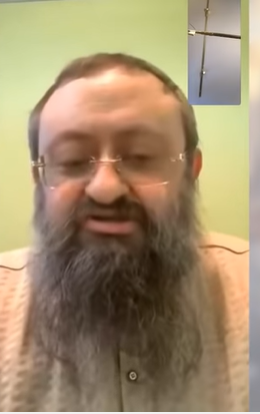
Dr. Vladimir Zelenko,
interview with Rudy Giuliani March 26th,
screenshot from here
There’s a doctor, Dr. Vladimir Zelenko, a family practitioner in New York, interviewed by Rudy Giuliani on his show Common Sense, on March 26th, with some significant anecdotal evidence. (Bill Whittle shares a 15-minute clip of this interview on his CoronaSphere Lounge , Episode11, March 30th, which is where I saw it.)   

In New York, Dr. Zelenko has treated a plethora of coronavirus patients—699 by March 30th. He had been using a combination of hydroxycholoquine with zinc supplements, plus azithromycin. The combination of the three had worked in 100% of sick patients. He only gave the drug to patients already struggling with the virus or who were at very high risk, not the ones who were clearly going to get over it on their own without drugs. Of these moderately severe patients, zero moved into the more serious illness of Acute Respiratory Distress Syndrome, which requires intubation, and from which there’s only a 50% recovery rate. Zero of his patients have died. Three have needed hospitalization with pneumonia; zero needed intubation. The 3-drug protocol takes five days. It’s possible not all symptoms will be gone at that point, but the virus replication has been slowed to the point the body can fight it off without further complication.

Dr. Zelenko thinks that the hydroxycholoquine is not actually attacking the virus. Rather, the zinc is interfering with the virus’s replication process. But the zinc has trouble entering the cell without the hydroxycholoquine. Once the hydroxychloroquine creates a channel into the cell, the zinc enters and does its healing work against the virus. Meanwhile, the azithromycin, an antibiotic, is working on a secondary bacterial infection, which happens when the gunk builds up in the bronchial tubes and lungs.

All total, the treatment is about $20 per patient and can be done in an outpatient setting.

Dr. Zelenko’s results coincide with other doctors using the hydroxychloroquine. In France, hydroxychloroquine had been combined with azithromycin in the lab with 100% success. Doctors in France and South Korea, and also doctors in New York ICUs, were each using two of the three medicines, with moderate success. He used the combination of all three, with significant success.

Note that it was only March 19th when President Trump suggested that the FDA allow hydroxychloroquine to be used in this off-label way, in clinical trials, to treat the virus. Dr. Zelenko offers his evidence on March 26th, one week later. The speed with which we’re getting at ways to treat and test for this virus is remarkably swift.

So a policymaker can look at that, listen to Dr. Fauci, but then say, why not use this on people who need something and have nothing better to try? Would you take it, if it were you? Probably yes. And the more anecdotal evidence we get—despite the lack of a double-blind study—the more likely we are to say “definitely yes.”

[Speaking of “anecdotal" evidence, there’s this piece, possibly worth considering.] 

So, that’s how a policymaker thinks differently from a scientist. We need both. But the policymakers are the ones radically affecting our lives right now, while the scientists do their very important role in the background.

We were told to social distance at first. Then stay home, with nonessential businesses shut down, all of us hoping that doing this for a few weeks would make a big difference.

But it has been that long. And without testing of the whole population—and we need two kinds of tests: to find out who has the virus now, and to find out who has antibodies because they’ve already fought off the virus—we don’t know what’s working. In that black hole of missing data, we’re stuck at home with the economy crashing around us indefinitely.

So, is there another way to tell whether what we’re doing is working? It turns out there is.
I got this chart from Bill Whittle, who has been giving encouraging words lately. He got the info from Kinsa’s Healthweather.us.  

data on fevers, from Healthweather.us

This chart does not show Covid-19. It shows body temperatures. There are companies, such as Kinsa, that make “smart” thermometers. People take their temperature, and their information gets uploaded for mass data purposes. The data has been gathering for enough years that there’s a normal expected range for the months of the year. In our country, body temperatures rise during winter, coinciding with cold and flu season, and then go down to a summer low, and rise back up in the fall. So that’s the blue range on the chart.

If you look at the orange line, and the red dots, you can see the actual data compared to the expected data (the blue). Then look at the dates. When we started radically modifying our behavior, there’s a sharp decrease in body temperature—fewer fevers. That line pretty quickly drops below the expected level. Well below. Not only is the social distancing cutting down new fevers from coronavirus; it’s cutting down fevers from all sources to well below expected levels. In other words, what works to keep from transmitting coronavirus also works to keep from transmitting flu and colds, the typical causes of fever.

Then there’s another chart, showing places, with dates and events added—from the same source at Healthweather.us. This one compares Santa Clara, California, to Miami-Dade, Florida.

fever level comparisons of counties and California and Florida
screenshot from here

They have many of the same events happen, but with Florida most happen somewhat later. What you can see is that the drop off becomes significant after the community makes significant changes, with steepest drops after schools are closed, restaurants are closed, and stay-at-home orders are put in place.

Did something else happen, coinciding with those dates, following a similar pattern in different places, other than the social distancing we’ve been doing in reaction to the coronavirus? I don’t think so.

The evidence is strong that staying at home is having an effect.

Yay, us! We deserve a pat on the back. From ourselves, of course, since we don’t want anyone else getting close to us.

Keep up the good work! But not indefinitely. It’s not time to quit doing what we’re doing yet. But we need to be having a serious talk about when we can go back out—without causing a sudden resurgence, which would be a terrible outcome.

We could use a few miracles—pick any you like:

·       The virus miraculously disappears.

·       The virus greatly decreases in the summer months, affording us time to prepare for a second season of it in the fall—with all the testing and treatments we’ll need.
·       The virus is greatly weakened as it changes—a not uncommon mutation in viruses, which die off quickly when they kill their hosts, so they need to weaken in order to perpetuate.
·       A cure is developed, tested, and made standard for care.
·       Testing procedures—for both presence of virus and presence of antibodies—are quick, cheap, and widely available within the near future and for any future outbreak.
·       We’re so good at staying home and social distancing that the virus stops having hosts to spread to and dies a natural death.

This coming Friday, Good Friday, our Church invites everyone to join us in a worldwide fast. That means, typically, skipping two meals over twenty-four hours. (For example, you eat dinner Thursday evening, and then fast until dinner time Friday evening, when you can eat again.) Prayer during a fast can be more intentional, because you feel your weakness and thus your reliance on God. We hold a monthly fast, and donate the cost of the two meals to help the poor; feel free to do that. This is a special additional one. Note that, if your health doesn’t permit you to go that long without food, you can adjust your sacrifice to whatever you can do; your efforts and prayers will be acceptable to the Lord.

Illustration cred: Josh Asuncion
found on Facebook

In our modern world, there are so many ways we have managed to control the elements, we can sometimes forget our reliance on God. But I’ve had friends point out to me a couple of things. If the Lord wanted to use a calamity for good, how about having more time at home with families? And more, how about having people home together on Passover (Wednesday evening to Thursday evening), and even all Holy Week, including Easter Sunday?

We’ll miss getting together with our kids and grandkids for these days. But we’ve enjoyed some very sacred Sundays, meeting together as just the two of us. And we enjoyed a broadcast of a worldwide conference this past weekend. Spiritually, we’re doing better (dare I say it?)—because of the crisis.

Encouraging words are intended to instill courage. I’m glad we’re getting some of that. I pray it’s enough to fend off any more discouragement.

Thursday, April 2, 2020

What Are the Inalienable God-given Rights?


With the kids home from school, maybe this is a good time for a civics lesson—one they probably wouldn’t be getting (but should) if they were in class. Feel free to share this with them. They might understand more than you’d expect.

Why do we refer to God-given rights, as our founders did, as opposed to government-given rights?

If God is the source of a right, then that is final; no earthly power can take away that right. If it’s not innate, given to us by God simply for being born, then it is given by someone earthly who can take it away. If it’s from god, it’s permanent.

Human history tells us, however, that there are plenty of earthly powers that fail to respect those God-given rights, pretend they don’t even exist, and trample over them—trample over the people to whom those rights belong.

That doesn’t stop those rights from existing; it just means those earthly powers are tyrants—whether governments or criminals.

Governments are established to protect the people’s God-given rights. But government, like fire, tends to spread and burn things it wasn’t intended to burn.

That means we, the people, need to be constantly vigilant, to prevent the spread of government beyond its protective purpose.

America’s founders set up our government carefully. They had certain expectations based on centuries of English Common Law. And, because of the distance between the original colonies and Great Britain, they got used to a lot of self-government. That made it easy for them to recognize government overreach, and they pushed back against it.

If you read the list of abuses of power in the Declaration of Independence, you can see many of the things they recognized as tyranny, which were antithetical to a free people. I went through the list of abuses of power in the Declaration, as a thought exercise this week, to identify the right(s) each complaint dealt with. I didn’t always know how to categorize the complaint, but it was enlightening to find multiple complaints related to the same rights. It shows us what they didn’t like, what they saw as tyranny.


So, what are the rights that they showed were being trampled?

One was that they had a right to the rule of law, rather than ruler’s law. Ruler’s law is whatever the ruler says it is, making it capricious, unfair, and tyrannical. The right to the rule of law is what they’d come to expect for half a millennium, since the Magna Carta. They weren’t inventing something new and then complaining that their monarch wasn’t going along; their monarch was bound by the law—so he was clearly violating that law when he ruled by fiat.

The right to self-rule was another big one. The law the people were subject to ought to be something they agreed to; they have a right to representation, to have a voice in what becomes law. They wanted things to be local, to respond to their actual needs. And they wanted a say in what that law was. They rejected having law imposed on them from high up and far away.

They had the right to equal protection before the law—unlike past tyrannies that favored some classes over others, regardless of behavior. They also mention that justice should be swift, and local—instead of forcing them to travel far from home. And records should be available locally—they had a right to government information, the right to transparency of government.

They had the right to property, and to what is often called the “bundle of sticks” that comprise property rights:  

image from here

·         Right to determine how your property is used—right to control and use property.

·         Right to benefit from the use of your property (as you’d benefit from using the milk from a cow you own).
·         Right to transfer your property to another—by selling or giving.
·         Right to destroy/dispose of your property.
·         Right to exclude others from using, benefiting from, or destroying your property.
image from here

Let’s add to these the Bill of Rights—which are not rights given to us in our Constitution, but our Constitution protects us from having government abridge these rights. All of them come under the broader categories of the rights of life, liberty, and property.

These are five in the First Amendment.

·         Freedom of religion—government can neither establish a state-favored religion nor prohibit from freely exercising their religion.

·         Freedom of speech—government cannot get in the way of people freely speaking their opinions, beliefs, facts that they know.
·         Freedom of the press—government cannot prevent the printing of news and media, sometimes extended to freedom of expression.
·         Freedom of assembly—government cannot prevent people from peaceably assembling, or gathering together with whomever they choose.
·         Right of redress of grievances—government is subject to being petitioned, or sued, when citizens perceive that government has harmed them.

The Second Amendment is the right to self-protection. Here’s a basic difference between a free society and subjects to a ruler. Free people have the right to protect themselves from attack—even using weapons, even causing death in cases in which their life or the life of another is threatened. A subject to a ruler who has abridged this right is dependent on the benevolence of the ruler to provide protection of not. And the ruler might abridge this right particularly to prevent an uprising among the subjects. The founders wanted to make sure that right to self-protection would not be abridged.

The Third Amendment may seem foreign to us today. But in the founders’ time—and this is mentioned in the Declaration—is freedom from having a standing army living among us, including quartered in our homes. Think of it as being drafted into donating your housing space to a military, and in their case a military that was set up not to protect them, but to protect the faraway government’s interests from the people.

The Fourth through Eighth Amendments relate to judicial fairness issues.

The Fourth Amendment is the right to be secure—our persons, houses, papers, and effects—from unreasonable searches and seizures. You yourself, and what you own, are not the government’s possessions for the taking. There has to be a lawful reason for depriving a person of these natural rights.

The Fifth Amendment relates to judicial fairness. It prevents a person from being forced to testify against himself in capital or otherwise serious crime. Also, it prevents a person from being put in jeopardy more than once—a second trial after being found not guilty. It prevents a corrupt government from preventing a person from going about his life by continually putting him in court over the same issue.

 The Sixth Amendment is also about judicial fairness: the right to a speedy and public trial, by an impartial jury in a local jurisdiction. Also, the accused must be informed of the nature and cause of the accusation, to be able to face witness against him, to have a process compelling witnesses in his favor, and to have defense counsel.

The Seventh Amendment is the right to a trial by jury in controversies over a certain minimal amount, and the jury’s decision shall not be overthrown. Also, the rules of common law must be followed.

The Eighth Amendment prevents excessive bail from being required, excessive fines from being imposed, and no cruel and unusual punishments afflicted.

The Ninth and Tenth Amendments are the miscellaneous everything else.

The Ninth Amendment makes it clear that mention of rights in the Constitution does not mean those are all the rights there are. Other rights cannot be denied. The people retain those.

The Tenth Amendment make it clear that any duty not delegated in the Constitution to the United States are duties and rights still held by the States and the people.

The rights that are included in the Bill of Rights reveal ways the founders had experienced tyrants trying to take their rights away, so they thought they needed to be spelled out most clearly—even though they were self-evident and inalienable.

But those last two show they understood that there are more rights, none of which can be taken from individuals except as the just punishment for a crime.

One of those not mentioned is parental rights: to see to the care and upbringing of their children. Another might be making your own healthcare choices.

But, in short, how do you know it’s a God-given inalienable right? It has to be something you’re born with. You deserve it because you’re human. Beyond parents obliged to caring for their child, it must be something others don’t have to be put into servitude to provide for you.