Showing posts with label volunteers. Show all posts

Tuesday, September 5, 2017

Through the Deep Waters

I’ve been away from Houston the past several days, helping out family, as planned well before Hurricane Harvey. But I’ve been following much of the labor and service and heartache, and I’m so proud of my many friends who are reaching out and putting in one heavy-labor day after another, at no cost—simply because it has to be done, and we Texans have compassion for those in need.

Disaster relief comes in stages: preparation, getting through the storm, rescue, mucking out, and then rebuilding. We’re at the mucking out stage now. In some neighborhoods, enough of that has been done to get trucks in to pick up the debris. In other areas, houses still have standing water, and the owners are still waiting to get inside. The longer that takes, the more damage, sadly.

Anyway, as you might imagine, there’s no hiring enough workers to muck out that many homes, and many homeowners are unable to do the job themselves. That means, if it’s going to get done, it’s volunteers who will do it. And that’s what my friends are doing.

So I’ll just share a few of their images that I’ve borrowed from Facebook. I want to note that Mormon Helping Hands aren’t the only helpers. We’re two percent of the population, and no everyone has the right age and ability for this job. Catholic Charities is working with us, and there are many other organizations and ad hoc community groups doing this messy work. But my access to friends who are doing this is mostly Mormon Helping Hands.

This first group is from my ward (congregation) Monday. Similar groups (including many of the same people) have been mucking out homes since late last week. 

Mormon Helping Hands from Copperfield Ward on Monday
Several friends posted this photo, so I'm guessing and
giving photo credit to Janet Taylor


Here’s another crew coming from my church building. Their regular church building got a lot of water damage, so they'll be sharing our building for some time.

Mormon Helping Hands from Bear Creek and Westlake Wards on Monday.
Photo credit to Melissa Willis

And here’s another crew from a little way north. They were lucky to have President Dieter F. Uchtdorf, of the First Presidency (a counselor to the Prophet and President of our worldwide Church) show up for services on Sunday—which were short and followed by work crews heading out to assignments. In every way, it was a special Sunday service.

Cypress Stake Center, which had been a command center
for boat rescue, is now a command center for
Mormon Helping Hands. President Uchtdorf
showed up to join them this Sunday.
Photo credit to Mary Moellmer.

If you wonder what mucking out means, it’s tearing out flooring, moving damaged furniture and debris to the curb for pickup, and tearing out damaged drywall from above the flood line so the insides of the walls can dry out completely before rebuilding can be done.
It looks like this.

Photo credit to Derrick Campos, who hasn't been able to get back in
his own house yet, but has spent the waiting time helping other
people do the mucking out. This is the third time his home has
flooded in recent years. Sometimes life isn't fair.
Another photo from Derrick Campos
This is what's happening inside--cutting out drywall.
Another photo from Derrick Campos
Flooring gets removed inside as well.
Photo from Melissa Willis, who had water up
onto the driveway, but her house was spared.
  
Some friends of mine, the Siebert family, are very talented. Jim Siebert is the meteorologist for the local Fox television station, and he’s the one many of us tuned in to for constant updates during the storm week. His wife, Debbie, is a musician, with a particularly gorgeous voice. They have been doing short Sunday hymn videos for a while—the whole family. They did one this past Sunday. It’s a hymn, “How Firm a Foundation.” It’s a common Christian hymn, although I think many churches use a different tune (“Old Hundredth,” I think it’s called). But they do the one from our LDS Hymns. The fourth verse, which we’ve sung all our lives, has taken on new meaning these past couple of weeks:

When through the deep waters I call thee to go,
The rivers of sorrow shall not thee o’erflow,
For I will be with thee, thy troubles to bless,
And sanctify to thee, and sanctify to thee,
And sanctify to thee thy deepest distress.
The Sieberts used photos from the disaster and cleanup as backdrop to their song. When they get to this verse, they change tempo and tone, which brought the tears when I heard it—for the sorrow of loss so many are feeling, because of literal deep waters; for the generosity and kindness of so many who are helping others in their need; and for the love that we feel from our Father in Heaven, who promises to be with us, our troubles to bless and sanctify.


We’ve said for more than a decade now, when the Lord wants His people to turn to him, He sends a hurricane to the Gulf Coast. Mormon Helping Hands have been active here since 2005, the year of Katrina and Rita. Would that we would all turn to Him without these painful reminders. But bad things happen even to very good people. When they do, our job is to serve God by serving one another.

Thursday, March 30, 2017

Upward Mobility

Here at the Spherical Model, we talk about the interrelationships of the political, economic, and social spheres. Freedom affects prosperity, and both are significantly affected by the civilization level of the people.

I came across a long piece by Megan McCardle for Bloomberg News (I’m estimating 25-30 pages, but online it’s a bit uncertain) about the state of Utah, where I grew up. And the interrelationships are evident.

Let’s start with some descriptions. The story begins with the population: 192,672. That’s the city proper. But that’s not really accurate. That puts it in the range of the Tri-Cities in Washington State (Kennewick, Richland, and Pasco together), which has a small town feel, and not even a 4-year college. The Salt Lake metropolitan area is actually well over a million. And if you extend the area north to Ogden and south to Provo, you’re up to nearly 2.5 million. It’s not as big as, say, Houston, but it’s significant in population size.

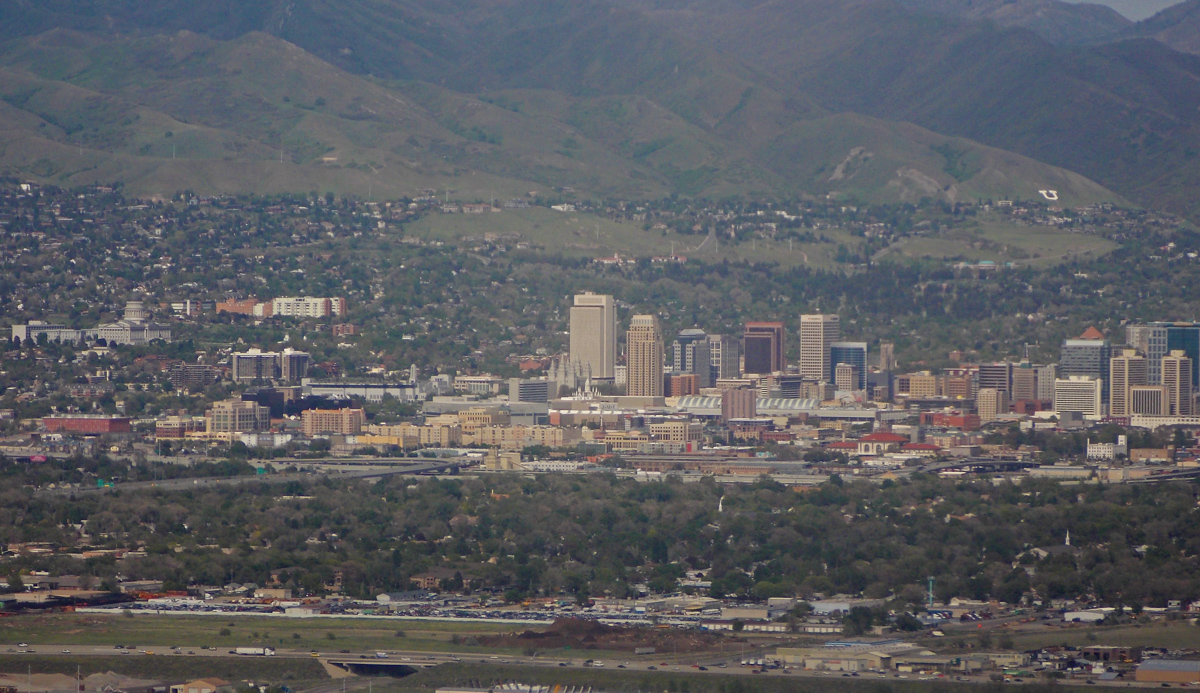
Salt Lake City, view from airplane, May 2014


Salt Lake City and surrounding areas have a high percentage of Mormons, since the valley was settled by Mormons after they had been driven from five previous homes by mobs burning and looting their property and killing them. (The Governor of Missouri had signed an extermination order, which made murdering Mormons legal.) So, it’s no wonder they wanted a place of their own, away from threats, where they could settle permanently.

Going back there, when daughter Social Sphere went to college, she commented, “I’ve never seen so many blonds.” I hadn’t noticed it growing up, but she was right. It’s a little startling after Texas. A lot of the Utah population comes from the northeastern US, plus many from England and Scandinavia (my heritage). So blonds are common.

But there are other notable demographics as well. Hispanics are around 22%. Then there are sizable populations of Pacific Islanders, and Asians (Nepal, Myanmar, Sri Lanka), and Bosnians.

There are only about 2.7% blacks. There has never been a migration of blacks to Utah. There has also never been slavery, and blacks (and women) had the vote all along, before statehood in the 1890s (statehood took away the women’s right to vote for a couple of decades). McArdle asserts that institutional racism is the reason blacks stay away—I have to say that’s an incorrect assessment of the people, and of the Mormons. But I’ll save that debate for another day.

Anyway, some of the comparisons between Utah and other places are like apples and oranges just because there isn’t an underlying racism issue. And another overriding question is, can the things that are working be transferred elsewhere, or is it because of the Mormons?

Upward Mobility

Upward mobility—the American Dream—is more likely in Utah than in the rest of the US. The main impetus of the article is to explore why there is this upward mobility gap:

A child born in the bottom quintile of incomes in Charlotte [North Carolina] has only a 4 percent chance of making it into the top quintile. A child in Salt Lake City, on the other hand, has more than a 10.8 percent chance—achingly close to the 11.7 percent found in Denmark and well on the way to the 20 percent chance you would expect in a perfectly just world.
Government Spending

Government spending isn’t the reason. Utah’s government seems to commit very limited funds for both fighting poverty and for education. “Utah is dead last in per-pupil education spending.” It’s not last in educational outcomes, however. For K-12 schools, it ranks 22nd, but in higher education it ranks 2nd. For overall education it ranks 9th.

They have a surprising solution for homelessness that seems to be working, called “Housing First.” It turns out, if you just outright pay for housing for the homeless, before dealing with the cause of that individual’s homelessness, it’s cheaper and more effective than the crisis-led practice of dealing with them once they show up in emergency rooms.

As McArdle summarizes:

That’s the thing about the government here. It is not big, but it’s also not … bad. The state’s compassionate conservatism goes hand-in-hand with an unusually functional bureaucracy.
Volunteer Help

Besides actually cheerful, helpful government workers, the biggest factor seems to be community involvement, with an army of volunteers.

The volunteering starts in the church wards, where bishops keep a close eye on what’s going on in the congregation, and tap members as needed to help each other. If you’re out of work, they may reach out to small business people to find out who’s hiring. If your marriage is in trouble, they’ll find a couple who went through a hard time themselves to offer advice.
Besides the very local, very personal volunteering, there’s also larger, more institutional helping. Welfare Square is visited by governments all over the country and the world, to see how it’s done, and to see what they can replicate. It’s not just a food pantry; it’s a production facility—actually a network of production facilities: bakeries, dairies, canneries, farms, orchards, and more.

Here in Houston we have a peanut butter cannery producing for Church welfare storehouses in Utah and all over. It’s run by volunteer labor. Additionally, the cannery is used by the Houston Food Bank to produce about 400,000 jars a year for local food pantries. The only jars actually sold are to Mormons buying a case or so for their personal family pantries. All the rest is donated to the poor.

LDS Peanut Butter Factory in Houston


Help from the Church is intended to be temporary. And recipients are expected to do volunteer work in exchange for the help, whenever physically possible. Usually help will be to tide a household over for a matter of a few months, all the while helping them find gainful employment, or head toward the training or education they need. There’s no life-long welfare help in the Church.

McArdle contrasts that with government programs:

This combination of financial help and the occasional verbal kick in the pants is something close to what the ideal of government help used to be. Social workers used to make individual judgments about what sort of help their clients needed or deserved. But such judgments always have an inherently subjective and arbitrary quality, which courts began to frown on in the middle of the 20th century, in part because they offered considerable discretion for racial discrimination.
Turning government welfare into an automatic entitlement based on simple rules undoubtedly made it fairer, and kept people from slipping through the cracks. But making it harder to remove benefits from people who stopped trying also made it easier for people to make understandable short-term decisions which turned into long-term dependence, leaving a significant number of people disconnected from work and mired in multi-generational poverty.
One of the factors in upward mobility is what BYU research David Sims calls “middle classness that’s so broad it’s almost infectious.” He means that young people are exposed to social differences beyond how they were raised. Moving up looks possible. And belief leads to efforts to succeed.

Lots of Marriage, Not Much Alcohol

Mormons contribute some additional social benefits. Mormons don’t drink alcohol, so poverty-related outcomes of alcohol addiction are a much smaller problem in Utah.

Also, Mormons are more likely to be married. We’ve talked about the formula for avoiding poverty in America at the Spherical Model from time to time. That comes up again here:

Economists Isabel Sawhill and Ron Haskins famously estimated that we could reduce poverty by 71 percent if the poor did just four things: finished high school, worked full time, got married and had no more than two children — and the number of children was the least important factor in that calculation.
Salt Lake Temple,
photo from the Conference Center
in the rain, January 2012, by Social Sphere
Marriage avoids poverty not only for the couple as individuals, but also for the children in the next generation. Marriage builds social capital. In areas of the US where it looks like upward mobility is racially caused, “once they controlled for the family structure of the community, that effect disappeared. Marriage seems to have more of a correlation with mobility than race does.”
And not just the families of married parents benefit; neighborhoods benefit:

If you live in a neighborhood full of single mothers who had a hard time finishing school, that’s probably the future you’ll expect for yourself and your own kids. If you live in a neighborhood full of thriving two-parent families, that’s probably the future you’ll envision, even if your own father disappeared when you were 2. Marriage matters at the individual level, but it also matters at the community level, because the community can strongly shape individual behavior.
That sounds just like something we’d come up with here at the Spherical Model. Families are the basic unit of civilization. You need a critical mass of families with intact married parents in order to get out of savagery and into civilization.

Results

So, here’s what you need, if you want Utah’s results of exiting poverty. You need married parents raising families with stability and caring. You need a volunteer force to care for the less fortunate. You need people willing to care for one another, rather than leaving that to government. And you need minimal government bureaucracy that, where necessary, is done with care and efficiency.

You might get that where there’s not a handy supply of Mormons. I’m even hopeful that it is possible. That’s what the Spherical Model shows. But if you need social capital to get underway, it sure is handy to start with a Mormon population.

Wednesday, February 27, 2013

Women Who Civilize

In the last post we talked about some of the special qualities men need to develop in order to contribute to civilization. To be fair, it seems we ought to look at some of the special qualities women need to develop in their contribution to civilization.

I’ve written about the importance of motherhood and women to civilization. Today I think I’d like to look at something specifically connecting economics and civilization, because we count on women to make contributions without remuneration.
Much of the economic debate is limited to the southern hemisphere of the Spherical Model. The statist side (southeast quadrant) believes that people can’t be counted on to earn enough to support themselves, make the best decisions about how to spend any money they earn, and take care of those who are unable to care for themselves (those too elderly, too young, too ill, or too underprivileged). The better parts of the southwest quadrant align with the Atlas Shrugged view, with this creed:
“I swear—by my life and my love of it—that I will never live for the sake of another man, nor ask another man to live for mine.”
At Spherical Model, the economic answer leading to civilization is always a combination of free market plus philanthropy.
Imagine, seriously, if mothers lived by John Galt’s oath. The world would collapse. It is the fatal flaw of Ayn Rand’s philosophy that she eliminates several essential qualities that are part of womanhood. She admires women who are like men: self-sufficient, intelligent, hard-working, entrepreneurial—all good qualities—but also infertile while sexually promiscuous, unsympathetic, and lacking in altruism. Dedicating your life to care for others for the sake of love instead of earning money is anathema to Rand’s world. (I wrote about this in much more detail in a three-part post here, here, and especially here).
The fact of humanity is that there are some people who depend on others through no fault of their own. Children are essential for our future, and any care we give them pays off for the future of us all. But it is usually women who are willing to do the day-in-day-out loving care, forgoing pay to do it.
I do not in any way intend to discuss whether women should be stay-at-home moms. I only know what God led me to do at various seasons, and I trust that other women can listen to God’s voice in their circumstances. Women are intelligent and capable; in today’s world, women are more likely to have college degrees and succeed academically. Woman can make many many valuable contributions to the economy. Nevertheless, civilization depends on the contributions women make without being paid.
While men can and should do many of these things as well, women as a demographic whole are more likely to give emotional nurturing to children, see to the academic progress of children, seek opportunities for social and physical growth and see to the spiritual training of children. While she goes about this, she is more likely to do volunteer work in schools and community organizations.
She is more likely to care for elderly adults. She is more likely to do the cards, letters, and gifts that keep family and friends connected. She is more likely to plan and carry out holiday celebrations. Imagine Thanksgiving if we expected nothing from women except what we pay for.
Imagine what homes would look like if women didn’t take it upon themselves to surround themselves and their loved ones with beauty and comfort. (Example: look at the difference between a series of girls’ dorm room and boys’.)
There are so many talents and abilities women naturally share, abilities we count on, that there’s a problem with women comparing themselves to the best examples in every category and always feeling they fall short, even when their unheralded giving pushes them beyond exhaustion.
Contrary to popular belief, women receive either equal or superior pay for equal work, and have done for some time. Where there seem to be differences, they are because women choose to spend less time at the office so she can spend more time with family and other ways that contribute to quality of life. She is more likely to break up her career for the sake of children. If her child is sick, she’s more likely to take time off from work than the dad is. If there’s a special event in the child’s life, she’s more likely to rearrange her schedule to be there.
Women make men more civilized than they would be without her, just by being part of his life. He’ll also be more productive and successful in his work than he would be without her in his life. Men want respect, and a wife can give him that; women want to be loved and cherished (more than rewarded with money), and a faithful, civilized man can give her that.
According to the conclusion of the Motherhood Study, many mothers understand she “holds a fragile but nonetheless powerful cultural position as the last best defense against what many people see as the impoverishment of social ties, communal obligations, and unremunerated commitments” (p. 42). Women ceasing to value civilization is a quicker route to savagery than men ceasing to value civilization. Economic necessity might require more of women in the workplace, but civilization also requires that she keep doing what she feels the life-giving need to do regardless of pay.
Women, value yourselves for what you do so unselfishly. Men, let her know how valuable you know she is.

Wednesday, September 7, 2011

Ablaze

Texas is on fire. We’re what we like to think of as used to disasters. Usually they’re water and wind related: hurricanes, tornadoes, floods. But we’ve been having a drought for many months, and that means something we’re not used to. 

Here at the Spherical Model household we feel fairly safe in a neighborhood not right next to any forest. The fires grabbed our attention a week ago when a wildfire started in a reservoir about four miles down the road (across a couple of wide roads and didn’t reach subdivisions nearby). Usually this reservoir has water, or recently had water, or will fill up again any day. It’s land set aside never to be built, so that when the heavy rains come, as they commonly do here, we have a quick runoff place. Some of it is just forest primeval, and some is used as park land. Back when the boys played league baseball, we missed a few games a year because the fields were underwater.  

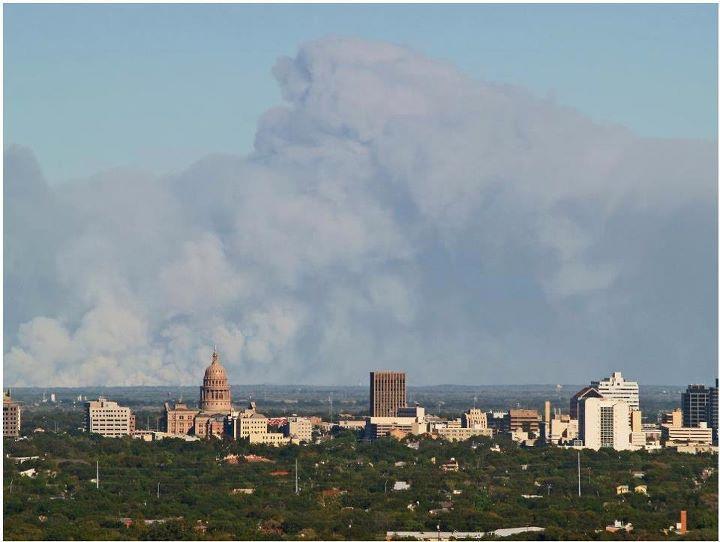
Bastrop fire beyond capitol in Austin
So when areas that are used to water and are full of undergrowth have a long dry season, there’s a lot of dry fuel. Combine that with a populous that isn’t used to needing to worry about flicking a cigarette out a car window or causing an engine spark, and add in the dry winds, which were the tailings we got from Tropical Storm Lee, and we get wildfires like this area hasn’t seen since the 1950s. 

In more rural areas the wildfires have been much more severe than our immediate area. Entire counties have been evacuated. Hundred, possibly thousands, of homes have been lost. 

I do not think we, as a people, are being punished for general wickedness. Far from it. One thing I believe about disasters in this area is that they bring out the desire to help one another. Facebook and emails have kept me somewhat apprised. Below are (slightly redacted for privacy’s sake) posts I saw from facebook friends and email lists.  

“We had to evacuate last night…. My husband and father-in-law are doing some recon right now to see what’s going on. We are staying with friend, and thank God for good friends!  We took our two dogs and two kitties, but had to leave our chickens. :-( 

“We can smell smoke here, but it appears we are out of danger right now. If there is someone/family needing shelter, please call. We will gladly help.” 

“Hey you! I am headed out in the AM to take supplies to the firefighters… wanna join forces?” 

“The high school has enough donations. They are asking people to take bottled water, Gatorade and snacks for the firefighters to the fire station…” 

“I you need safe pasture for your horses due to wildfires in Texas, call Mr. M- D- at (phone number). He has pasture to shelter 60 horses and has trucks and trailers ready to go. He can move 10 horses at a time. Please repost.” 

“M- West Command Center is in need of LARGE ice chests or an upright freezer! Ice is melting!” 

Command Center is in need of lunch meat and deli sliced cheese. We do NOT need bread. Deliver all donations to the Fire Department on R- Road.” 

“I found this website that shows active fires in Texas and U.S. Thought it might help someone looking for a visual.  http://www.wunderground.com/wundermap/?lat=31.48489
<http://www.wunderground.com/wundermap/?lat=31.48489&lon=-100.41504&zoom=6&t "
 

“This may be a repeat post, but I found this site which has a lot of useful links and info related to the wildfires, including maps, advisories, daily situation reports, what to do, etc.: http://texashelp.tamu.edu/004-natural/fires.php "


I did indeed check those links. Several times. Another positive source was one of the local news channels (probably all of them, but I saw this online). More video keeps appearing, but this one (http://www.click2houston.com/video/29100810/index.html ) talks about what’s happening with the evacuees. And they recognize people coming to help. A mother, along with her kids who were out of school because of the evacuations, showed up at the shelter so she could teach her kids how to serve. They gave food and water to first responders, and just looked for ways to be useful. I think that is normal behavior here.

The drought started a chain of wildfires late last year, mostly in West Texas. Governor Perry had asked for a disaster declaration, to get aid, but that went to deaf ears for several months. If I’m remembering right, fires were popping up in April near the time we drove through Odessa, and no disaster declaration was yet forthcoming. But that has happened since then. Resources are being provided. And there does seem to be a fair amount of cooperation between local citizens, volunteer help, trained first responders, and government disaster response teams. 

I saw one brief article (http://montgomerycountypolicereporter.com/?p=31987) expressing concern about federal interference, or pulling rank. It may just be a lot of people under severe pressure trying to do what they think needs to be done. 

In the aftermath, I trust that what we’ll see is a lot of people in various stages of grief, who are nevertheless grateful for those who ran to their aid in their time of need. And until then, people everywhere are praying for rain.


* The photos are all from the Texas Storm Chasers facebook page.