We interrupt our usually scheduled political
philosophy blog for this special announcement:
The Houston Astros won the World Series
It’s worth celebrating. It’s hard to gauge from here at the
current center of the universe, but my guess is that Houston was a sentimental favorite
everywhere this year, because of Hurricane Harvey.
Storm on the left, 'Stros on the right from a friend's Facebook
One Houston Chronicle headline I read this morning said, “Harvey
dropped 51 inches so the Houston Astros dropped the Los Angeles Dodgers 5-1.”
It may not be a cause-effect relationship, but it’s important. Several of the
players had photos in their lockers of Houston homes underwater. They said
that when they had a tough day and felt like slamming their glove into the
locker, they’d see that photo and remember it was their fellow Houstonians who
really had it rough. And they’d resolve to win this for them.
As the Chronicle story says,
The team wore "Houston Strong" patches on their
jerseys, even when some of us felt less than mighty sifting through wet,
damaged memories. The team visited flood victims in shelters, bringing a bit of
blue and orange light where darkness was the norm.
It has been two months now, plus a week, since Harvey hit.
Most of the damage near my neighborhood is no longer visible from the outside.
But friends are still out of their homes—maybe for another 4-6 months—while inside
repairs are underway.
As the team said last night, if they could just bring four
hours of joy on a game night—a little bit of happiness—that’s what they wanted
to do.
from a friend's Facebook*
There was a lot of love coming from the team. And it showed
in their playing. And there was a lot of love back at them. My Facebook feed is
very orange today, with Astros banners. The whole city—and everyone who ever
lived here—is celebrating. The way we felt unified in the face of Harvey’s
tragedy, we feel unified now celebrating with our team.
I’ve never lived in a championship city before. Maybe other
places feel this way with their celebrations too. But, because of what we’ve
been through here, it feels especially good.
2017 has been one for the history books.
No place like home.
I almost never wear graphic Ts, but I want this one.
Springer, who gave us 5 home runs this series, won MVP. And he gave us the term "Springer Dinger," which was yet another of his hits right when it mattered.
Governor Abbott declared Friday Houston Astros Day. Houston schools are closed. There will be a parade.
__________________________________________
*The Houston Astros Day image is from Governor Abbott's Facebook page. The T-shirt is a screen shot. All the others came from Facebook posts, and I do not know the origins, but I don't take photo credit for them.
Hurricane Harvey made landfall near Corpus Christi on August
25th, and made its way north to Houston August 26th,
beginning the biggest flooding event in recorded US history. That was one month
ago today. So I took a drive, camera in hand, to see how things look now,
compared to that crazy day.
Today’s post is mostly a photo essay.
There aren’t any hills in Houston. We use overpasses and
skyscrapers for views. So when you see a little hill like this one, you know it’s
not natural. This is the Addicks Reservoir Dam, not far from the spillway. Most
of the time, it’s just part of the road.
Clay Road runs over Addicks Reservoir Dam
Addicks Dam south of the spillway
Eldridge Parkway goes through the reservoir. During heavy
rain, it floods, and they close it. This has happened maybe a dozen times in
the nearly 20 years we’ve lived here. It’s part of the plan. It was closed until
a few days ago. There’s still water in the reservoir that hasn’t drained yet.
Eldridge Parkway, running through the reservoir, is finally open,
but there's still a lot of water alongside the road.
Bear Creek Park is the alter ego of the reservoir. Our kids
used to play baseball here. There are soccer fields, camping areas, playground
equipment, a lot of forest primeval, and other things you’d expect in a park.
That’s how we make use of the space between floods. It has probably been out of
commission for an entire month several times. We don’t know how much longer it
will still be water instead of playground.
The road through Bear Creek Park is closed
while the park is serving as the reservoir.
Bear Creek Village was one of the worst hit neighborhoods.
For those who think people shouldn’t be building in flood zones, understand
that this neighborhood is 40-60 years old. They probably thought they’d never
flood. But it turns out, when the reservoir fills up with 800-year flood
waters, they do flood.
It took quite a while to get the water out so the mucking
out could be done. Finally now the debris removal is underway. You can see the heavy equipment at work, and some really big
trucks.
Debris removal is underway in Bear Creek Villages
There’s still a lot of debris to pick up.
Sometimes you see stacks of furniture, like this, that
remind you there was a live family that lost all of this.
The post office I usually use is being rebuilt.
Bear Creek Post office before
(Photo from Melissa Willis)
Bear Creek Post Office
reconstruction underway
Closer to my house, you can see more lawn scars—the places where the debris sat before
getting picked up. Some houses are marked with a C or an H. I believe those were put there by rescuers. I haven’t been able to learn what they stand for. Maybe “clear” and “hazard.” I’m not sure. I'm not sure how they remove them either. But that's a minor detail by comparison with rebuilding the home's interior.
In my neighborhood, I was able to do a few side-by-side
comparisons.
After the mucking out.
Same corner after debris removal. Dusty, but looking near normal.
The street the boats went down to rescue people is clear and
dry again.
Where boats launched to do rescues into the neighborhood.
Dry again, and looking pretty good.
This was our entrance underwater, and back to normal now.
Our entrance, once the heavy rains stopped. It was underwater
for about a week. That means those homes were underwater that long too.
Back to serving as a road again. You can't even tell.
The Mormon Helping Hands were still out this past weekend, but we're reaching the end of mucking out. Unfortunately, homes that haven't been able to do that yet may be a total loss. The church where I play music with friends once a week is back to normal today; a week ago it still had refugees sleeping in the sanctuary, and a dog refugee room somewhere at the back (we could hear them). That was a long time for a church to be used. Schools are open, and students have been reassigned to new schools as needed.
So Houston lives on. The streets were designed to flood, as
backup waterways when the bayous are too full. There’s a lot of engineering
that helps this city handle massive amounts of rainfall. But when several feet
(not just inches) come down all at once, even this system is overwhelmed.
What’s amazing, really, is how well the water was handled,
how few lives were lost. And most important was how neighbors, from near and far, helped one
another. Which needs to keep happening for some time yet.
There are a few areas that might not be rebuilt. And there
are plenty of places still in the midst of cleanup—way before restoration. But
what’s surprising is how much has returned to normal for most of Houston, and
how much hope there is that most of us will have our lives rebuilt eventually.
We feel blessed here. So many people showed they cared about
us.
Meanwhile, we’re watching the devastation in Puerto Rico
from Hurricane Maria. We know a missionary there, who was flown out today, along with a hundred or so others. They had been working hard there, but The
island is in desperate need. there wasn't enough food, clean water, or housing for them. They had stayed in the mission office during the storm, packed in together. Most of them were unable to return to their apartments, so they lost all their belongings beyond the change of clothes with them.
There's no electricity. Spotty communication.
Transportation difficulties. Prayers and aid need to go their direction next. That's what good people do for one another.
During Hurricane Harvey, and even since, we have had an outpouring
of concern for us. But our home was never in danger. As I talked about Monday, we’re
just north of the Addicks Reservoir, which filled fuller than it has ever been.
Ever!
We looked at elevations. The spillway was breached about 108
feet. As that happened, and more water just kept coming, there was an estimate
that the level would peak just under 110 feet. Our street level drain is at
about 109. Our house is another foot or two higher. Maybe three feet. With
water already going over the spillway, it couldn’t get as high as we are
without filling every part of Houston lower than about 112 feet.
But it was close. Our usual subdivision entrance has been
underwater since Saturday night. We were concerned that the other entrance
would be closed and leave us on an island with no way out. But that didn’t
happen.
This is usually the entrance to our subdivision. Neighbors were putting up a line of sandbags, trying to keep it from coming up on our side.
They ingeniously filled garbage bags with sand from our neighborhood volleyball court.
During a storm like this, the first concern is personal. Are
we going to be OK? And then comes concern for others. Since we felt fairly
secure, we have been very concerned for many others, many we know that had to
evacuate or suffer damage to their homes. A third of Harris County was
underwater, which is only just today beginning to recede.
We haven’t left home much, because we don’t have rescue
equipment, and it was often better to be off the roadways and out of the way of
rescue personnel.
This is across the main four-lane road separating the upper and lower parts of our subdivision. I usually take this route to go to the neighborhood pool. Only high profile vehicles could navigate this relatively shallow part of the main road. The neighborhood roads are for all-terrain military vehicles or boats only.
These rescuers are launching from the 4-lane road so they can go down into the neighborhood. By Wednesday, people who thought they could stay might be ready to get out.
But that idleness leads to a sort of survivors’ guilt
anxiety. It is better to be out doing something meaningful. My prayers had included
being guided to know what to do to help.
Yesterday we again took a walk to our entrance, and down the
main street along our subdivision fence. The water was a bit higher than the
day before. And boats and military vehicles were still doing work to get people
out. There are people who would have stayed in an upstairs floor, where they’re
safe, but then after a day realize they’d better get out.
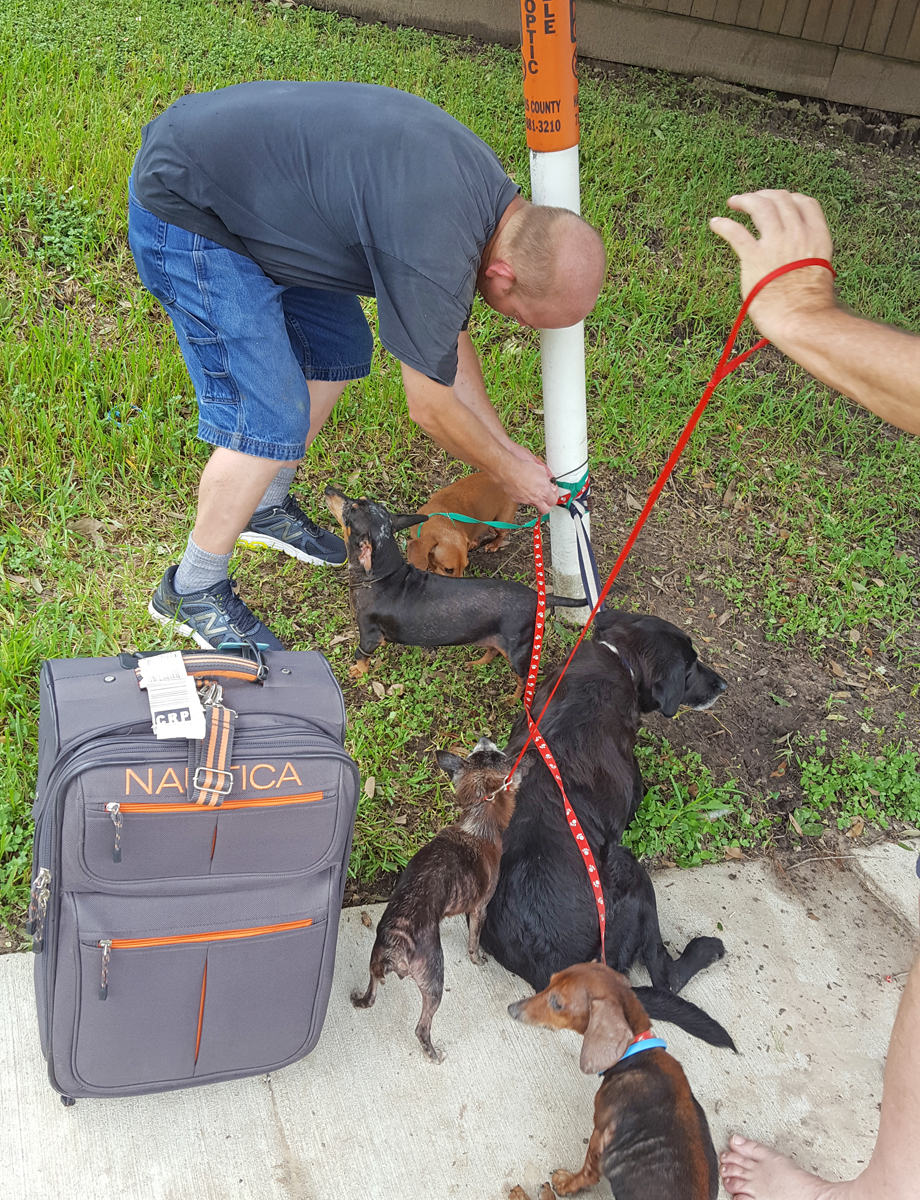
As we were walking, we came upon a man sitting on the grass,
with five dogs: a Chihuahua, three Dachshunds, and a Labrador. At first we
thought he was just out walking the dogs. But as we talked, we learned he was displaced
from one of those flooded houses across the street. We ended up driving him out
to Katy, and learned more of his story along the way.
We found Dean and his dogs sitting on the grass, just up from all that water. They took a boat ride out just a couple of hours earlier.
His name is Dean. He had spent the night in a shelter at St.
Maximillian, a Catholic Church about five miles away, where he reported they
treated him very well. The rising waters sort of sneaked up on him, he said. He
owns another house in Rockport, where the hurricane landed, and he’d been paying
attention to that, and worrying about both the house and his friend who was
living there. It’s a 100-year-old house they had just finished renovating. (It
survived, by the way, while much of Rockport was completely flattened.)
That would have been how he spent Friday and Saturday. It
was Saturday night when the torrents really hit in Houston. He hadn’t been that
concerned, because he hadn’t flooded during the Tax Day Flood last year, even
when several streets of homes near him had. That was 15 inches of rain. How bad
could this be?
Then, all day Sunday the waters rose. Monday, water was
still rising. By Tuesday he had water in the house. Who knows how long that
water is going to stay there, waiting to drain? His house is, for now, part of
the Addicks Reservoir.
Tuesday he saw a military vehicle going down the street, and
he realized he’d better take the chance to get out. He had no time to take anything
with him. He set up the house so the dogs would have food and water upstairs,
and he left for the shelter.
Then on Wednesday he came back to see if he could rescue his
animals. On the way in, he had to wade through chest-deep water for about half
a mile to get to the house. Inside was a mess, but the dogs were upstairs and
safe, just worried. He had to wait for an animal rescue boat to get them out,
because there was no way to carry all five, and the water was too deep. The Labrador
might have been able to swim, but the little dogs—two of whom were pretty old—couldn’t.
So they waited for the boat and got on. Fortunately, he was able to take one small bag with him this time.
But then, once out, he had no transportation. And he realized
that he had left his cell phone in his back pocket, so it no longer worked. He
had planned to end up in his ex-wife’s and daughter’s house, but he hadn’t
memorized the phone number; he always depended on his phone to remember for him.
Dean hesitated to ask, but he ventured to see if we had a
vehicle that he could put dogs in. We do. We’re dog people, even though we don’t
own one right now. We were going to go back to the house with him, to see if we
could find the phone number on a computer. But it was about a mile walk back,
and those little dogs have very short legs. By the time we got to the open
entrance, Mr. Spherical Model decided he’d leave us there and walk quickly back
for the car.
In our haste, we didn’t think to bring water or food.
Afterward we learned he had been sitting there with his animals for probably two
hours when we came upon him. He hadn’t eaten since breakfast at the shelter. We’re
sorry about that, Dean.
I-10, also called the Katy Freeway, was at a near standstill. This was on a low traffic day. So glad we hadn't been expected to evacuate the whole city on this road, even though it's maybe the world's biggest freeway.
The drive to Katy usually takes about 25-30 minutes in good
traffic. We had to go out of our way, since the usual route was right through
the reservoir and will be underwater for probably the next couple of months. We went east to Beltway 8, south to I-10, and then west toward Katy. And
then hit traffic. There was an accident slowing traffic almost as soon as we
got on the freeway. And then traffic slowed because water on the road was
taking up a couple of lanes. So it took about half an hour to get past that
section. The rest of the way was clear, and we dropped him off safely.
Dean isn’t a neighbor we’d met before, even though we’re
within a mile, and are essentially part of the same subdivision. At first he
seemed a bit muddled, and was having a hard time explaining things or making
decisions. Eventually, though, on our way, we learned about his work (in real
estate and related work), and he seemed to be thinking clearer. It helped that
the answer of where to go and how to get there were finally answered for him.
I wrote down for him the hotline numbers for the LDS Mormon
Helping Hands, Catholic Charities, and others who will work together to do
recover volunteer work once people can get back into their homes.
South of the Addicks Resesrvoir, water had covered the much lower feeder road and, despite all efforts, had taken out a couple of lanes of I-10.
Eventually Dean will be OK. And we felt better because we
had found a meaningful way to help. It was only one person (and five dogs), and there are tens of
thousands of displaced people. I was reminded of the parable about the starfish
left on shore when the tide goes out. You can’t save them all, so why try?
Because it will mean something to the one you can save.
On our way home, we stopped by a restaurant where Mr.
Spherical Model has been doing performance consulting lately. They had taken on
a little water and were replacing a piece of carpet. But they were due to open
the bar with limited food today, and a limited dinner menu by Friday night. In
the meantime, they were making soup and bread to take to shelters. They’d done
that the day before and were just getting ready to provide food for up to 300
people being sheltered at nearby Cy-Fair Lone Star College, where several
smaller shelters had been consolidated. The workers were upbeat and willing,
and excited to be doing what they do best—feeding people.
It will be a while before Houston and surrounding areas are
back on firm ground. But spiritually, Hurricane Harvey showed that so many
Texans have been on firm ground all along.
We’re in Houston. We’re still OK. It’s still raining.
It’s the fourth day of Harvey, although we only got
sprinkles on most of Friday. The winds of Hurricane Harvey did most of their
damage Friday night further south, toward Corpus Christi. Entire towns were
laid low. Rockport hardly still exists. But very little human life was lost,
because people evacuated.
Hurricane Harvey, photo National Weather Service
Wind has not been an issue here in Houston, with the storm
downgraded to a tropical storm, but it is stalled and swirling. It is rain like
we haven’t seen here—or anywhere—since, maybe Noah. (I’m thinking it must have
been challenging for Noah and family to have this downpour for ten times longer
than we have faced so far. Although they were probably occupied enough with the
animals not to obsess about it much.)
Houston is built for floods. The city is at about 30 feet
above sea level and very flat. So we have a canal system in and around every
neighborhood to take care of runoff. It’s called the Bayou City, which sounds
better than the Drainage Canal City. Also, there are areas set apart as runoff
reservoirs. Just south of us is the Addicks-Barker Reservoir. In normal times,
it’s a very large park, with baseball and soccer fields, camp sites, a tiny
zoo, and lots of biking trails. When it rains, it becomes a lake.
Sometimes
water flows onto nearby roads, and traffic gets diverted to alternate routes for
a while.
This setup handled Tropical Storm Allison in 2001, Hurricane
Rita in 2005 (two weeks after Katrina), Hurricane Ike in 2008, the Tax Day Flood of 2016.
Actually, the Tax Day Flood—before hurricane season, just a
freak storm—showed us the limits. This is like the Tax Day Flood day after day.
Last night Harris County officials decided to open the dams, for a controlled
release. It will relieve some of the water rising on homes near the reservoir,
but endangers more places downstream. But if the dam were to be breached, an
uncontrolled release would affect those downstream locations even worse. During
a press conference a newsperson asked about that, because it looks like officials
are choosing whom to flood. But the official just looked at him and said, “Downtown
is already flooded.”
Downtown Houston before and after the flood
photo found here
It was surprising how quickly we got back to normal after
that April 2016 flood. Water drained. Much of the building material was
designed to handle that and was quickly cleaned and serviceable. I don’t know
how long recovery will take this time. Water is higher. It’s staying longer.
Downtown could take longer.
Many of the homes affected last year went through a
months-long recovery process, and homeowners have probably felt uneasy this entire
hurricane season. Many of the same people are being affected again. As well as
many who were a close call last time.
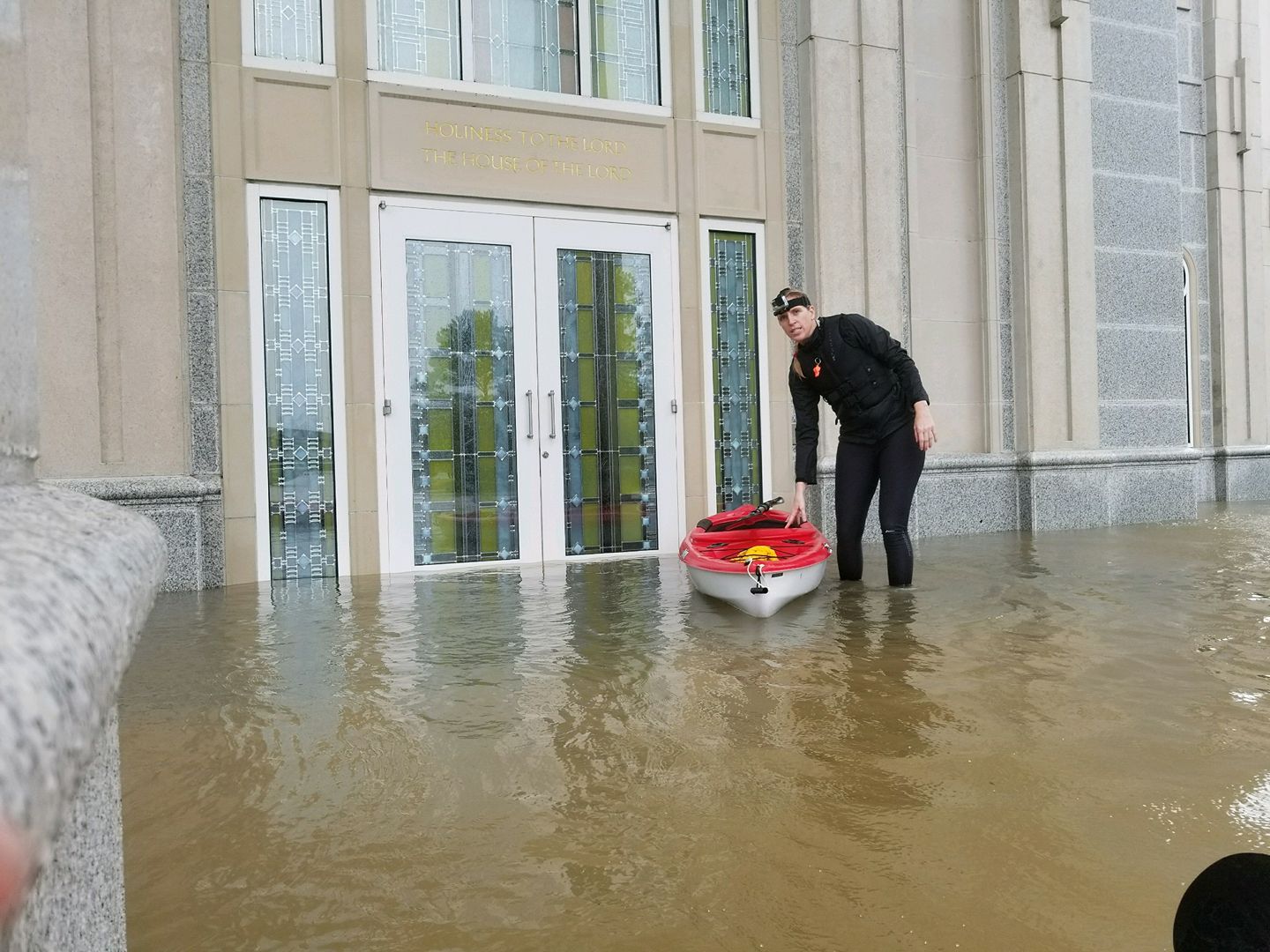
This is the front door of our beloved LDS Houston Temple
photo courtesy the Haines family,
more information here
Usually we worry about areas closer to the coast, in southeast Houston. This storm is big enough to affect the full circle around the Greater Houston Area. And that’s a big area—bigger than Rhode Island, and twice the population of Manhattan. Random places are affected that haven’t been hit before. And it is an unimaginable amount of water. (This Washington Post story tries to give perspective.)
At our home wee’re at 30.12 inches since the storm began. We got 15
inches in the Tax Day Flood. We got more than 15 inches the first 24 hours of Harvey, but
we’re only getting about 9 inches a day since. Whoever thought saying “only 9
inches of rain” would make sense? I've been obsessed with the Harris County Flood Warning System site, which is full of useful graphics and data.
What I’m trying to say is, this isn’t in any way the fault
of people who have built in high-risk areas, or who have done less than they
should to take precautions. We have learned with every storm, and have gotten
better at handling floods. I’m very grateful to both government and private
citizens who are going out of their way to rescue and care for people.
Loss of life count on this fourth day is at three confirmed,
including where the Hurricane made landfall—or maybe five in some reports. [While I was writing this, a family of six was washed away in their car. Surely the count will go up a bit.] Each
of these is important and unfortunate. But at this point 2000 people had lost
their lives in Katrina. That difference is stunning.
Looting has been minimal. A story I read yesterday reported
two shootings of home invaders, one killed. And the story pointed out that
there are 22 million guns in Texas. So, unlike New Orleans after Katrina,
looting here is not profitable.
There was no panic to evacuate. Those who needed to evacuate
have done it orderly, as needed. More evacuations are happening, including
long-time friends of ours this very afternoon. This evening evacuation orders
came out for subdivisions just across the main road from us, and just to the
west of us. (Actually, our subdivision has been mentioned, but as a warning,
not mandatory, if I’m understanding correctly.)
Our church doors have been opened to about a dozen families.
Downtown, the George R. Brown Convention Center is taking in 4800 refugees.
Somewhere around 30,000 (estimates keep rising) have been evacuated. Thousands
are being rescued in boats and by Coast Guard and Navy helicopters. I heard
about a search and rescue team from Utah that traveled here to find and save
people in trouble. And people with boats have answered the County Judge’s
request to go out in neighborhoods to collect flood victims and transport them
to shelters.
People who are dry in homes are asking how to help [some
suggestions here], and where they can take donations of
water and other basic needs. We’ll get more of those as people can be certain
they’re safe to go out.
We went out to the Kroger one mile from home—our first time
out in the car since Thursday. Some water was on the main road, and pretty deep
the direction we weren’t going. But we got what we needed—except eggs, which
were not to be found. No bread or water on the shelves, but we have enough at home, and we covered the rest
of my weekly grocery list. People were orderly and cheerful, including our
checker, who was uncertain whether she would have to evacuate later today.
We’re about five miles north of the Addicks-Barker Reservoir
area. And our elevation is just above the top of the levee. I think we’re going
to ride this out without damage. We’ve had power the whole time (except for a couple of momentary blips this evening). A tornado
touched down about five miles west on Saturday, but tornado alerts are much
fewer now.
Social media has been very helpful. We’ve been able to check
in on one another, and get word out that we’re safe. We’ve been able to share
photos and information.
It is touching how many people are sincerely praying for us
here. People have called and texted to check in on us. Our church does that; we
try to make sure everyone is accounted for and needs are assessed. And once
that is settled, the next question is, “How can we help?” We’re organized that
way. But, really, all of Houston has developed that attitude.
Thank you if you are praying. Thank you if you are looking
for ways to help. I’m sure there will be the need for help with recovery for
some time to come.
Someone posted a comparison to Charlottesville, or Berkeley, saying that Houston, with people rescuing one another, is the real America. It’s full
of love and caring. And we can feel God’s spirit with us as we get through this
unprecedented disaster.
SWAT team member rescues woman and her 13-month old
photo found here
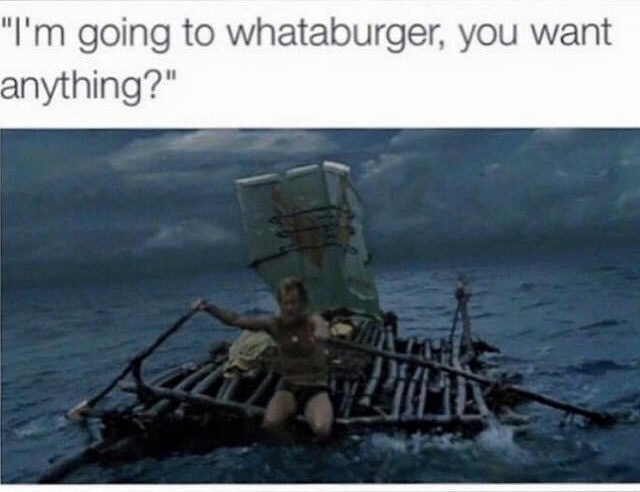
As Houston Mayor Sylvester Turner pointed out, even in this
dire situation, people have maintained their sense of humor.
Here’s one example.
I found this on Facebook, but it may have come from here.
And here's another:
I found this on Facebook, but I don't know who to credit.
Again, we personally are among the blessed ones still safe and dry at home, for which we are grateful. We are mindful of our many friends and neighbors who will have some big challenges rebuilding their lives after the rain finally stops. Please keep the prayers coming.
It’s tax filing deadline day—an extension from the usual
April 15th. We’re having a flood here in Houston, from storms all
night long. Several hours during the night we got 2-3 inches of rain per hour.
In our neighborhood we got 15.6 inches overnight, double what we got during
Tropical Storm Allison. The nearby bayou went over its banks; it’s a 500-year
flood level. Our neighborhood, relatively new, is built up several feet about
street level, so we’re safe. But a number of neighbors and people we know from
church have some flooding. And the main street we have to take to get out of
the neighborhood has flooded.
Houston's Tax Day Flood photo from Houston Chronicle reader, here
This afternoon we’re having a bit of a reprieve between
storms that are predicted throughout the week. That should give the water a
chance to flow into the reservoirs down the road. We’re the bayou city for a
reason; bayous (i.e., drainage ditches) are in and around every neighborhood.
Because heavy rains happen here. So we’ve planned for them. And, when whatever
we do is not enough and flooding happens, we dig in and help each other out.
There ought to be some metaphor in here about taxes. One
might be that we’ve been suffering something of an economic catastrophe since
around late 2008—that’s eight years. At last there are signs of the bad stuff
letting up in the not-too-distant future.
I’m looking at the possibility that we could get lower
taxes, simpler taxes, higher growth—all the things that happen when the
government gets out of the way. These things might just happen, if we get the
Ted Cruz tax plan.
It’s a simple plan. He put out an ad this past week,
explaining it in one minute:
On Friday Ted Cruz appeared on CNBC’s Squawkbox, where he
talked about his tax plan with Joe Scarborough and team. It was a good
opportunity to hear what the outcome for the economy will be of this simple
plan. So I’m sharing a few portions of it.
Joe Scarborough starts the conversation asking about
economic growth.
Ted Cruz: Growth
is foundational. My number one priority is growth. Every other problem we’ve
got, whether it’s unemployment, the debt, the deficit. Whether it is
strengthening and preserving social security and Medicare, or whether it is
rebuilding our military and keeping us safe—you’ve got to have growth to make
it work. And we have been trapped in stagnation for the seven years. And if we
don’t turn that around, nothing else gets fixed….
Historically, since WWII, our country has grown an average of
3% per year. And yet from 2008 to today it’s averaged only 1.2% a year. If we
stay at… this level of growth, these problems are not solvable….
My economic agenda is focused very directly on growth,
because if you get back to historic levels, 3, 4, 5% growth, suddenly the
federal government numbers turn around dramatically….
Joe S is concerned about what looks like a global problem
and asks about that. Ted Cruz responds with examples from history, from
Coolidge, to JFK, to Reagan, where the right policies turned things around.
TC: Taxation
reform and regulatory reform are the two most potent levers that the government
has. In the 1960s, John F. Kennedy did the same thing. In the 1980s Ronald
Reagan did the same thing. We have three periods in the past century, the 20s,
the 60s, and the 80s, and in every one when we passed tax reform and regulatory
reform, when we reduce the burdens of government on small businesses—and small
businesses are critical; they’re the job creators; they’re the innovators;
they’re the catalysts—the result has been record-shattering growth. We just
need to do what works.
At 13 minutes in, Ted Cruz gets to describe the actual tax plan.
TC: My tax plan is
simple. It is a simple flat tax. For a typical family of four, for the first
$36,000 you earn, you pay nothing. Zero income tax. Zero payroll tax. Nothing.
Above $36,000, each marginal dollar you pay a simple flat tax of 10%.… Everyone
pays the exact same….
Another difference, by the way, no longer do you have any
differential rates between ordinary income and dividends or cap gains…. Everything’s
10%, which means people actually allocate capital based on where it’s efficient,
rather than on what the tax laws say, because the tax laws are neutral to
everything.
And then, on the business side, we abolish the corporate
income tax. As you know we have the most punitive corporate income tax of any
developed country in the world. We abolish the Obamacare taxes. We abolish the
payroll taxes, which are the single biggest tax most working Americans pay. And
we abolish the death tax, which is a tremendously unfair and punitive tax on
farmers, on ranchers, on small businesses. And we replace all of those with a
simple 16% business flat tax.
And the effect is an incredible catalyst for job creation and
wages going up, and bringing jobs back to America. That’s my priority:
high-priced jobs coming back to America, wages going up for everyone.
When government people score a
plan, they give a number on what it will cost. But they assume the tax cut will
do nothing but reduce government revenue. That is called static scoring. Ted
Cruz gets to talk about that, and offers a more likely dynamic scoring
scenario.
TC: I suspected
you might say that, so I actually printed out a comparison of tax plans that
was done by the Tax Foundation. The Tax Foundation is a nonprofit…. It is
nonpartisan, and it scores everybody’s plan. If you look at it the way they
score it, in terms of the cost—Now, the static cost is $3.6 trillion; that’s a
lot of money. But scoring it static is assuming that cutting taxes has no
impact on the economy—that doesn’t make any sense. I mean, that is an
Alice-in-Wonderland scoring.
If you score it with dynamic scoring, which is, you take into
effect what is going to happen when you cut taxes, then the total cost of this
plan is $768 billion. It’s less than a trillion. If you contrast that, for
example, to Donald Trump’s plan, Donald’s plan costs over $10 trillion. So mine
is less than a trillion…. And the difference is, even though Donald’s is more
than ten times as expensive as mine is, my tax plan produces more economic growth.
4.9 million new jobs, coming from this capital investment, increases 44%.
One of the big reasons is that any business, when you invest
in capital, it’s immediately deductible. No longer do you have complicated
depreciation tables. None of that matters. If you make a capital expenditure,
you immediately expense it. That is a powerful catalyst for growth.
And then, the most exciting thing about it is just the impact
on after-tax wages, take-home pay. Every income group, from the very poorest to
the very richest sees a double-digit in after-tax pay. The average family in
America under the Cruz simple flat tax will take home $7600 dollars more. Seven
thousand six hundred dollars. That’s real money that makes a difference for
someone struggling to make ends meet
Around 34 minutes into the conversation, Joe Scarborough brings
in economist Art Laffer. Laffer, best known
for the Laffer Curve, advised Reagan back in the day, and
has helped Cruz in developing his plan. He is asked whether he can verify this
“dynamic scoring.”
Art Laffer: Of
course dynamic scoring’s the right way to do it, Joe…. I did watch the other
segment. I thought Ted did a great job of explaining exactly how it works and
what the dynamics of it would be—except that I think he underestimated the
dynamics that will occur.
If you look at his tax plan, it makes Reagan’s tax plan look
weak, in the 1980s. I would expect to see a greater growth rate, not only
because Obama is worse than Jimmy Carter, but because this tax plan is even
better than Reagan’s. It’s would take the top rate down to 16% on businesses
and 10% on individuals. And I think you’ll get growth rates higher than
Reagan’s, which were enormous, Joe. You’ve got 6, 7, 8% real growth annualized
on a quarterly basis in the years ‘83, ‘84. And in a number of the quarters
you’ll get more than that. Our economy is relatively much worse off than it was
even under Jimmy Carter.
There’s some discussion about the excuses, relating to the
Fed, about why this recession is supposedly different from all others, and then
Ted Cruz is brought back in.
TC: I agree with
Art that the numbers that were estimated, if anything they’re underselling the
GDP impact. My object is a minimum of 5% GDP growth. And I would note JFK, when
he campaigned, he campaigned promising 5% GDP growth, and he ended up producing
5% GDP growth.
AL: And the tax
revenues were much higher too. He went into surplus because of economic growth.
TC: That is
exactly right. And the wealthy ended up paying more. When you cut the tax
rates, the wealthy paid a higher percentage of taxes.
Art, tell us, what would the impact be on the economy? What
would the impact be on working men and women, if we had four years or eight years
of 5% GDP growth, instead of the stagnant 1 and 2% we’ve got right now?
AL: Well, the
impact would be huge. I mean, the biggest driver of tax revenues, Ted, is GDP
growth.
But what very few people have talked about on your plan, and,
if I may, is the revenue impact on cities, counties, local districts, and state
budgets would be enormous as well. And no one’s even looking at that.
The impact on income redistribution would be also huge. I
mean, John F. Kennedy put it so beautifully—you referred to Kennedy, and he was
my hero—John F. Kennedy said the best form of welfare is still a good high
paying job. And creating those jobs will reduce inequality dramatically. And
that will lead to more prosperity everywhere.
So you’re going to have much higher revenue impact. I think
you’re going to get even higher growth rates than 5%. And you’re going to
reduce inequality. What’s not to love in this plan?
Indeed. What’s not to love?
But would those good outcomes really happen? I think they
would. I remember the Reagan years, which is helpful. But I think hearing from
business people is helpful. I came across a five-minute video by businessman/speaker Ryan Moran, in which he talks about the so-called “fair
share” he has to pay. He holds up a check for $170,000 he’s
paying in taxes. This is not his tax bill; he paid the estimated tax in
December. This is just the overage, by which he was off. He explains a bit
about what he’s paying. And then he talks about what he could do with that
money.
Now what could a businessperson do with $170,000? You know
what I would like to do? Hire more people. I’d love to hire three highly paid
people at $55,000, or five people at $35,000. But I can’t. ‘Cause it’s going to
the government…. I’d love to put it back into a business, or back into people….
So the government can’t just create things out of thin air.
It has to take—it has to take— from
what would be productive: hiring people, investing into more products and
services, creating better experiences for customers, putting into a college
fund for my ten-month-old daughter. Any of that would be a better use.
But, no. People got to pay their “fair share.”
It’s not just speculation. People really do make better use
of their money than government does.
I like that a 10% flat tax is pretty similar to what God
does, with tithing. Let’s limit what government takes from us, and limit what
government does with the tax money it gets—to the powers enumerated in the
Constitution.
Let the government-caused catastrophes end. And then watch us
thrive.
Houston; we have a problem. It’s the mayor, Annise Parker.
She’s notable for being the first openly homosexual mayor of a major US city.
The thing is, she ran, a known democrat for the nonpartisan position, as a
sensible businessperson ready to rein in overspending and implement common-sense
policies. She claimed to be able to clean up a number of money mismanagement
areas left over from Mayor Bill White—also a democrat who had run as a
businessman who cared about money management rather than liberal ideology, but
who then went on to mess up the budget and follow liberal ideas like being a
sanctuary city for illegal aliens.
So Annise Parker did not run as either a liberal or as a
homosexual. In fact, I was not even aware she was a lesbian until the week
before the election. And when that information came out, in the context of the
rest of the campaign, it didn’t seem relevant. Houstonians didn’t elect a
lesbian mayor; they elected the candidate who convinced them she would be most
effective for the city.
I live a mile outside the Houston city limits, so I don’t
vote in city elections (nor do I have to suffer additional city taxes). While
the city leadership affects all of the Greater Houston Area, it’s less relevant
when we don’t actually live in the city. There was a Republican opponent (and
others), but I don’t remember who. In Houston, as in pretty nearly any urban
area, getting the least liberal democrat is about the best you can hope for. So
I looked on, hoping she wouldn’t be too bad.
Then, the moment she got elected, the big news was that Houston
had shocked the world by not being bigoted against a lesbian in their mayoral
election. Hmm. And she has been much better at pushing the LGBT agenda than
getting Houston’s fiscal house in order. Practically every time she’s in the
news, it has something to do with her lesbianism, rather than her caretaking of
the city.
The big one this past several months has been policy
purportedly for “fairness” toward transgenders. In June, she pressed a bill
through the city council (so, not entirely her fault, but wouldn’t have
happened without her pressure) what is referred to as the “bathroom bill.” The
city created transgenders as a protected class, and one cannot do anything to “discriminate”
against a protected class. In this case, transgenders get to choose which
public restroom to use on any given day, depending on which gender they feel
like that day. No matter how they may dress, one cannot question whether they’re
inappropriately in the wrong restroom.
There’s an ick factor involved in having a six-foot-three obvious
male, either dressed as a male or a female, in a women’s restroom. But it’s not
so much with transgenders that the public has a problem. It’s sexual predators.
No one is allowed to ask, or suspect. So if an obvious male appears in your
women’s restroom, you must accept his presence or be subject to prosecution for
going against the city ordinance that is intended to prevent transgenders from
feeling uncomfortable (regardless of any discomfort they might make you feel).
So that tells predators, “You can go into women’s restrooms and prey upon
unprotected females, and no one can question your being there.”
The problem was brought before the city council and the
mayor. They dismissed it as just more bigotry against LGBTs. That scenario,
they claim, might never even happen.
But for some reason the public doesn’t trust them on that.
Imagine you’re a dad with a 9-year-old daughter who needs to use the restroom.
You let her go in, and you stand outside the door. Then, following her in is a
burly, obvious male. What do you do? Follow the guy in and stand guard for your
daughter? One thing you don’t do is think, “Oh, the mayor says I shouldn’t
worry, so I’m sure my daughter is safe enough. I'd much rather risk my daughter's safety than risk hurting the feelings of a possibly transgender person.” The mayor is expecting the
public to go against human nature. But, then, she’s not a father, and neither she
nor her “spouse” can ever be.
There was a huge public outcry against the policy. Some
55,000 signatures were collected from the public in a referendum demanding
repeal; only 17,269 signatures were required. The Houston City Secretary and
staff counted the signatures, and when they got to 19,177, they validated the
count without going on, since the threshold had already been surpassed.
But then the mayor decided to look into the
validity of the signatures. Among the certified count were enough disqualified
signatures (didn’t contain adequate information, or didn’t qualify as city
residents) to drop the count to around 15,000. Without counting the additional
30,000+ signatures, the mayor threw out the initiative as invalid. In other
words, she acted like a dictator and unlawfully overruled the people with her
own dictates. Just like any other petty dictator.
A coalition was formed to sue the mayor over the issue,
referred to as Woodfill v. Parker. (Lawyer Jared Woodfill was until recently
the Harris County Republican Chair. He's on the legal team for the suit.)
This week the news got out that, in the city’s defense against
the lawsuit (using taxpayer dollars), she has subpoenaed certain information
from five area pastors. These pastors are NOT part of the lawsuit. They are,
however, outspoken opponents of the mayor’s “bathroom bill,” (among 400 or so
who took a stand against it) and sometimes against the mayor’s more general
LGBT activism.
To be clear, in defense of a lawsuit, one can gather
information from many places, including from witnesses that are not part of the
lawsuit itself. Her seeking information from these particular pastors is not in itself illegal.
But the overly broad request is a
bit shocking: "All speeches, presentations, or sermons related to HERO
[what the Mayor calls the ordinance], the Petition, Mayor Annise Parker's
homosexuality, or gender identity prepared by, delivered by, revised by, or
approved by you (the Pastors) or in your possession."
What she wants to know specifically is, did the pastors, or
their surrogates under their approval, request that their congregation members
sign the petition? She wants to claim that this would disqualify the churches
for getting involved in politics.
But that, in itself, is a misunderstanding of political
participation. Churches generally (not technically prohibited by the Constitution, but by
recent readings of it by SCOTUS) aren’t allowed to choose parties or candidates
to support. But issues—particularly issues related to religious beliefs—are always
fair game. Always! Putting abortion, or “same-sex marriage,” or various family
laws, or prostitution or public nudity, or location of bars, etc., on the ballot
does not place those issues out-of-bounds for churches to talk about. That
would be an absurd approach to religious freedom.
But absurd is the typical approach of Mayor Annise Parker
and others who think they have the only acceptable beliefs—the intolerant.
There are a couple of other absurdities here: the sermons
were already offered publicly. And sermons are not necessarily written. This is
similar to subpoenas made by the IRS to True the Vote and King Street Patriots—requiring
they detail, in writing, every person who spoke and every word spoken at meetings—where people
get together to speak their minds—not typically written out, and not expected,
in most cases, to be recorded. So, is it because Parker and her people don’t have
going-to-church experience? Or is it less about gathering information and more
about squelching future speech? As with the IRS, it looks like the latter is intended.
Already she has backed off the original subpoena—because of
pressure, and bad press. She claims she wouldn’t have worded it the way her
lawyers did. (The broader elements of the subpoena have been changed to more specifics, but the subpoenas are still in process.)
She’s still defending her behavior:
·Forcing the “bathroom bill” on the people of
Houston (and anyone who works there or visits and might need a public restroom).
·Illegally throwing out the validated signatures expressing
of will of the people.
·Defending her position, using taxpayer dollars,
against the people’s will, by attacking pastors in their churches.
So, while she isn’t, at this point, “monitoring” churches to
make sure they don’t say anything she doesn’t like, we can probably assume she’s
bigoted enough against religious people (or anyone who disagrees with her) to
quash religious speech is she could. Ironically, she does it in the name of
tolerance.