Showing posts with label Arlenes Flowers. Show all posts

Monday, July 9, 2018

First Amendment Theme for the Session


The Supreme Court’s term ended at the end of June. That means it’s a good time of year to take a look at their recent rulings. There was something of a theme this first term with Justice Gorsuch on the bench. There were a number of rulings related to the First Amendment. And mostly it turns out the majority, by a thin—and stretched—line, supports what our Founders thought of as God-given, self-evident rights.

image from here

Remember, the Bill of Rights wasn’t included in the original Constitution, not because those were afterthoughts, but because they were so well accepted as obvious that they didn’t require being spelled out. But some of them, including George Mason, Governor of Virginia, who had been a major contributor to much of the Constitution, decided they’d better include that Bill of Rights—in case there came a time when the people didn’t have the same understanding as the Founders.

That was prescient. Now it’s hard to come up with Supreme Court justices, let alone a majority of people on the street, who are aware of natural rights, and recognize they are bestowed by God, not by government. Now we have people positing we should “repeal” the Second Amendment, as if that would take away our God-given right to defend ourselves. You can’t “repeal” a God-given right; but you can have a tyrannical government that not only fails to protect that right, but also infringes on it—or even stomps on it.

So, back to the list of First Amendment rulings:

·         National Institute of Family and Life Advocates (NIFLA) v. Becerra
·         Masterpiece Cakeshop v. Colorado Civil Rights Commission
·         Janus v. American Federation
·         Rowan County v. Lund


National Institute of Family and Life Advocates (NIFLA) v. Becerra

“A government that tells you what you can’t say in dangerous, but a government that tells you what you must say—under threat of severe punishment—is alarming.” Those are the words of Michael Ferris, President of Alliance Defending Freedom (ADF), following oral arguments in this case. This case is out of California, where people think differently from freedom-loving Americans. There are some freedom-loving Americans in California, as there probably are in all tyrannical regimes, but they’re outnumbered there.

image from here


NIFLA, a crisis pregnancy center, offering free services and followup care in service of their pro-life beliefs, were ordered by the state to advertise, on their walls, abortion services. Other similar service centers had joined NIFLA in the suit. Becerra is California’s Attorney General, who was enforcing the state’s reproductive FACT Act (reproductive Freedom, Accountability, Comprehensive Care, and Transparency).

Let’s put this in some other terms. Say there’s a fast food chain, Chick-fil-A, which sells chicken sandwiches, rather than hamburgers. Suppose government insisted that they must advertise nearby hamburger fast food restaurants on their walls: McDonald’s, Burger King, Whataburger. Their mission is to provide non-beef food. Wouldn’t it go against their mission to advertise other restaurants that do other things?

Maybe we can get the analogy even closer to home. Suppose there’s a vegan restaurant, whose mission is to sell non-meat foods. But the meat lobby convinces government that they need to force vegan restaurants to advertise, on the walls of their establishment, nearby meat-providing restaurants. Should government be allowed to make and enforce such a law?

That’s the kind of question we’re looking at in the NIFLA case. It’s a bit more complex, because of arguments about professional speech (which, it turns out, is still protected speech), and that these nonprofits are being coerced to advertise the government’s services that go against their beliefs and mission.

The ruling, reversing the Ninth Circuit Court of Appeals, was a 5-4 decision. Justice Thomas wrote the majority opinion, joined by Justices Roberts, Kennedy, Alito, and Gorsuch. Justice Kennedy also wrote a concurring opinion, joined by Justices Roberts, Alito, and Gorsuch. Justice Breyer wrote a dissent, joined by Justices Kagan, Sotomayor, and Ginsburg.

It’s a bare win. Which shows how very important it is to get yet another judge who will follow the Constitution, rather than try to argue for a political goal and pretend they’re arguing for the Constitution. [The announcement came as I was writing.]

After the ruling, ADF’s Michael Farris said this: 

No one should be forced by the government to express a message that violates their convictions, especially on deeply divisive subjects such as abortion. In this case, the government used its power to force pro-life pregnancy centers to provide free advertising for abortion. The Supreme Court said that the government can’t do that, and that it must respect pro-life beliefs. Tolerance and respect for good-faith differences of opinion are essential in a diverse society lie ours. They enable us to peacefully coexist with one another. If we want to have freedom for ourselves, we have to extend it to others.

Masterpiece Cakeshop v. Colorado Civil Rights Commission

I wrote about this case when the ruling came down in early June. In short, the case pits public accommodations laws against First Amendment freedom of religion rights.
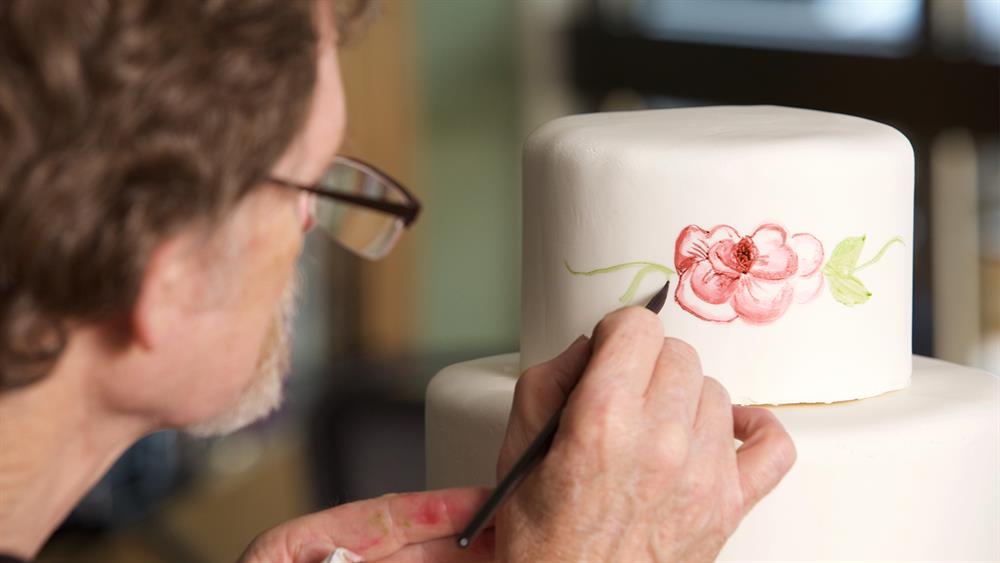
Jack Phillips of Masterpiece Cakeshop
image from here


The Court drew up short in finalizing that decision, saying that courts could not show prejudice against religious beliefs, which the Colorado commission had done. So the actual question—Can the government force a cake artist to design a wedding cake that celebrates a same-sex marriage? Or, more broadly, Can the government force a person who provides a creative service to use those talents/abilities in direct opposition to the person’s religion?—that question will have to be settled another time. There are pending cases.

One of those cases awaiting the answer to the questions was Barronelle Stutzman’s case, Arlene’s Flowers v. Washington State. It was on the docket for ruling, but in light of the Masterpiece Cakeshop ruling, on June 25th the judgment was vacated, and the case was remanded to the Supreme Court of Washington for further consideration. 

That means the state court will have to consider whether it’s decision was biased against religious beliefs. They may claim that it was not, even though we know that it was—the persecution against her is pretty obvious, since she never denied service to anyone, and her client wasn’t even miffed with her, let alone injured. If the state supreme court rules the same again, it goes to a Circuit Court of Appeals again, with the same possible results. But in the Masterpiece Cakeshop case, the Colorado Commission actually spoke its prejudice aloud.

But, if it comes before the Supreme Court again—with another conservative judge replacing Justice Kennedy—then the outcome is highly likely to go in her favor. And the real question is much more likely to get answered: no, the government cannot coerce a person into servitude against that person’s religion. As the Founders though, that should go without saying.

Anyway, additional cases awaiting that answer are still in lower court jurisdictions:

·         Joanna Duka and Breanna Koski, owners of art studio Brush & Nib, asking Arizona’s Supreme Court to protect them from the threat of jail time or burdensome fine for claiming the right not to be forced to create art that conflicts with their beliefs. 

·         Blaine Adamson, a promotional printer, with a business called Hands On Originals, asking Kentucky’s Supreme Court to prevent him from being forced to print messages that conflict with his faith.
·         Atlanta Fire Chief Kevin Cochrane, whose case has not been heard by a jury and ruled on, but who is suing for wrongful firing, after being terminated for religious writings he wrote in his spare time and shared never shared during office hours or to professional colleagues. The terrible thing he wrote? That marriage is between one man and one woman—which is the very thing Barak Obama and Hillary Clinton were both claiming to believe in 2008 and beyond.     
Masterpiece Cakeshop and others have this “et al.” in their titles, meaning there are other parties involved. I’m not sure of all the individual other parties. There was a family-owned bakery in  Oregon, Melissa's Sweet cakes, who were fined $135,000 and lost their family business due to the persecution over the religious freedom issue. There’s a farm that used to host weddings at their farm/home, until they refused to be forced to host same-sex “weddings” in what is their actual home, where their children reside. There are  photographer cases as well.

So the question will probably be answered eventually. And, if the choice for SCOTUS is a good one, it is likely to go in favor of religious freedom.


Janus v. American Federation

In this case, the state of Illinois has had a law requiring workers in public sector jobs to pay union dues, regardless of membership in a union, even when they disagree with the union’s efforts, both political and in collective bargaining.  

The syllabus, the brief summary before the written opinions in the ruling, offers this explanation (I’ve skipped over the citations).

The State’s extractions of agency fees from nonconsenting public sector employees violates the First Amendment. Abood [previous similar case] erred in concluding otherwise, and stare decisis cannot support it. Abbod is therefore overruled…. Abood’s holding is inconsistent with standard First Amendment principles…. Forcing free and independent individuals to endorse ideas they find objectionable raises serious First Amendment concerns…. That includes compelling a person to subsidize the speech of other private speakers…. In Knox and Harris v. Quinn…, the Court applied an “exacting” scrutiny standard in judging the constitutionality of agency fees rather than the more traditional strict scrutiny. Even under the more permissive standard, Illinois’ scheme cannot survive.
This was an incremental ruling. Past cases allowed employees to object to their dues being spent for political purposes. The Janus case extends that to other purposes. The union was speaking for the employee, saying things in the bargaining process on his behalf that he did not want to have said. But he was compelled to pay for the union to say those things against his will.
In summary, this is what the case rules:

The First Amendment is violated when money is taken from nonconsenting employees for a public-sector union; employees must choose to support the union before anything is taken from them. Accordingly, neither an agency fee nor any other form of payment to a public-sector union may be deducted from an employee, nor may any other attempt be made to collect such a payment, unless the employee affirmatively consents to pay.
It was another 5-4 decision, along the usual lines, this time with Kennedy going in favor of First Amendment speech rights.

In other words, four of the justices believe it is acceptable to compel speech—or agreement by forced payment of dues—of employees in order to avoid the free ride issue.

We need to talk sometime about the use of the word “liberal” in relation to those who are not in favor of “conserving” the Constitution. The Constitution is about freedom, and protecting that freedom. The opposition to that, therefore, is anti-freedom, which is anti-liberty—or illiberal. Coerced behavior is what the four dissenting judges favor.


Rowan County v. Lund  

The case of Rowan County v. Lund was denied a writ of certiorari—in other words, the Supreme Court didn’t rule on it after all.

In this case, the legislators in Rowan County, North Carolina take turns offering prayers at the beginning of their meetings. There is no paid or invited clergy. No one dictates the content of the prayer. This has been done historically since such meetings in this county began. But some citizens decided to sue the legislators for establishing a religion. The citizens won their suit up through the Fourth Circuit Court of Appeals, and the Fourth Circuit said Rowan County must bring in paid sectarian chaplains to offer the prayers.

Justice Thomas dissented from the denial, and was joined by Justice Gorsuch. As Justice Thomas put it, 

This Court’s Establishment Clause jurisprudence is in disarray. Sometimes our precedents focus on whether a “reasonable observer” would think that a government practice endorses religion; other times our precedents focus on whether a government practice is supported by this country’s history and tradition…. Happily, our precedents on legislative prayer tend to fall in the latter camp…. Yet the decision below did not adhere to this historical approach. In ruling that Rowan County must change the prayers it uses to open its board meetings, the Court of Appeals for the Fourth Circuit emphasized that the county’s prayers are led by the legislators themselves, not by paid chaplains or guest ministers. This analysis failed to appreciate the long history of legislator-led prayer in this country, and it squarely contradicted a recent decision of the Sixth Circuit. I would have granted Rowan County’s petition for certiorari.
Of the direction given by the Fourth Circuit, to bring in paid clergy, Justice Thomas adds this footnote:

In addition to having little basis in history, the Fourth Circuit’s decision has little basis in logic. It is hard to see how prayers led by sectarian chaplains whose salaries are paid by taxpayers—a practice this Court has upheld…, could be less of a government establishment than prayers voluntarily given by legislators.
He offers this final point about conflicting rulings:

The Sixth Circuit, also sitting en banc, recently surveyed this history and upheld a municipal prayer policy virtually identical to Rowan County’s…. The Sixth Circuit acknowledged that its decision was “in conflict with the Fourth Circuit’s” but found the latter “unpersuasive,”… not least because the Fourth Circuit “apparently did not consider the numerous examples of [legislator-led] prayers” in our Nation’s history…. Thus, the Sixth and Fourth Circuits are now split on the legality of legislator-led prayer. State and local lawmakers can lead prayers in Tennessee, Kentucky, Ohio, and Michigan, but not in South Carolina, North Carolina, Virginia, Maryland, or West Virginia. This Court should have stepped in to resolve this conflict.
Indeed, conflicting circuit court decisions are a usual reason for the Supreme Court to take on a case.
This one shouldn’t be so difficult. There seems to be a misunderstanding of what establishing a religion means. It is a far cry from allowing, or even encouraging, religion or religious behavior. To establish a religion is to make a particular set of beliefs the state-endorsed and state-enforced religion. Not stepping in to prevent free Americans to behave in religious behaviors of their choice ought to always be the default choice of a government protecting the free exercise of religion—the first of the First Amendment rights.

What is the best remedy for Rowan County, North Carolina, now? To continue doing what it is doing, assert its Tenth Amendment rights to decide issues not enumerated as powers given to the federal government, and assert its First Amendment rights to both exercise their religion freely, but to prohibit the federal government from making any law (including by judiciary, which has no lawmaking powers in the first place) prohibiting the free exercise of religion.

If all of us, in every state, had that reaction to Supreme Court overreach, we could breathe easier over whomever the President appoints to that bench.

Monday, February 20, 2017

Another Nail

On February 16, the Washington State Supreme Court ruled on the case of State of Washington v. Arlene’s Flowers and Ingersoll v. Arlene’s Flowers.

Baronelle Stutzman of Arlene's Flowers
photo from Alliance Defending Freedom


Here’s a review of what happened. Baronelle Stutzman, the owner of Arlene’s Flowers in Richland, WA, had been happily serving her friend, a gay man, for several years. But in 2012(just three months after the state invented same-sex “marriage” in a close vote) he asked her to be the florist for his same-sex “wedding.” She kindly declined. Her Christian belief that marriage is the union of one man and one woman prevented “her from using her artistic talents to promote contrary ideas about marriage.” But, while she couldn’t do the work, she gave him the names of three other florists she thought would be glad to do the event.

In a normal world, the gay man, who had been a friend and had clearly not been discriminated against because of his sexual orientation, would have simply gone to one of the other florists on the list. But this is not a normal world.

He sued her for discrimination. And then the State of Washington joined in its own suit, claiming she violated its anti-discrimination law. In 2015 the trial court ruled against her. The ruling this week was the appeal to the state’s supreme court; they ruled unanimously against her.

Her defense had two prongs: freedom of religion and freedom of speech. The court was unsympathetic to both.

A person has a right to practice their religion, says the state, but only within the limits that the state sets. If the state decides it has a compelling interest, it is free to trample religious freedom at will. The state calls it punishing an “independent social evil.” What was the evil that the kind florist did? Disagree with the state’s current opinion about sex. So they say they have a “broader societal purpose: eradicating barriers to equal treatment of all citizens in the commercial marketplace.”
A person does not have a right, the state says, to refuse to perform an event that a homosexual—or some other protected class—requests. A person is obligated to provide the service so as not to “disrespect and subordinate” someone in that class. The state believes it has the right and power to coerce specific work; the state believes it owns slaves.

It was clear in the facts of the case that Stutzman did not deprive anyone of a service; she accommodated reasonably by recommending other florists. That was a win/win solution; the customer would receive the service he wanted, and she would preserve her right to live her religion according to her conscience.

But the court disregarded the facts of the case, as well as the clear wording of the law. The court has no sympathy for this particular religious belief, so they punish for it.

But the test for them will be when a white supremacist goes to an orthodox Jewish-owned business and insists that they print the advertising for their anti-Semitic event. Or when they require a Muslim business to cater a pig farmers’ banquet. Or require a Jewish photographer to photograph the third polygamous “marriage” of a Muslim client.

It appears the law will only rule against Christians, or anyone who has the temerity to go against their preferred religious position on sexuality.

Beyond the religious freedom argument, there is the freedom of speech—or expression. When I look at a court case, I often turn to the Volokh Conspiracy (a legal blog). Eugene Volokh gives this summary:

[T]he court concluded that flower arranging isn’t sufficiently expressive to qualify. (I think the analysis should be different for people who produce material that has been traditionally viewed as expressive, such as photographers, calligraphers, printers, singers, artists and the like, though it’s not clear how Washington state’s Supreme Court would decide on that.)
It appears that courts also get to define, at their whim, what is “sufficiently expressive to qualify.” A printer has a stronger case, possibly, because actual words are involved. If a cake decorator is asked to write words on the cake, that makes a stronger case. And, if a court decides that a singer, photographer, calligrapher, or other artist is using his/her talent as a form of expression, the court might be more sympathetic about coercing use of that expression. But floral design, they have arbitrarily decided, is not really a talent, or an expression, or anything but a commercial service.

While Alliance Defending Freedom, which has been representing Stutzman, plans to appeal to the US Supreme Court, Volokh is not encouraging. He says,

I doubt the U.S. Supreme Court will review the case further: It could only review the First Amendment issue (since the state supreme court is the final decision-maker on the state constitutional issue), and the compelled speech case here is weaker than in the New Mexico wedding photographer case, which the U.S. Supreme Court refused to hear.
Even if SCOTUS were to take on the case, their decision would still hinge on Justice Kennedy’s ruling. He’s the one who heard all the evidence in Obergefell, heard the warning about religious freedom being affected, and then ruled broadly that same-sex couples have always had a right to marry—six thousand years of multi-cultural world history to the contrary.

What is particularly disturbing about this case was the extent to which the Washington court was willing to go. They punish to excess—and, again, beyond the law. A business owner is generally protected from having personal property affected by a lawsuit against the business, unless there are certain overriding factors. As David French wrote,

[I]f you doubt the court’s malice, look only to its last ruling—that Stutzman can be held personally liable for her allegedly discriminatory act. In other words, the court is willing to pierce the corporate veil to impose individual liability even in the absence of the traditional justifications for that drastic step. Stutzman didn’t commit fraud. She didn’t commingle her personal and corporate funds. She kept her private and professional affairs separate. But she still faces personal financial ruin.
Arlene's Flowers
photo from here
Remember, Baronelle Stutzman was 70 years old in 2012, at the time of the original incident—after spending 40 years as a florist. The fine was only about $1000, but she was also required to pay the legal fees of the ACLU—about $1 million—in addition to never operating her business again. Her small business never had that many assets. Add in all of her belongings, savings, preparation for retirement, and she is placed in penury with no chance of recovery. If you have any sense of justice, this seems way out of line for the crime of slightly inconveniencing a longtime customer/friend.


When you’re taking the life, livelihood, home and savings of a 70-year-old woman who has always served you sweetly and cheerfully, you really need to re-think who is the intolerant one.

Monday, February 23, 2015

This Is Not Tolerance


This past week I came upon yet another story of a private business being attacked by the “gay mafia.” And this time it was kind of personal. (This case was also mentioned last year here.)
Arlene's Flowers, in Richland, WA
photo from Alliance Defending Freedom
The business being attacked this time is Arlene’s Flowers, in Richland, Washington. The name and photo of the shop look familiar to me. We spent most of a decade living in that corner of Washington. Daughter Social Sphere was born in the hospital in Richland. We didn’t have a lot of events that called for flowers back then, but chances are if Mr. Spherical Model brought me flowers when our daughter was born, they came from Arlene’s Flowers.
Owner of Arlene’s is 70-year-old Barronelle Stutzman, who has been making a living as a florist for 40 years. She has served everyone, regardless of race, religion, or sexual orientation. But she’s a Christian, and in 2013 when a longtime customer asked her to do the flowers for his same-sex wedding, she declined. It was the event, not the client, that she declined, because, to her, marriage is sacred and something that can’t be mutated to mean same-sex.
Stutzman must have been rude enough to really anger the client, right? No. “I put my hand on his and said, ‘I’m sorry Rob, I can’t do your wedding because of my relationship with Jesus Christ…. We talked a little bit, we talked about his mom [walking him down the aisle]…we hugged and he left.”
But the result of her friendly, gentle refusal was to suffer a discrimination lawsuit. More than one. First, the Washington State attorney general filed suit, requiring a $2,000 fine in addition to an order that the service be rendered. Then the couple filed another suit through the ACLU. Last week a Washington State judge ruled against Stutzman. The result is worse than just putting her out of business.
She said, “They want my home, they want my business, they want my personal finances as an example for other people to be quiet.”
An ACLU lawyer said, “Religious freedom is a fundamental part of America. But religious beliefs do not give any of us a right to ignore the law or to harm others because of who they are. When gay people go to a business, they should be treated like anyone else and not be discriminated against.”
So, religious freedom is OK and tolerated—unless it isn’t. Because…law.
So, a moment of history about marriage law in Washington. In 1997, following a threat to the definition after Hawaii had challenges to marriage there, the legislature wrote legislation defending the long-standing definition requiring one man and one woman. It passed  63 to 35 in the House and 27 to 19 in the Senate, but Governor Gary Locke vetoed it. He said it was divisive and unnecessary, since the law was already clear on the definition. And he added, "Our overarching principle should be to promote civility, mutual respect and unity. This legislation fails to meet this test." Please remember that. Veto override vote failed 26-20, when seven Democrats who had voted in favor of the law changed their votes to support the governor.
In 1998 the legislature attempted similar legislation, a Defense of Marriage Act (DOMA). The governor vetoed this one as well, saying, "Our laws right now prohibit same-gender marriages, and I oppose this legislation because it is trying to make illegal something that is already illegal." The veto was quickly and soundly overridden. Yes, the definition of marriage was settled, but the people wanted it protected.
Over the following decade same-sex “marriage” advocates could not get traction, because public opinion in the state continued to support the existing definition of marriage. So they pushed instead for domestic partnership status, through initiative in 2007, withdrawn for lack of signatures to get it on the November ballot. But in the meantime they did establish domestic partnerships through the legislature in April 2007.
Then in 2012 the legislature voted to enact same-sex “marriage” on close votes. After a delay to let the people decide by referendum, the voters approved the law 54%-46% (I believe that’s the first state to choose same-sex “marriage,” rather than have courts or legislators force it on them against their will). It went into effect in December 2012.
Three months later Robert Ingersoll walked into Arlene’s Flowers and ruined Barronelle Stutzman’s life. It was a no win for her.
I think a businessperson should be allowed to refuse service to anyone for any reason. But that’s an argument for another day.
She didn’t refuse service to anyone; she refused to perform a particular service for a particular event. She did no damage to the customer; he could go elsewhere. He knew she hadn’t ever discriminated against him because of his sexual orientation. But, instead of going and finding a willing florist, he decided she should have her business taken, her livelihood and savings siphoned off in fines and court costs, and threaten everything she had, which at her age she could never recover from. Because she said she wouldn’t do a particular kind of event—that had been against the law for the entire history of the state until three months earlier and was only made law by a close margin.
Somehow that takes precedent over anyone’s personal religious beliefs, even though religious protection is guaranteed in the First Amendment because it is God-given and inalienable.
Alliance Defending Freedom has stepped in, to help her appeal. But even an eventual win will leave her years older, herd business closed, her savings gone.
What Stutzman did was tolerant. What Ingersoll did was beyond intolerant; it smacks of mafia.
Eventually, if the Supreme Court reads the Constitution and grows a spine, we can hope cases like this will be reversed. That will be good news for all people who engage in commerce while living religious lives. But the businesses already attacked will probably never recover.
Because of the threat of these anti-discrimination lawsuits, a religious person doing business today risks losing everything as soon as a protected-class customer walks through their door.
There’s no safety for religious businesspeople, but there are some rather painful alternatives:
1.      Incorporate, rather than have a sole proprietorship, to limit the assets that can be accessed in a lawsuit. The business, then, is sued for discrimination. You’ll need to have the business go bankrupt right away, but at least your personal assets can’t be seized.

2.      Limit your business in a way that will prevent the dilemma. This would look something like “we never do wedding arrangements,” which is pretty limiting but avoids the attack. This would be true for cake decorators and photographers as well. But, it might be hard to keep the business going if you have to turn away work for the 99.99% of customers who might your skills for a regular wedding.

3.      Take the job, and then purposely do a very poor job. Your reputation may be at risk. You may have to return any money you were paid. You may even be out the cost of resources and time. But you can’t be sued for refusing service to a protected-class person, and you haven’t used your skills and abilities in honor of something that offends your religious heart.
The thing that has bothered me so much about these cases is the expectation that a person must do work that some judge says they must. If you must do work that you haven’t contracted to do, that is coercion.

Another word for it is slavery. But there’s a difference between this and the slavery we saw in the South prior to the Emancipation Proclamation. Back then, the slaves could be forced to work. But they could not be forced to create beauty. Mostly slaves wouldn’t be trained to do artistic work. They could be asked to work in a garden, but they wouldn’t be expected to design the garden. They might be an excellent cook, but they wouldn’t be expected to be a haute cuisine chef.
But today’s “gay mafia,” along with the judges that are their tools, are trying to enslave people who should have the expectation of freedom (they are their own bosses in their own artistic businesses) to do things that not even “legally owned” slaves could have been forced to do.
When you’re taking the life, livelihood, home and savings of a 70-year-old woman who has always served you sweetly and cheerfully, you really need to re-think who is the intolerant one.
I’ve written enough for a day. I thought I’d have a portion to devote to the singe same-sex “marriage” that happened in Texas last Thursday. So, just to re-cap, the federal judge who required it had no power of mandamus; he had no authority to require a state judge to do what he asked. The state judge who allowed the license to be granted did so unlawfully. The Jewish rabbi who “married” the two lesbian women was not abiding by any Jewish religion that I’ve ever encountered (but I’m sure I’m not familiar with ever version of Jewish belief). The case is not in any way precedent setting, and the state attorney general has already made clear to all the state’s judges that such licenses cannot be granted in Texas at this time, while cases are pending in the 5th Circuit and there is a stay. The attorney general has the right to challenge the legality of the “marriage,” since the granting of the license did not abide by Texas law. So, except that two people started calling themselves “married,” nothing has changed in Texas.
I’ve written recently on the same-sex “marriage” issue here and here. I wrote about religious freedom here. The two topics are closely tied.