Thursday, July 7, 2022

SCOTUS Has Ended Life as We Know It—For the Better

It has been quite a season for the US Supreme Court. The term generally runs from fall of one year through June of the next. It can go longer, and has. But typically you get the docket completed by the end of June. So June is a big month. This year June was ratcheted up a couple of extra notches.
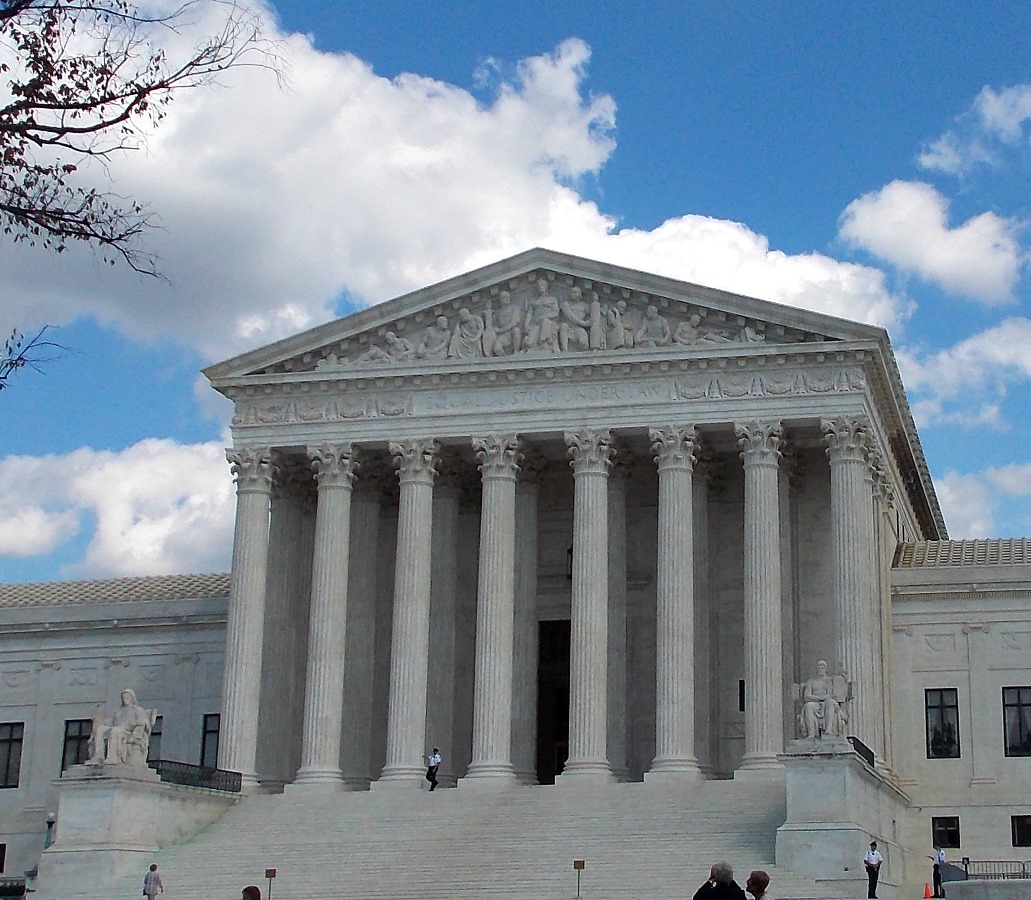

The Supreme Court building, taken on a trip
to Washington, DC, in 2014

I have in past years tried to analyze the Court's term on my own. There are easier ways now. SCOTUSblog has published a 28-page "stat pak" about the rulings, here. There will always be plenty to talk about related to the highest court of the land; there have been 66 rulings this term. But for today I'm mainly looking at four of the late June rulings.


Dobbs

The biggest news-getter was the June 24 ruling on Dobbs, which overturned Roe and Casey. We saw it coming because of the leaked document in early May—a leak which in itself upended the tradition of trust within the Court. But we have been disappointed so many times in the past, it was hard to be certain it would happen. But it did. It completely overturned those past cases, which had not based their rulings on the Constitution.

This does not ban abortion in the US. It returns the question of abortion to the individual states.

At some future point perhaps there will be a case that considers the question of the right to life of the preborn. This case only considered whether the Constitution granted a right to kill preborn life, and the Court ruled that the Constitution is silent on the issue and therefore the decision is in the hands of the states.

In Texas and a number of other states, that means there is a ban on abortion. In Texas we passed a trigger law in the last legislative session, which said that when/if Roe and Casey were overturned, Texas would assert its right to ban abortion. Also, logically it would mean the law reverts to what it was prior to Roe in 1973, and abortion was illegal in Texas at that time.

This does not mean that women are forced to risk death in order to carry a pregnancy to term. When two lives are at stake and both cannot be saved, the mother’s life is given priority. It happens that in almost all such cases, it’s a matter of losing both lives, because the baby isn’t going to survive to term in a dead mother. If the baby can survive—has reached viability, which is getting earlier all the time—then it’s not an either/or decision. Doctors will try to save both, if they can.

It also does not mean that women with an ectopic pregnancy will be refused care. Termination of an ectopic pregnancy has never been considered an abortion; it is a necessary procedure, because the baby cannot grow to term without ever being in the womb, and failure to end that situation has a high chance of causing death in the mother. If you’re being told otherwise, it’s a scare tactic lie.

In Texas, the punishment for participation in abortion is still being worked out. But at this point the doctors and other participants are held liable, not the pregnant woman.

In other states, the question may still be open. Some states are using the opportunity to extend abortion to abominable levels—up to the moment of full-term birth, and possibly beyond birth, which is infanticide.

Another unfortunate direction is using mail-service prescriptions for abortifacients, which add risk to pregnant women, who will not be under a doctor’s care if complications ensue.

At any rate, when semi-sane people realize they can still get an abortion if they’re determined to do so, the protests simmer down, and people go back to working on their state legislatures. 


Protest following the Dobbs ruling, Getty Images, found here

The decision of June 24, 2022, lifts from us the burden of condemnation for killing babies in the womb—a hideous pagan practice. Individuals—and some states—will retain that burden. But many of us see that God has accepted our efforts to fight against this evil. And we trust that He will help us in the battles yet to come.


NY Rifle

The day before Dobbs, there was a big decision on gun rights in New York, where people had been required—for 100 years—to justify their need to get a concealed carry permit. Reasons such as self-protection from overt threats of violence from a stalker could be turned down as insufficient. The Supreme Court ruled that the Constitution was clear; the state could not infringe on a person’s Second Amendment right, as it had been doing.

But the Court didn’t limit the decision to this case. They declared that, not only was this 100-year-old requirement in New York unconstitutional, because the Second Amendment is clear that the right to bear arms shall not be infringed; they said that plenty of other cases needed to be remanded to lower courts for reconsideration based on this decision.

So that changes the trajectory of gun law cases in the US going forward. I’d say that’s a big deal.


Kennedy v. Bremerton School District

Those rulings came out on a Thursday and Friday. The following Monday, June 27, SCOTUS ruled on the Kennedy case, in favor of Coach Kennedy and religious freedom. Joseph Kennedy, a football coach in Bremerton, near Seattle, Washington, had been fired for praying after games, on the football field, where people could see him. Students often joined him, including students from opposing teams. The Court ruled that the school district’s claim that, as a government employee he was not allowed to express his religious views where they could be seen was in complete contradiction of the First Amendment, which says the government cannot infringe on our God-given right to freely exercise our religion. They also ruled that his First Amendment freedom of speech had been violated. This is a positive and definitive statement upholding the First Amendment, and it should be good precedent going forward.


Coach Joseph Kennedy
image found here


West Virginia v. EPA

I was thinking how remarkable it was to get three such rulings in a row, and wondered what would be next. Then Mr. Spherical Model pointed out to me that there was a case about to be ruled on that had the potential to be much more explosive than Dobbs. It turns out that ruling came on Friday, June 30. The case is West Virginia v. EPA.

On Monday, July 4th, Joshua Philipp (Crossroads on EpochTV) spent much of his hour on this case, saying it was one of the biggest cases in the US in a long time. He says, “What they actually did was make a ruling against the administrative state.”


Joshua Philipp talks about the Supreme Court's ruling against the EPA.
screenshot from here

So, what is the administrative state? Sometimes called the regulatory state (and sometimes the Deep State, although I’d say that goes beyond the administrative state), it’s a corruption of the Constitution that has been going on for close to a century. Somewhere around Woodrow Wilson’s time, and pretty well established by FDR’s administration, the idea cropped up that the modern world is too complicated now for mere congressmen to be able to understand, so we ought to turn their job over to experts, the regulators.

The regulatory agencies are part of the executive branch. The legislative branch has abdicated its role by passing big, complex laws that mostly say, “and the agency will fill in the details.” The agencies are glad to do that; they live for that. For them it is not so much about accomplishing their stated purpose as it is about building and perpetuating their power. (It was learning this by hard experience that changed economist Thomas Sowell from a Marxist to a conservative.)

What it has come down to is, these unelected bureaucrats set up the laws (only they call them rules, for some sleight of hand), they police and prosecute companies and/or individuals not in compliance, they hold court within their own system, and they pass sentence, which could be a fine, repeal of license to do business, confiscation of property, or worse. In other words, they take upon themselves all three branches of government, essentially wielding unlimited power within their purview.

As we saw during the pandemic, an agency with the assignment of tracking and warning about communicable diseases, the CDC, suddenly took upon itself the power to shut down businesses, declare that landlords cannot evict renters who fail to pay rent, declare under what conditions various companies may operate, force people to wear masks, social distance, etc.

The current case specifically was about the Environmental Protection Agency. The state of West Virginia, along with two coal companies and other parties, sued the EPA. Problems with the EPA go back to its inception. But this particular case related to the Biden administration’s goal of creating a carbon pollution-free power sector by 2035, and then net zero emissions economy-wide by 2050. As Philipp points out, “Folks, you and I are made of carbon. And cows breathe out carbon— We breathe out carbon dioxide. Carbon dioxide net zero is impossible to do, unless you eliminate all life on earth.”

But those are the EPA targets. And, of course many of the administration’s efforts, their new rules to accomplish these audacious goals, were passed through the administrative state, not through Congress, not through any actual legislative process.

Maybe you think, nevertheless, that it’s not a bad idea to limit greenhouse gas emissions, mercury toxicity in the air, coal ash in air pollution, and various Clean Air Act standards for power plants and for particulate matter and ozone levels, haze in population centers, etc. Maybe you think there’s some level of sanity we could agree on there, just so long as it does not mean getting rid of all our power sources practically overnight.

But then they go too far, even for you, when they decide that the EPA is also about “racial justice.” What does that look like? I don’t know. But some bureaucrat who is not accountable to me or any other voter gets to decide. And maybe they’ll decide I’m in violation of EPA standards for writing things they don’t agree with on a blog like this. Or for being ethnically “white” instead of whatever color they decide deserves favor. And if I object to their ruling against me, I have no recourse, no way to defend myself.

It’s called a whole of government approach. So “racial justice,” or whatever the priority whim of the day, relates to all the various agencies: EPA, HHS, CDC, OSHA, you name it.

West Virginia, et al., felt they were suffering harm from these Biden administration policies. And fortunately they were granted standing, because of this harm. These administrative courts generally don’t grant standing; they don’t allow a jury trial; they don’t allow for a public defender—so essentially only the large companies with plenty of resources can push back on regulations. So getting standing in an actual court of law was necessary.

The worry, expressed by anti-constitutionalists, since at least 2019, has been that a conservative court might reconsider what was being termed the non-delegation doctrine—that the Congress did not have the power to delegate lawmaking authority, as it had been doing pretty consistently for 84 years or so. Justice Thomas had conversed with Justice Scalia about just such ideas some years ago. A majority conservative court could actually do something about it.

The night before the ruling, Gregg Phillips (the tech guru in 2000 Mules) tweeted out: 

I hope y’all will consider joining us in prayer tonight. The Supreme Court will rule on West Virginia v. EPA.

The consequences of this ruling will resonate for another 100 years. For more than a century Congress has ceded power to write broad and far-reaching laws to bureaucrats accountable to no one. This is how the deep state was built.

I pray that the SCOTUS delivers a blow from God’s mighty hand.


Gregg Phillips tweet, here

The Supreme Court could have ruled in a limited way, simply that the EPA had overstepped the boundaries of its power.

But their reasoning said that this overreach entailed making laws that did not pass through Congress, and were therefore unconstitutional.

That means this ruling applies to all regulatory agencies acting this way.

It’s one of those things that might not look like much when it happens but might eventually be seen as the pivotal moment. Something like a small seismic event that causes what appears to be a small crack in a dam, but which turns out to be the structural weakening that eventually brings the whole dam down in a massive flood.

The enemy worried big time when the Court took up the case. And in the week leading up to the ruling—which did what they feared it would—there was a fair amount of handwringing going on. But since then there has been radio silence.

Joshua Philipp commented on it:

I'm blown away, frankly, by the fact that almost no media is talking about this, like the weight of what just happened. I mean, I'm telling you all this right now, I feel the weight of what just happened can’t be overstated. This basically changed the way our government has worked for over 80 years.

This has brought America back to the government we had prior to this…. This is a huge, huge seismic shift in how our country functions.

I asked son Political Sphere about this general silence on the case, during our Fourth of July family time, and he thinks it’s because no one wants to call attention to it. It’s not a sudden collapse. It will be a gradual one, as one lawsuit after another takes on regulatory overreach using the WV v. EPA ruling as their pattern. So the lawsuits are being lined up, and those people don’t want undue attention that could make their road harder. And the opposition doesn’t want to encourage more people to take up lawsuits, by speaking about it now that it is the reality.

But, despite the deafening silence, it’s a big deal. As Joshua Philipp puts it,

Most of the government, as it stands right now in the United States, is unconstitutional. Most of the administrative state is unconstitutional—most of the laws we have to abide by that were not passed through Congress are unconstitutional.

And he adds,

By deciding in favor of West Virginia, the Court could begin to rein in the vast powers of the alphabet agencies in DC that run our lives and return it to legislators, whom we elect, to create legislation.

It may not be hyperbole when he says, “I would call it like the second American Revolution we just witnessed.”


screen capture, highlighted, from the Opinions page of the Supreme Court


Summary

The Supreme Court has been on a roll. I like it.

The great thing for the country is, when the Supreme Court abides by the Constitution, everyone wins; when they go off and make rulings based on their own feelings, everyone loses—and the country might take 50-100 years to recover from those bad rulings, however well-intentioned the justices might have been when they made them.

There are a couple of metaphors I’m picturing for this term. In one, I picture SCOTUS, and mainly Justice Clarence Thomas, in the role of Martin Luther nailing his list of grievances on the church door. He was reminding the church of his time of the infractions against the law and doctrine the people were supposed to be able to count on. Eventually that church made all, or most, of those reforms. But in the meantime, the whole world changed, reformed, and religious freedom became a big part of the change.

In another metaphor, I’m picturing the signers of the Declaration of Independence, with Justice Thomas holding the pen and parchment as Thomas Jefferson did. The Declaration is, in large part, a list of grievances, deviations from the common law the citizens were supposed to be able to count on, but that King George had violated. The patriots had the moral high ground. And God upheld them.

I believe our Constitution was God-inspired—the rule of law, equality under the law, the balance of powers, the preservation of inherent rights, the limits placed on government. It’s a beautiful work.

Ignoring the Constitution has put us in peril. Ignoring the laws of God—honoring God, family, life, truth, and property ownership—has put us under condemnation. This term's rulings lift some of the condemnation, and some of the peril. May God bless these good justices! And may God shine His light on this exceptional country once again!

Monday, June 27, 2022

Convention Debrief—Platform and Resolutions

This is Part III of my debriefing of the Republican Party of Texas Convention, which ran Monday, June 13, through Saturday, June 18. (Part I was on the editing adventure; Part II was on Rules and Legislative Priorities.)

Finally I’m getting to Platform, plus Resolutions, which probably require some explaining. 


Platform Committee taking a vote, screenshot from here.
The middle section, with Chairman Matt Patrick in the center, is upper left;
right side is upper right; left side is below. I am handling the file, seated next to the Chair.

Just a word, first. If you’ve been looking online for the final version, it is not there yet. I have not yet received the end-of-convention file from RPT, which handled it during floor debate. In the meantime, we’ve worked on taking care of editing issues, noticing repeated titles in different sections, and creating an index. Maybe we’ll get the file tomorrow. My hope is to get it completed and turned in by Friday so I can enjoy a nice holiday weekend. I’m not sure why I didn’t get the file right away. The person handling the file got sick, so we pushed our deadline back a week. But I really just need it sent as an attachment, so it shouldn’t require much work on their part.

They may want to delay until they get the scantron done. That’s the counting of the up-or-down votes on each plank. The machine was delivered to them last Friday; it was the wrong machine. The replacement should come on Tuesday (tomorrow), so they should be able to set it up and do the counting on Wednesday. Again, I don’t need that information before I do my editing. If a plank, or planks, gets under 50% approval, then deleting that plank is a very simple matter. But it has never happened. In fact, I don’t think there’s ever been a plank that got under 2/3 approval. But getting a higher approval (90% or higher) is used to convince the legislators to support an issue.


Resolutions

The platform gets created out of resolutions that get set to state from district and county conventions, which got them from precinct conventions. A resolution has a format, typically with explanations of reasoning with each paragraph worded, “Whereas….” Then comes the statement part, often worded as “Therefore, be it resolved that….” When it comes to writing the platform, we take the wording in the “be it resolved statement” and reword it as a platform plank—something like, “We urge the Legislature to…” or “We support…” or “We proclaim that….” The Whereas statements might get referred to on rare occasions for clarity. But our process would be simpler if submissions came in closer to platform wording, which some of them do. My senatorial district sends them all in as platform wording.

But there is another type of resolution that is not part of the platform. These resolutions are statements proclaimed by the body. I didn’t understand about these different resolutions until I became a precinct chair, and we started dealing with resolutions as part of our quarterly meetings. In those cases, the Harris County Republican Party Executive Committee, made up of precinct chairs and officers, would vote on acceptance and wording of such proposed resolutions. Those that were accepted by the body would be posted on the website, and sent to the appropriate people, such as officeholders and media.

Some years at the state convention there are no such resolutions for the Platform & Resolutions Committee to deal with. Last time there was one, and it did not pass. This year there are two; both passed. And they have gotten some media attention, which might have been a goal of some people. But the media—even thorough media like The Epoch Times—has misunderstood. The resolutions are not part of our platform, but they are part of the Platform & Resolutions Committee Report. They show up below the platform in the report. And they become, if approved, statements made by the body of delegates.

Both resolutions came up late in the process, on the day of Permanent Committee, if I’m remembering right. They are considered separately from the sections of the platform, and are required to be handled in floor debate.


The first one proclaims that election fraud changed the outcome of the 2020 presidential election. It’s bold to say so, but it’s a fact, provable if we would ever get a court to look at the evidence (the movie 2000 Mules was shown in various discussion sessions during convention week), and the majority of the delegates hold this view.

As with all platform planks and resolutions, this does not have the force of law. It is a statement; that is all.  But a very loud majority felt like it was worth saying.

The second one was a response to the Senate vote that week on gun control, signed onto by Texas’s Senator John Cornyn and a number of others. They were called out and condemned for going against the Constitution and the will of the people of Texas.


Platform

I talked about our process in the first post. Today is finally about platform content—which I did not affect, other than as a delegate. Editors are there to facilitate the work of the Committee, not to influence it. I had my chance to do that at the senatorial district level.

The sections still relate broadly to Senate committees in the Texas Legislature, but order was changed somewhat this year. Rather than the sections being alphabetical, they’re laid out in ways that seem to flow logically. Constitutional Issues is the first section after Preamble & Principles, since it states overriding purposes. Business then flows into Finance, which deals with funding, so Education follows and then Health & Human Services. Then we get into governing, local on up to national, with Criminal & Civil Justice, State Affairs, Government & Election Integrity, and finally National Defense and Foreign Affairs.

The names of the last two were changed. Election Integrity was always in Government, but parts of it were also in State Affairs; now they’re together. Government used to contain Foreign Affairs, but that seemed like a more logical fit with National Defense.

All of this is to say, if you’re trying to track the changes from the previous platform, good luck with that. After subcommittees do their work, the Committee of the Whole is creating a whole new document, to be used for the next two years.

There are seldom changes to the Preamble and Principles. Two years ago we added a single word: “equally.” But this year there is a sentence added within the Preamble: “We recognize that human nature is immutable.” I believe this is referring to attempts to change gender or some other characteristic we’re born with. There was a suggested amendment about repudiating socialism and asserting national sovereignty, but it failed. Those ideas, however, show up elsewhere in the document.


Parents’ Rights

Parental rights, as you saw from Legislative Priorities, was a big issue this year. It comes up in Constitutional Issues, subsection Citizen Rights, and again in Education, subsection Parents’ Rights, with several planks. The one in Constitutional Issues was amended on the floor to add language about transparency and a Parental Rights Amendment to the state constitution. That issue was covered and detailed in one of the Education planks. But I guess it doesn’t hurt to say it in more than one place. I’d just like the floor to know, that issue was not neglected by the Committee.


Convention of States

One of the contended issues was Article V Convention of States. Texas passed the call for an Article V convention several years ago. But that hasn’t stopped opposition from trying to get rid of it every year. They did that last year during Temporary Committee, and it had to be brought back during Permanent Committee. This year it was there at the end of subcommittee, but got struck during Temporary Committee of the Whole. I missed that debate, doing other duties across the hall. But it was first order of business for Permanent Committee on Thursday, and it got reinstated with slightly different wording, asking the Legislature to extend the call.

Important public testimony came from the Chair of Legislative Priorities, who pointed out that COS was one of the 15 priorities of that committee, and it would be more than awkward to have a legislative priority that was struck from the platform.

One committee member, Tom Glass, had voted to strike in Temporary Committee, but changed his mind the next day. He had been thinking, since we’ve passed the legislation, it didn’t still need to be in our platform. But because there is a time-sensitive sunset clause, we need it in the platform to make sure it doesn’t disappear. He did, however, amend to keep only the last sentence, which related to that clause.

Bill Ely, the committee member from my SD, and another board member of our local Tea Party with me, is a COS champion. He gave an excellent speech in the Permanent Committee, bringing in data from the resolutions across the state, which he had studied after setting up our spreadsheet for us. I wanted to link to that here (it cues up here), but the sound cuts out almost as he starts, I was disappointed to find. Anyway, he rebutted some of the previous night’s testimony, which claimed a majority of senatorial districts were opposed to a Convention of States. Bill showed that wasn’t accurate. Even in those districts that put forth resolutions against an Article V COS, most of those districts also put forth resolutions in favor. And there were many districts who sent resolutions in favor that did not also have resolutions opposing. So if you look at the state overall, and the resolutions overall, the picture is quite different from what convinced the committee to strike the plank the night before.

The plank is back in, in shortened form, preserving what is necessary.


School Choice

There’s a moment here to talk about how important testimony can be. As we saw at our SD level, and as we prepared documents for the state platform, people are pretty upset with our schools. Parents want choice, transparency, and removal of anything that even hints at indoctrination. In the Education subcommittee, the room was cavernous. It was supposed to be divided but hadn’t been, so another committee got moved. What was left was bigger than the room we used for Committee of the Whole. People were lined up out the door for testimony. They took four hours of testimony, which placed them getting their work done and turned in to me around midnight, several hours later than scheduled. But it was important that the people got heard.

There is an ongoing split in the school choice world. A small but vocal minority of homeschoolers (homeschoolers as a whole are a small minority; this is a much smaller sub-minority) fear school choice, because they fear government might step in and regulate them. While I understand their arguments, I do not agree with them. We have to be vigilant against government intrusion regardless of what choices are offered to people who feel stuck in public schools. Fear of some nebulous possibility is no reason to deprive all those families trapped in the public school monopoly. If we introduce choice, we get the possibility of improvement.

This small minority is vocally active. They took part in the subcommittee debate, but they were outnumbered there with so much other testimony, much of it about breaking that monopoly somehow. But in testimony for permanent committee, where there is limited time for each section, they managed to fill all the slots, probably six or so individuals.

As they had hoped, they gave the impression that there was a huge outcry against the phrase “and the funding should follow the student,” claiming that isn’t possible without strings attached. Even if that were so—it is not—it wouldn’t attach strings to them if they’re not taking the money, so they’re really just interfering with other people’s decisions. Anyway, a committee member did bring up such an amendment. Subcommittee Chair Will Lutz spoke strongly against taking those words out. I looked forward to relistening to his speech in the livestream. It is here. He reminded people of the testimony they’d received from across the state. And he reminded them that every year school choice planks get watered down in committee, and then when the body of delegates see it, they put the strong school choice language back in—with loud acclamation. We should follow what the people in the state are telling us.


screenshot from here

I took a look at the starting document for education, which contains all the education resolutions from the 31 senatorial districts in the state. In addition to resolutions with wording in favor of school choice, there were 31 resolutions specifically stating that the money needs to follow the child. There were I think three resolutions in opposition to funding following the child. Chairman Lutz was right.

There were a couple of other speeches for and against the amendment. There was a committee member who homeschools, who spoke out well in favor of the money following the child.

And there was another committee member who pointed out that, when he got a GI bill, he could use it for education at a religious seminary, and the government had no say in that. They couldn’t tell him where he could study or what he could study; they could only insist that the money was spent on education. I appreciate that comparison. It’s how I’ve been seeing it. That is the freedom we want to give parents. Since the very next plank reiterates that government will not be allowed to regulate curriculum for homeschoolers or private schoolers, that ought to do. Again, we’re not writing law; we’re telling the legislature what we want and saying, “You figure it out.”

The amendment failed. But it was a close call—because of those final testimonies. It would have been such a sad day for all those who testified in subcommittee, if those final voices had gotten the last word.


Homosexuality and Gender Issues

There was an amendment that has gotten undue attention. A sentence was added at the beginning of the Homosexuality plank: “Homosexuality is an abnormal lifestyle choice.” The rest was about not granting special legal entitlements or special status based on homosexual behavior or other LGBTQ identification. I was satisfied with the plank the way it was. The new language states basic fact, but it did cause an uproar on the committee, where we had one committee member who is a gay man—unknown to most of us, because he didn’t press for those issues and was overall pretty conservative and helpful. (I had suspected, because I'd heard him give reports from Log Cabin Republicans before.) So he felt personally hurt. I don’t believe that was the intention. You can hear the discussion starting here. If the purpose had been intended to provoke while being factual, it could have been, “Homosexuality is a perversion of normal human sexual reproduction,” perhaps. It wasn’t that inflammatory. But it did draw attention that the original might not have. And you can decide whether that is a good thing or not.

screenshot from here


Election Integrity

Election Integrity was a huge issue. There’s debate about whether paper ballots ought to be the solution or not. I believe they are not; there’s a “long and glorious tradition[i]” of voter fraud using paper, well established before machines were brought into the picture. That aside, there was a lot of agreement that we need better and stronger election integrity laws. We got what people are calling an A-Z plank, with bullet points covering most of the alphabet.  That was amended with one addition during floor debate that is probably also useful. Now we just need the legislature to go at it.


And that, actually, is what we need to do for the whole platform. Set it before the legislators, get their attention, remind them of the platform—which their constituents support. Train their staff to recognize the platform and refer to it continually. So, the platform, in tandem with Legislative Priorities, is kind of a blueprint for the Legislature. To quote my friend Terri again, “This is what we want done. Get busy. You figure it out.”


[i] Princess Bride reference.

Thursday, June 23, 2022

Convention Debrief—Rules and Priorities

This is Part II of my debriefing of the Republican Party of Texas Convention, which ran Monday through Saturday of last week, June 13-18. (Part I here) I’ll deal briefly with floor debate and final outcomes for the party Rules and Legislative Priorities, and then it looks like it will take an additional post, so I can spend more time on the Platform, from my inside view as editor.


Rules

The Rules Committee is a special breed, dealing with arcane things that would take me quite a steep learning curve to fully understand. These are the rules the Republican Party of Texas and its sub-entities (local county and district bodies) will follow during the next biennium. I’m not sure of their process—how the ideas for change get from the grassroots to them. There were a few changes submitted as resolutions to the Platform Committee, and we passed them along to Rules a day or two into convention week. They must also have their own submission process, but I don’t know what it is. So I’m picking up the narrative at the point of floor debate. You can view their Permanent Rules Committee discussion here, and their floor debate from Friday here, and from Saturday here

The Rules Committee Report discussion was supposed to be completed during the General Session on Friday, and we did do some business then. But, as I mentioned, the printed copies of the reports had not been delivered. They had been posted on the RPT website, but in that convention hall of some 10,000 people, most of us just got an error message. So we could only read what was on the big screen; we couldn’t look through the document to make comparisons or get a larger context.

The main discussion that day was about removing references to the TEC (Texas Election Code) from the document. This doesn’t mean RPT won’t abide by election law; it simply declares the RPT to be its own sovereign entity. This means the Texas Legislature, including its Democrat members, cannot determine rules for the RPT. There was a floor amendment trying to put the TEC language back in, but it failed.

Mark Ramsey speaks against an amendment
during Friday's floor discussion on Rules.
I snapped the photo from my seat a few rows away.
This change proposed by the Rules Committee was explained to me by Mark Ramsey as the most important decision we would be making at Convention. Among other things, like how we elect our Party Chair, it makes it possible for the Party to decide to have a closed primary. That means people would choose their party affiliation when they register to vote, and that will be the party whose primary they can vote in. Currently Texas is an open primary state; you declare your party on the day you vote in the primary. It allows for shenanigans, such as purposely voting in the opponent’s primary to affect who you want your opposing candidates to be.

When Mark Ramsey spoke from the floor during the limited debate, he didn’t mention that detail. I asked him later if there was some strategic reason for that. No, he told me; he just didn’t think of it while speaking extemporaneously in front of all those people. But he did convince the body of delegates, along with other testimony, to accept the Committee version and reject the minority report that was trying to change things back. So that was sufficient. (Mark's testimony and the one before him here.)

It was shortly after that that we postponed the rest of deliberation until Saturday, when we hoped the printed copies would be available.

So, when we took up Rules in the Saturday General Session, Mark Ramsey called the question on Rules—meaning that, with the exception of the Minority Report, which we were required to consider, there would be no other debate on Rules, that the previous day’s debate would suffice. The move passed, and we proceeded with the Minority Report, which was about Rule 44—Censure Process and Penalties. It seems to me that Rules talk about this Rule 44 every convention, so I think it is frequently refined. I believe the purpose is to maintain integrity and to hold elected officials accountable to uphold the Party Principles (a list of 10 core beliefs at the beginning of the Platform).

The Minority Report was an attempt to add more teeth to the censure process. But it did it in a way that was probably not legal and would open up the Party to legal liability. It failed.


Legislative Priorities

Legislative Priorities is a relatively new innovation to the convention, begun officially in 2018. It has a similar purpose to the Platform—to let the Legislature know what we want them to accomplish. The Platform is broad and detailed; the Legislative Priorities are a way to say, “If you can’t get anything else accomplished, at least get these things done.” That year I think we had to narrow the list down to five. In 2020 we narrowed it down to 8. But there was a new process: the LP Committee narrowed the hundreds of submissions from around the state down to 15 or 16 (we had 15 this year). And then the body votes on their priorities.

Floor debate was on accepting the wording. Each priority has a title and a short statement, very similar to Platform planks. Here are the 15 priorities presented by the LP Committee (the brief summaries here are mine):

·        Protect Our Elections (strengthening election integrity, requiring citizenship verification, limiting mail-in ballots, shorten early voting).

·        Ban Democrat Chairs (in an attempt to get more of our legislation to pass out of committee for a floor vote).

·        Abolish Abortion in Texas (granting preborn children the right to life and equal protection of the laws).

·        Eliminate Property Tax (to end the practice of people losing their homes, because on their fixed income they can no longer afford the tax—as though they do not own their property).

·        Stop Sexualizing Texas Kids (getting rid of sexualizing material in schools, which have been exempted from following obscenity laws under the guise of education).

·        Protect the Electric Grid (protection from weather and manmade or natural disturbances—which we should be able to accomplish, because Texas has its own grid).

·        Ban Gender Modification of Children (related to the transgender movement, specifically for children).

·        Secure the Border and Protect Texans (several ways of securing the border and stopping illegal alien magnets, such as taxpayer-funded services and subsidies).

·        Parental Rights and Educational Freedom (parents want to regain rightful control over the education of their children).

·        Protect Medical Freedom (in response to so much government overreach during the pandemic).

·        Defend Our Gun Rights (constant vigilance required, such as against red flag laws and gun-free zones).

·        Ban Taxpayer-Funded Lobbying (much of this relates to school districts using tax money to hire lobbyists who work against the will of the people and in favor of unions and administrators).

·        Stop Executive Overreach (another response to the pandemic response, which suspended laws and impacted religious freedom and business freedom).

·        Convention of States (the call for COS passed several years ago, but needs to be extended so it doesn’t sunset while waiting for enough other states to join the movement—more on this below, in the Platform).

·        Save Women’s Sports (another response to transgenderism; we passed legislation on public schools last session, but not for collegiate athletics).

The order above is the ranking order provided by the LP Committee. The delegates (about 5,000 participated) marked 8 of these on their ballots. The scoring came out Wednesday. I don’t yet have rankings, but these are the 8 final Legislative Priorities

·        Protect our Elections

·        Abolish Abortion

·        Stop Sexualizing Texas Kids

·        Ban Democrat Chairs

·        Ban Gender Modification of Children

·        Secure the Border & Protect Texans

·        Parental Rights & Educational Freedom

·        Defend our Gun Rights

Here’s a little color commentary on the process and on the RPT Chair, Matt Rinaldi, who has the very difficult job of maintaining order during all the complicated Roberts-Rules-of-Order conversation among several thousand people at a time.

During Legislative Priorities, there was debate on a proposed amendment at one point that was taking time and was probably unnecessary, considering that Legislative Priorities are merely a statement of the issue, not law cut in stone. A friend of mine, Terri Leo Wilson, who won her runoff race to become the candidate for the Texas House in her new district, HD 23 (after moving away from here, where she was our SREC person up until two years ago) called a point of information. That’s a question to the Chair to clarify something rather than to make a motion or offer debate. 


Terri Leo Wilson calls for a point of information.
screenshot from here

What she said was,

We are currently working on Legislative Priorities. We are not crafting words for the Platform. We are not making laws. We are saying, “Protect our elections, Legislature; you figure it out.” “Ban Democrat chairs; you figure it out.” “Abolish abortion in Texas; you figure it out.” We are not wordsmithing. We are just telling the Legislature, “Get busy. This is what we want done.”

So, that wasn’t a point of information; that was a statement. But it was actually a helpful reminder. The Chair, Matt Rinaldi, did not interrupt her. He let her finish. Then he said, “That’s not a proper point of information, but we’re counting that as a speech against.” And he did this cute smile that he has, no annoyance, just enjoyment, that makes him well suited for the high-pressure position as public face of the Party.


RPT Chair Matt Rinaldi
screenshot from here

Rinaldi was elected by the SREC after Allen West stepped down to run for Governor. I wasn’t very familiar with him. On Monday I was with the Platform Committee Chair in our large committee room, and he came in wearing jeans and a plaid shirt, and looking so young I thought he was just one of the RPT staffers. The Chair was talking to him about logistical things we were lacking, and he agreed to see to them. The Chair told me who he was after he left. Really? The state party chair looks like a young staffer? Up on the big screen, in a suit, he looks appropriately serious. But even there he’s more casual than some of his predecessors, and he does seem to have a very pleasant personality.

The only time I saw things a bit out of control were during Platform discussion. People kept asking questions about how to fill out the scantron sheets—the way we vote up or down on each plank. It would have been less distracting to hand them out after debate concluded; also, the doors weren’t closed and a quorum called. But ta number of senatorial districts had handed them out, so others went ahead and passed them out. Many people haven’t filled out a scantron since school exams, so they wanted to know, do you put your name on it? Is there a code for your district? Does that go to the left or the right? Do you fill in zeros for the blanks you don’t use? Does True and False equate to “Yes, keep this plank” and “No, do not keep this plank”? These questions kept popping up in the middle of debate on various amendments, and it was getting annoying, especially when the same questions got asked more than once. Handing them out probably allowed more people to vote the scantron than would have waited all the way till the end. But, lesson learned for next time: explain how to use them as soon as you pass them out, whether that’s at the beginning, middle, or end.


I had originally intended to complete the whole debrief today. I’ve written and outlined a few portions already about the Platform. But there’s too much, on top of Rules and LPs, for one post. So this debrief will have a Part III just on the Platform, coming in the next post.

Monday, June 20, 2022

Convention Debrief—The Editing

Debriefing last week’s convention is going to take a couple of posts. That’s the Republican Party of Texas Convention—probably the biggest political gathering in the nation, or maybe anywhere. I think we had around 8,900 delegates. 

This first post is about my participation as editor of the platform—I know; not that interesting to everybody. But it’s what I experienced, and it’ll do me good to debrief. In the next post I’ll cover a few details about the Rules and Legislative Priorities reports, and then a fair amount about the content of this year’s state platform. So come back for that content.


That's me, at the 2022 Republican Party of Texas Convention
at the George R. Brown Convention Center.

I spent day and night caught up in convention things this past week, quite literally. Editing the platform involves a lot of late-night work. We take the document as it is at the end of subcommittee meetings, clean out all the unused resolutions and keep only the words the subcommittee wants. Then we review that with the subcommittee chairs, to make sure we haven't lost any of their wording, and to get approval for any word edits we make. That version then goes online (except for the Government section, which had some formatting issues we couldn’t wade through at 3:00 AM Tuesday night/Wednesday morning. We got it ready just in the nick of time for that section to come up in Temporary Committee of the Whole, toward Wednesday evening.

The same process happens after the Temporary Committee of the Whole, getting their report ready for the Permanent Platform Committee on Thursday.

In case you don’t understand the temporary and permanent process, we’ll go through that quickly. The committees that do most of the work are appointed people, representing each of the state senatorial districts. They get time to look over the files ahead of the convention, and then they start their meetings on Monday of convention week. This is true for other committees as well, mainly Rules and Legislative Priorities. But my experience is with the Platform & Resolutions Committee. Delegates are welcome to come and observe and testify on those first three days, but most delegates arrive at convention on Thursday.

The platform is divided into a Preamble & Principles page, which changes very little from year to year. (An added paragraph this year was probably the biggest change I’ve ever seen in it.) The other nine sections relate generally to state senate committees, so the ideas can get aimed to the right places to get legislation passed. Of these nine, five meet as subcommittees on Monday, and the other four meet on Tuesday. The 31 committee members are divided up, so they’re on one committee each day.

Their starting point is to look at the planks of the previous platform. And they get all the resolutions submitted from around the state placed nearby to help them make decisions about what they want this year’s platform to say (over 3500 resolutions; placing those kept a team of us volunteer editors busy for over a month). They can strike a plank, keep it as is, or amend it. And they can add additional planks, if the resolutions add ideas that seem to require their own plank.

The system, you can see, tends to grow the platform each year. This year the Committee Chairman gave a directive to shorten the platform—each section by 10% or more. They did—sort of. The committees did their part by making fewer planks. We went from 337 planks to 275 (I believe that will be the final count, after floor debate, where two planks were added.) But a word count and page count of the document shows the platform actually grew—again—despite having fewer planks. Many ideas were combined into larger planks with multiple bullet points. That is probably helpful in the long run. But it didn’t shorten the platform.

The Temporary Committee of the Whole goes over the subcommittee reports, now put together into a full platform document, during their meeting on Wednesday. They take more testimony (testimony was given in every one of the subcommittees earlier), and they propose any additional changes. Their work (after our all-night editing and their morning review) becomes the starting document for the Permanent Committee.

Permanent committees—again, for Rules, Legislative Priorities, Platform, and Nominations (and maybe Credentials, although I’m uncertain about them) get elected in the Senatorial District Caucus, which is one of the first things to happen after most delegates arrive on Thursday. Usually these Permanent Committee members end up being the same people who did the work all week—the Temporary Committee members. But sometimes there will be some changeouts.

I don’t believe there were any changes among Platform Committee members this year, but last convention I think we had two or three. In Legislative Priorities I know there was a changeout in my district, because the man on Temporary Committee had a number of other responsibilities once all the delegates arrived at the convention, so he amicably asked for another person to be nominated for the Permanent Committee. A changeout, then, can be for a benign reason, or because a district didn’t like the work of their Temporary Committee appointee.


This is the view from my seat next to the Committee Chair.
It was standing room only during public testimony during the 
Permanent Platform Committee meeting on Thursday, June 16, 2022.


The Permanent Platform Committee will take testimony again, and go through each section to discuss any last-minute changes. They also go through additional resolutions submitted by delegates that day.

This meeting was supposed to start at 2:00 PM on Thursday. But SD (senatorial district) caucuses weren’t all done by then. And one of the late ones was being held in our meeting room. So it was closer to 4:00 PM when we got underway. We were scheduled to go until 11:00 PM, a necessary deadline to get the document to the printer, to make it available to delegates by 8:00 AM Friday.

Drama came for me because of this deadline. I had tried to do all the necessary preparations, so that our post-committee edit and formatting would be brief, maybe an hour or an hour and a half. Experience helps. Back in 2018, my first year editing, we had to change from Google Docs—the preferred format of RPT, who was controlling the file that year—to Word, in order to provide both plank numbers and line numbers. That took some intense—and imperfect—work to accomplish the tasks between the end of the meeting at midnight and the 2:00 AM deadline. So I did a lot of things ahead of time this year—including using Word the whole time to avoid formatting issues. At least that was the intention, but we had some editors use Google in subcommittees for reasons we had to compromise on in a pinch. And that led to us all learning some new tricks for overcoming the formatting problems that brought.

Anyway, I was assuming I probably had a 2:00 AM deadline, but it was fine with me if they got done at 11:00 or before, and I would be done earlier than expected.

Then, at 8:01 PM, an RPT staffer came in to let us know, “Oh, by the way, you have until 9:15 PM to get the file turned in for the printer.” No compromise. No explanation for the change from expectation. We hadn’t taken a dinner break yet. (Well, I had; I changed out with another editor to get some fuel in me around 6:30.) And we still had a third of the platform to go through, plus amendments proposed by committee members.

We ended the committee at 8:45, with two sections completely untouched by the Permanent Committee. And those resolutions lined up to be handled—didn’t get handled.

The moment the meeting adjourned, I started the clean-up—removing strikeouts, notes, and highlighting, keeping the approved language.

I had been expecting a chance to go through the copyediting that I needed approval on. Those are changes bigger than commas or spelling (which I simply authorize), but are wording changes I think are acceptable but ought to be looked at. So the “track changes” were still in the document. The Committee Chair did a blanket approval, so one click accepted all those changes. (There was a miss or two, places where we’d done an actual strikethrough, rather than allowing “track changes” to do it. We’ve caught those now in our errata.)

Then, with an editor on each side of me, we did the formatting—which, at this point mainly involved adding plank numbers—only on planks, not on any extra paragraphs in a plank, so you have to pay careful attention—and on deleting extra line spacing that is used for working in committees but not needed for printing. And we try to catch any other things out of place. We faced a few formatting issues, and dispatched with them pretty quickly. No time for an additional careful edit. This is about 40 pages. It should not have been physically possible to meet the deadline. But we did.

I was anxious to see it printed the next day. I missed the morning SD Caucus, when we elect our SREC (State Republican Executive Committee) representatives, and the SDs vote for state party chair (unopposed this year) and vice chair (which had 3 candidates). That started at 8:00 AM, and I hadn’t slept more than a few hours a night all week. So we (my husband and I; he is also a delegate) aimed for the afternoon general session.

After a number of speeches—including, just as we walked in, the booing of Senator Cornyn, who signed onto gun control legislation last week—the Rules Committee presented their report. But their printed report wasn’t available.

It didn’t dawn on me right away. They faced the same deadline change in the middle of deliberations that we had. I wasn’t sure the reports were being printed together, and maybe they decided to blow off that stupid deadline and finish their work. But I soon learned—the printer failed to deliver. After the deadline change. After stopping deliberation so that several hours of important, planned and paced-for work was jettisoned.

And it turned out, most convention goers couldn’t get their copy of the Rules Report on the internet, because of system overload. My husband got it on his phone, but I just got an error message on mine. They conducted some of the business, but the delegates were frustrated at not being able to see more than what was on the big jumbo screen. So the remainder of Rules discussion was postponed until Saturday.

So the biggest drama for me was that impossible deadline—which we met—followed by the breach of contract by the printer. I don’t know where to place fault at this point. But I’m thinking there will be some combination of RPT staff firing and/or lawsuit for breach of contract.

OK. Now I’ve let off a little steam, and given a peek behind-the-scenes.

The editorial team has been growing. There were just two of us in 2018, the first year there was an editorial team, and we only did copyediting. There were four of us in 2020, and I led, because I was the only one with experience from 2018. I was asked to come and lead again this year. And we had a great team. I don’t have an exact count, because we got some early help from people who had to drop out, and then we had an extra or two join last minute. Some only did secretarial duties (keeping minutes, managing and recording testimonies), and most did all duties. All were a joy to work with. So hard working. And skilled. Two of this year’s team were on the 2020 team. And now we’ll have quite a lot of experience going forward. We're all thinking of ways to improve the process.

I was surprised at how excited people were to do this, and to learn from me and the others around them. They thank me as if I gave them a great privilege, instead of causing them to do hard labor for zero pay. I even had someone come up and ask me, “How do you get to do what you do?” You get invited, or found. You let it be known you’re willing. But I’m surprised we somehow made typing and staying up all night at our computers look fun. For me it is fun. And exhausting. The intense focus is something my brain enjoys doing. But, does that look like something a young person wants to get the chance to do?

Anyway, there are some weird people like us out there. And several on the team have said they want to be called again next time. Just to work with them again, the late nights and tight deadlines would be worth it.

What did all that typing and editing and formatting produce? I’ll talk about that in Part II.