Showing posts with label medical testing. Show all posts

Monday, April 6, 2020

Encouraging Words


I don’t like hearing, “You’re not good enough; you need to do more,” especially when it’s a group project. Like the one we’re all involved in.

We’ve been confined to home, with a few times venturing out to forage for food, for about 3 ½ weeks now—coincidentally how long we in our household have been confined because of Mr. Spherical Model’s broken ankle, which makes it easy to keep track. And we haven’t, until now, gotten anything like, “What a good job you’re doing! It’s working.” In fact, this week there’s extra pressure to add face-mask-wearing to the going out routine.

Also, someone asked Dr. Anthony Fauci the other day the question that we should have had on the table before shutting down the world economy: what has to happen before we can let up? Fauci’s answer was zero new cases and zero deaths.

This is why you don’t have experts make policy. Fauci’s side is the scientist side; he’s required (and requires himself) to give the absolute, scientific answer—as part of the information a decision-maker needs.

We don’t shut down the world economy indefinitely until there is no new incidence nor a single death. We didn’t shut it down for the flu, which causes 40,000+ deaths a year. We didn’t shut it down in the past for polio, or small pox, or measles. We didn’t shut it down for the Spanish flu in 1918—although that pandemic affected the economy on its own, and some areas were shut down. We didn’t shut it down for Ebola a few years ago.

Zero possible deaths is not a standard we typically base policy on. We don’t stop people from swimming, or boating, or hiking. We don’t stop people from driving. We don’t even stop people from driving over 25 mph, even though we can estimate how many more deaths will occur for each increment of higher speed. We set policy based on something more, which includes willingness of the people Because people need to make a living, go about our lives, and willingly face a certain level of risk.

So while Dr. Fauci is right about what he needs to say, policymakers also need a say. (We discussed this difference in thinking on March 30.)

For example, about hydroxychloroquine, Dr. Fauci points out that there have not been double-blind clinical studies to determine effectiveness, only anecdotal evidence. So he is not in a position to give the green light for that drug. But anecdotal evidence isn’t nothing.
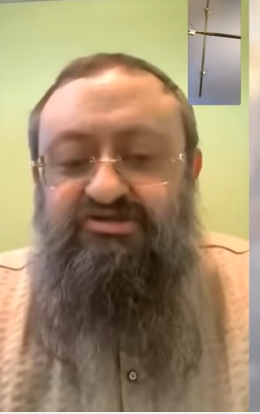
Dr. Vladimir Zelenko,
interview with Rudy Giuliani March 26th,
screenshot from here
There’s a doctor, Dr. Vladimir Zelenko, a family practitioner in New York, interviewed by Rudy Giuliani on his show Common Sense, on March 26th, with some significant anecdotal evidence. (Bill Whittle shares a 15-minute clip of this interview on his CoronaSphere Lounge , Episode11, March 30th, which is where I saw it.)   

In New York, Dr. Zelenko has treated a plethora of coronavirus patients—699 by March 30th. He had been using a combination of hydroxycholoquine with zinc supplements, plus azithromycin. The combination of the three had worked in 100% of sick patients. He only gave the drug to patients already struggling with the virus or who were at very high risk, not the ones who were clearly going to get over it on their own without drugs. Of these moderately severe patients, zero moved into the more serious illness of Acute Respiratory Distress Syndrome, which requires intubation, and from which there’s only a 50% recovery rate. Zero of his patients have died. Three have needed hospitalization with pneumonia; zero needed intubation. The 3-drug protocol takes five days. It’s possible not all symptoms will be gone at that point, but the virus replication has been slowed to the point the body can fight it off without further complication.

Dr. Zelenko thinks that the hydroxycholoquine is not actually attacking the virus. Rather, the zinc is interfering with the virus’s replication process. But the zinc has trouble entering the cell without the hydroxycholoquine. Once the hydroxychloroquine creates a channel into the cell, the zinc enters and does its healing work against the virus. Meanwhile, the azithromycin, an antibiotic, is working on a secondary bacterial infection, which happens when the gunk builds up in the bronchial tubes and lungs.

All total, the treatment is about $20 per patient and can be done in an outpatient setting.

Dr. Zelenko’s results coincide with other doctors using the hydroxychloroquine. In France, hydroxychloroquine had been combined with azithromycin in the lab with 100% success. Doctors in France and South Korea, and also doctors in New York ICUs, were each using two of the three medicines, with moderate success. He used the combination of all three, with significant success.

Note that it was only March 19th when President Trump suggested that the FDA allow hydroxychloroquine to be used in this off-label way, in clinical trials, to treat the virus. Dr. Zelenko offers his evidence on March 26th, one week later. The speed with which we’re getting at ways to treat and test for this virus is remarkably swift.

So a policymaker can look at that, listen to Dr. Fauci, but then say, why not use this on people who need something and have nothing better to try? Would you take it, if it were you? Probably yes. And the more anecdotal evidence we get—despite the lack of a double-blind study—the more likely we are to say “definitely yes.”

[Speaking of “anecdotal" evidence, there’s this piece, possibly worth considering.] 

So, that’s how a policymaker thinks differently from a scientist. We need both. But the policymakers are the ones radically affecting our lives right now, while the scientists do their very important role in the background.

We were told to social distance at first. Then stay home, with nonessential businesses shut down, all of us hoping that doing this for a few weeks would make a big difference.

But it has been that long. And without testing of the whole population—and we need two kinds of tests: to find out who has the virus now, and to find out who has antibodies because they’ve already fought off the virus—we don’t know what’s working. In that black hole of missing data, we’re stuck at home with the economy crashing around us indefinitely.

So, is there another way to tell whether what we’re doing is working? It turns out there is.
I got this chart from Bill Whittle, who has been giving encouraging words lately. He got the info from Kinsa’s Healthweather.us.  

data on fevers, from Healthweather.us

This chart does not show Covid-19. It shows body temperatures. There are companies, such as Kinsa, that make “smart” thermometers. People take their temperature, and their information gets uploaded for mass data purposes. The data has been gathering for enough years that there’s a normal expected range for the months of the year. In our country, body temperatures rise during winter, coinciding with cold and flu season, and then go down to a summer low, and rise back up in the fall. So that’s the blue range on the chart.

If you look at the orange line, and the red dots, you can see the actual data compared to the expected data (the blue). Then look at the dates. When we started radically modifying our behavior, there’s a sharp decrease in body temperature—fewer fevers. That line pretty quickly drops below the expected level. Well below. Not only is the social distancing cutting down new fevers from coronavirus; it’s cutting down fevers from all sources to well below expected levels. In other words, what works to keep from transmitting coronavirus also works to keep from transmitting flu and colds, the typical causes of fever.

Then there’s another chart, showing places, with dates and events added—from the same source at Healthweather.us. This one compares Santa Clara, California, to Miami-Dade, Florida.

fever level comparisons of counties and California and Florida
screenshot from here

They have many of the same events happen, but with Florida most happen somewhat later. What you can see is that the drop off becomes significant after the community makes significant changes, with steepest drops after schools are closed, restaurants are closed, and stay-at-home orders are put in place.

Did something else happen, coinciding with those dates, following a similar pattern in different places, other than the social distancing we’ve been doing in reaction to the coronavirus? I don’t think so.

The evidence is strong that staying at home is having an effect.

Yay, us! We deserve a pat on the back. From ourselves, of course, since we don’t want anyone else getting close to us.

Keep up the good work! But not indefinitely. It’s not time to quit doing what we’re doing yet. But we need to be having a serious talk about when we can go back out—without causing a sudden resurgence, which would be a terrible outcome.

We could use a few miracles—pick any you like:

·       The virus miraculously disappears.

·       The virus greatly decreases in the summer months, affording us time to prepare for a second season of it in the fall—with all the testing and treatments we’ll need.
·       The virus is greatly weakened as it changes—a not uncommon mutation in viruses, which die off quickly when they kill their hosts, so they need to weaken in order to perpetuate.
·       A cure is developed, tested, and made standard for care.
·       Testing procedures—for both presence of virus and presence of antibodies—are quick, cheap, and widely available within the near future and for any future outbreak.
·       We’re so good at staying home and social distancing that the virus stops having hosts to spread to and dies a natural death.

This coming Friday, Good Friday, our Church invites everyone to join us in a worldwide fast. That means, typically, skipping two meals over twenty-four hours. (For example, you eat dinner Thursday evening, and then fast until dinner time Friday evening, when you can eat again.) Prayer during a fast can be more intentional, because you feel your weakness and thus your reliance on God. We hold a monthly fast, and donate the cost of the two meals to help the poor; feel free to do that. This is a special additional one. Note that, if your health doesn’t permit you to go that long without food, you can adjust your sacrifice to whatever you can do; your efforts and prayers will be acceptable to the Lord.

Illustration cred: Josh Asuncion
found on Facebook

In our modern world, there are so many ways we have managed to control the elements, we can sometimes forget our reliance on God. But I’ve had friends point out to me a couple of things. If the Lord wanted to use a calamity for good, how about having more time at home with families? And more, how about having people home together on Passover (Wednesday evening to Thursday evening), and even all Holy Week, including Easter Sunday?

We’ll miss getting together with our kids and grandkids for these days. But we’ve enjoyed some very sacred Sundays, meeting together as just the two of us. And we enjoyed a broadcast of a worldwide conference this past weekend. Spiritually, we’re doing better (dare I say it?)—because of the crisis.

Encouraging words are intended to instill courage. I’m glad we’re getting some of that. I pray it’s enough to fend off any more discouragement.

Monday, March 30, 2020

The Classic Trio: Emotion, Logic, Action


There’s a classic trio in literature. An advisor offers the emotional reaction. Another advisor offers the logical, rational reaction. And the main character takes action based on the input from those two sides.

You see it really clearly in the original Star Trek series and movies. Captain Kirk is the main character, the man of action. Bones, the doctor, offers the emotional side—but he’s also a scientist, so he’s not purely emotional. Spock, the Vulcan, offers the logical, rational side—pretty much devoid of emotion.

Star Trek cover art, found here


The purpose of literature is to show us patterns for our lives—so that we learn by experience vicariously, without having to go through everything the hard way personally.

We may each have tendencies that are more emotional, or more rational, or maybe a very confusing mix. But we are each the main character—the “man of action”—in our own story.

So, what we need to do is take in some input from the emotional, human side, while also taking a heavy dose of logic and rationality, and then find the right balance to make the wisest decision we can on how to move forward.

Maybe we can apply this to the current Covid-19 pandemic. How should we be dealing with questions about personal behavior, and about sharing scarce resources and business shutdowns?

Emotions are plentiful. Social media is full of that input. So are many regular media outlets. The input from that side is: We should worry! We should be fearful! We should take extreme protective measures! Lives are at stake! Even one life lost is too many! We’d better go out right now and stock up on anything we think we might run out of or be unable to get in the future! What about my job? How will I pay my bills? What will I do if I run out of food? Why isn’t everyone else taking this seriously? How can I deal with this all alone? Or cooped up with my crazy kids?

I think we’ll never have a shortage of emotion surrounding a worldwide pandemic. The word itself is enough to instill apocalyptic images.

That’s why we need plenty of logical rationality to temper that. But the rational side requires data.

A week ago, one of our movie choices was an old Star Trek movie, the one where they save the humpback whales from extinction. There’s a point when Kirk needs a recommendation from Spock, but Spock is reticent, because he doesn’t have enough data. But timing is urgent. Kirk tells him to just guess. He has to order him to guess, because otherwise Spock won’t do that. The story turns out all right—because it’s fiction.

But, here we are, without enough data, being forced to guess.

Here’s what we need to know:

·       How virulent is the virus? That is, how likely to cause severe illness or death to any given person who contracts it.
·       How contagious is the virus? How is it spread, and how easily? And how likely is a person to get it from various levels of contact?
We’re acquiring data. We know a lot more now than we did a month or two ago. But there are some sub-questions that it would be very handy to know:

·       Who in the population has antibodies and is now safe from the virus? These people could be used to help develop a vaccine. They could also feel free to go to work without fear of contracting the illness or spreading it.
·       Who in the population has the virus and could spread it, whether they show symptoms or not? These people need to self-quarantine, completely avoid contact with anyone else who does not yet have the virus. If symptoms appear and they need medical help beyond what they can handle at home, then they get help from hospitals equipped to safeguard medical personnel while treating the patient.
If we knew the answers to these “who” questions, we could wipe out the disease. Literally.

What we need is enough testing to provide data on those two questions. Then the decision-makers, the Captain Kirks of their communities, states, or nations, can advise accordingly. Everybody who is immune, you’re free to go about your lives. Just be careful not to track germs to someone not immune.

Everybody who tests positive, you’re in quarantine. Expect to be there for at least two weeks—enough time to have come down with the virus if you’re going to. If you do come down with symptoms, then your quarantine continues until you’re over symptoms and no longer “shedding,”—that’s the word I’ve learned for when you can spread the virus to others before, during, or after exhibiting symptoms. The practice has been to get at least two consecutive days of virus-free tests following the end of symptoms. Then you’re free to roam about the world with the other immune people.

Everybody who tests negative, you’re dependent on how well the others do their quarantining duty. If you’re concerned because you’re at high risk, then you might want to wait things out by sheltering at home as much as you can. If you’re not at high risk, then weigh the risks.

But what we haven’t had is population-wide testing. At least not here.

Scientists in NY have developed test for
Covid-19 immunity, photo credit:
Jacob King/Press Association via AP Images,
found here
Dr. Richard Epstein talks (also here) about how nationwide testing could happen, and that, if used correctly—quarantining anyone who accurately tests positive—you could wipe out the virus within weeks, without the need of a vaccine or even a cure. You would deprive the virus of new hosts, which means it would be eradicated. Assuming the rest of the world does this protocol as well. Which is a big “if.” But he thinks such testing ability is on the horizon. 


In the meantime we have cities and countries and economies being shut down. These bold steps are understandable, but they’re based on insufficient data—because we don’t know who has the virus.

There’s nevertheless some data worth looking at.

My son, Political Sphere, put together a spreadsheet concerning cases per million population and deaths per million population. Without full testing, we won’t know exactly how many cases there are, so we won’t know death rate, or virulence. But we can learn some other things.

New York City has the most cases/million population recorded worldwide, with 3,663 (a number going up daily, but this is yesterday’s snapshot). New York State as a whole is next, with 2,751. PS gathered data for the top 69, but here are the top 20. Note that some of these are countries (shaded green), and some are jurisdictions within a country (shaded blue).


Rank
Country/State
Cases/mil pop
1
New York City
3,663
2
New York State
2,751
3
Switzerland
1,642
4
Spain
1,567
5
Italy
1,533
6
New Jersey
1,252
7
Austria
929
8
Belgium
793
9
Louisiana
711
10
Germany
694
11
Massachusetts
613
12
France
569
13
Washington
566
14
Netherlands
564
15
District of Columbia
485
16
Michigan
471
17
Connecticut
427
18
Iran
426
19
USA
379
20
Colorado
358


It looks like New York is in terrible shape. Worse than Italy, which we’re all fearful of becoming. But let’s add another piece of data: deaths per million population:


Rank
Country/State
Cases/mil pop
Deaths/mil pop
1
Italy
1,533
166
2
Spain
1,567
128
3
New York City
3,663
80
4
New York State
2,751
43
5
Netherlands
564
37
6
France
569
35
7
Switzerland
1,642
31
8
Belgium
793
31
9
Iran
426
30
10
Louisiana
711
29
11
Washington
566
25
12
Vermont
338
19
13
New Jersey
1,252
16
14
United Kingdom
256
15
15
Michigan
471
11
16
Connecticut
427
9
17
Colorado
358
8
18
Austria
929
8
19
Georgia
230
7
20
USA
379
7


Italy and Spain move to the top, above New York. In fact Italy doubles NYC’s rate. Dropping out of the top 20 entirely are Germany, Massachusetts, and District of Columbia. New to the top 20 are Vermont, United Kingdom, and the state of Georgia.

Some of this data will change as cases move past active to recovered or deaths. So PS plans to update the data weekly. But for now we can at least ask some questions about what we’re seeing:

·       Do the areas with higher death rates have more vulnerable populations?
·       Do the areas with higher death rates have overwhelmed resources making them  unable to treat some patients?
·       Can we learn from areas with lower death rates what practices are working best?
Italy has an older population, which means probably more vulnerable. As overwhelmed as NYC is, their hospitals are still only at 80% full, with the hospital ship USS Comfort arriving. Greater resources. Those details can make a difference.

In areas with more cases per million population, the harder hit areas, we have other questions:

·       Do areas with higher prevalence have certain characteristics? Population density, use of public transit, colder climate?
·       Did areas with higher prevalence wait longer to take precautions?
I’ve been wondering about that last question. President Trump cut off travel from China at the end of January. His usual detractors accused him of xenophobia. And there were areas that insisted he was overreacting. New York City went ahead with Lunar New Year celebrations, encouraging big crowds, more than a week after that travel restriction.


These two tweets were posted on a friend's
Facebook page, with speculation about
NYC's serious virus breakout.

Time has been passing kind of slowly this month. But here in Texas, where we had no known cases, things were going on through February and early March fairly normally. The first big cancellation was SXSW in Austin, a combination technology and music festival, cancelled March 6th, a week ahead of the ten-day event. 

Meanwhile the annual 20-day Houston Rodeo kept going. These are different events in that SXSW had major companies, from elsewhere, that withdrew, so there wasn’t much choice about it. The Houston Rodeo is made up of a whole lot of smaller vendors and contestants, some of whom make much of their annual income during that month. So it would take a lot to convince all those people to shut down. But the rodeo did shut down, 11 days early, as of March 11th.

At the time the Greater Houston Area, with more than 4 million people, had only a handful of cases, all related to a particular travel group to Egypt, all of whom were immediately quarantined. The number of cases has been growing now, but not as fast as many other places. It may be that the social (physical) distancing, followed up with the more recent stay-at-home directive, were done early enough—based on how many cases there were—to prevent spreading.

Maybe New York already had too many unknown cases before they began discouraging social gathering.

Church that had a Covid-19 breakout among choir members
image found here
There’s a church choir in Washington State, in a county that had no known cases when they went ahead with a rehearsal on March 10th, although there had been other cases in Washington State, about an hour north in Seattle. Schools and businesses were still open, and large gatherings were still permitted.


They used hand sanitizer on the way in and refrained from hugging and shaking hands. They thought they were being prudent without being reactionary. But within days they learned it was the wrong decision. Sixty people attended—half of the total choir. Now, three weeks later, 45 have tested positive for Covid-19 or are exhibiting symptoms (without yet being tested); two have died and at least three have been hospitalized.

Here in Houston I participated in a church choir just a week and a half before that. As far as I know, we’re all still fine. But at that point I think we hadn’t had any local cases yet. I feel blessed to have gotten in all the socializing I did, safely, before we had to take precautions. But in the interactions we had that last week before being shut down, we were also trying to be prudent without being reactionary.

It’s not usually a matter of stupidity; it’s a matter of not knowing enough. Until we know who actually carries the virus, we’re stuck making deductions based on insufficient data.

I’ve been following this interactive map. It has raw numbers, but not per population info. 

Interactive map of Covid-19 worldwide
screenshot from here

The Houston Chronicle has provided this map more relevant to just Texas, also raw numbers without population info. 

Interactive map of Covid-19 in Texas,
screenshot from here

The more data the better. I have to make decisions for myself, balancing the emotional and the rational. I naturally lean more toward Spock than either Bones or Kirk. But when there isn’t enough data, more emotion creeps in than I’d prefer. I don’t like to just guess. I am, however, pretty comfortable staying home; that has always been true. But there’s a lot of anxiety surrounding things as mundane as grocery shopping. I could do well with some going back to normal.

May God bless the researchers and innovators. We could use more testing—quick and easy and cheap for absolutely everyone. We could use more equipment—ventilators, protective equipment. We could use medicines that work to treat this. And we could use more data to help with wise decision-making.