Showing posts with label Masterpiece Cakeshop. Show all posts

Monday, July 9, 2018

First Amendment Theme for the Session


The Supreme Court’s term ended at the end of June. That means it’s a good time of year to take a look at their recent rulings. There was something of a theme this first term with Justice Gorsuch on the bench. There were a number of rulings related to the First Amendment. And mostly it turns out the majority, by a thin—and stretched—line, supports what our Founders thought of as God-given, self-evident rights.

image from here

Remember, the Bill of Rights wasn’t included in the original Constitution, not because those were afterthoughts, but because they were so well accepted as obvious that they didn’t require being spelled out. But some of them, including George Mason, Governor of Virginia, who had been a major contributor to much of the Constitution, decided they’d better include that Bill of Rights—in case there came a time when the people didn’t have the same understanding as the Founders.

That was prescient. Now it’s hard to come up with Supreme Court justices, let alone a majority of people on the street, who are aware of natural rights, and recognize they are bestowed by God, not by government. Now we have people positing we should “repeal” the Second Amendment, as if that would take away our God-given right to defend ourselves. You can’t “repeal” a God-given right; but you can have a tyrannical government that not only fails to protect that right, but also infringes on it—or even stomps on it.

So, back to the list of First Amendment rulings:

·         National Institute of Family and Life Advocates (NIFLA) v. Becerra
·         Masterpiece Cakeshop v. Colorado Civil Rights Commission
·         Janus v. American Federation
·         Rowan County v. Lund


National Institute of Family and Life Advocates (NIFLA) v. Becerra

“A government that tells you what you can’t say in dangerous, but a government that tells you what you must say—under threat of severe punishment—is alarming.” Those are the words of Michael Ferris, President of Alliance Defending Freedom (ADF), following oral arguments in this case. This case is out of California, where people think differently from freedom-loving Americans. There are some freedom-loving Americans in California, as there probably are in all tyrannical regimes, but they’re outnumbered there.

image from here


NIFLA, a crisis pregnancy center, offering free services and followup care in service of their pro-life beliefs, were ordered by the state to advertise, on their walls, abortion services. Other similar service centers had joined NIFLA in the suit. Becerra is California’s Attorney General, who was enforcing the state’s reproductive FACT Act (reproductive Freedom, Accountability, Comprehensive Care, and Transparency).

Let’s put this in some other terms. Say there’s a fast food chain, Chick-fil-A, which sells chicken sandwiches, rather than hamburgers. Suppose government insisted that they must advertise nearby hamburger fast food restaurants on their walls: McDonald’s, Burger King, Whataburger. Their mission is to provide non-beef food. Wouldn’t it go against their mission to advertise other restaurants that do other things?

Maybe we can get the analogy even closer to home. Suppose there’s a vegan restaurant, whose mission is to sell non-meat foods. But the meat lobby convinces government that they need to force vegan restaurants to advertise, on the walls of their establishment, nearby meat-providing restaurants. Should government be allowed to make and enforce such a law?

That’s the kind of question we’re looking at in the NIFLA case. It’s a bit more complex, because of arguments about professional speech (which, it turns out, is still protected speech), and that these nonprofits are being coerced to advertise the government’s services that go against their beliefs and mission.

The ruling, reversing the Ninth Circuit Court of Appeals, was a 5-4 decision. Justice Thomas wrote the majority opinion, joined by Justices Roberts, Kennedy, Alito, and Gorsuch. Justice Kennedy also wrote a concurring opinion, joined by Justices Roberts, Alito, and Gorsuch. Justice Breyer wrote a dissent, joined by Justices Kagan, Sotomayor, and Ginsburg.

It’s a bare win. Which shows how very important it is to get yet another judge who will follow the Constitution, rather than try to argue for a political goal and pretend they’re arguing for the Constitution. [The announcement came as I was writing.]

After the ruling, ADF’s Michael Farris said this: 

No one should be forced by the government to express a message that violates their convictions, especially on deeply divisive subjects such as abortion. In this case, the government used its power to force pro-life pregnancy centers to provide free advertising for abortion. The Supreme Court said that the government can’t do that, and that it must respect pro-life beliefs. Tolerance and respect for good-faith differences of opinion are essential in a diverse society lie ours. They enable us to peacefully coexist with one another. If we want to have freedom for ourselves, we have to extend it to others.

Masterpiece Cakeshop v. Colorado Civil Rights Commission

I wrote about this case when the ruling came down in early June. In short, the case pits public accommodations laws against First Amendment freedom of religion rights.
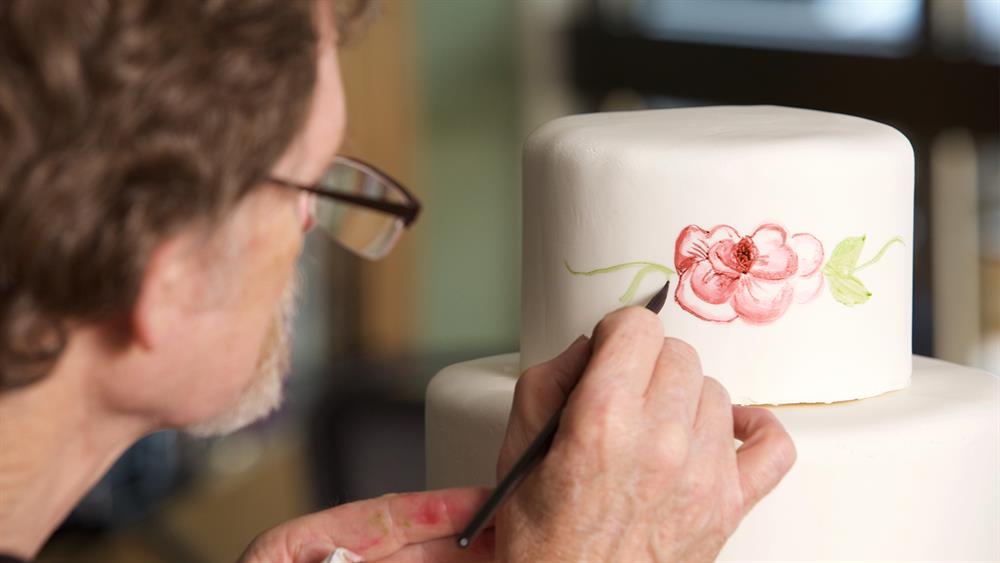
Jack Phillips of Masterpiece Cakeshop
image from here


The Court drew up short in finalizing that decision, saying that courts could not show prejudice against religious beliefs, which the Colorado commission had done. So the actual question—Can the government force a cake artist to design a wedding cake that celebrates a same-sex marriage? Or, more broadly, Can the government force a person who provides a creative service to use those talents/abilities in direct opposition to the person’s religion?—that question will have to be settled another time. There are pending cases.

One of those cases awaiting the answer to the questions was Barronelle Stutzman’s case, Arlene’s Flowers v. Washington State. It was on the docket for ruling, but in light of the Masterpiece Cakeshop ruling, on June 25th the judgment was vacated, and the case was remanded to the Supreme Court of Washington for further consideration. 

That means the state court will have to consider whether it’s decision was biased against religious beliefs. They may claim that it was not, even though we know that it was—the persecution against her is pretty obvious, since she never denied service to anyone, and her client wasn’t even miffed with her, let alone injured. If the state supreme court rules the same again, it goes to a Circuit Court of Appeals again, with the same possible results. But in the Masterpiece Cakeshop case, the Colorado Commission actually spoke its prejudice aloud.

But, if it comes before the Supreme Court again—with another conservative judge replacing Justice Kennedy—then the outcome is highly likely to go in her favor. And the real question is much more likely to get answered: no, the government cannot coerce a person into servitude against that person’s religion. As the Founders though, that should go without saying.

Anyway, additional cases awaiting that answer are still in lower court jurisdictions:

·         Joanna Duka and Breanna Koski, owners of art studio Brush & Nib, asking Arizona’s Supreme Court to protect them from the threat of jail time or burdensome fine for claiming the right not to be forced to create art that conflicts with their beliefs. 

·         Blaine Adamson, a promotional printer, with a business called Hands On Originals, asking Kentucky’s Supreme Court to prevent him from being forced to print messages that conflict with his faith.
·         Atlanta Fire Chief Kevin Cochrane, whose case has not been heard by a jury and ruled on, but who is suing for wrongful firing, after being terminated for religious writings he wrote in his spare time and shared never shared during office hours or to professional colleagues. The terrible thing he wrote? That marriage is between one man and one woman—which is the very thing Barak Obama and Hillary Clinton were both claiming to believe in 2008 and beyond.     
Masterpiece Cakeshop and others have this “et al.” in their titles, meaning there are other parties involved. I’m not sure of all the individual other parties. There was a family-owned bakery in  Oregon, Melissa's Sweet cakes, who were fined $135,000 and lost their family business due to the persecution over the religious freedom issue. There’s a farm that used to host weddings at their farm/home, until they refused to be forced to host same-sex “weddings” in what is their actual home, where their children reside. There are  photographer cases as well.

So the question will probably be answered eventually. And, if the choice for SCOTUS is a good one, it is likely to go in favor of religious freedom.


Janus v. American Federation

In this case, the state of Illinois has had a law requiring workers in public sector jobs to pay union dues, regardless of membership in a union, even when they disagree with the union’s efforts, both political and in collective bargaining.  

The syllabus, the brief summary before the written opinions in the ruling, offers this explanation (I’ve skipped over the citations).

The State’s extractions of agency fees from nonconsenting public sector employees violates the First Amendment. Abood [previous similar case] erred in concluding otherwise, and stare decisis cannot support it. Abbod is therefore overruled…. Abood’s holding is inconsistent with standard First Amendment principles…. Forcing free and independent individuals to endorse ideas they find objectionable raises serious First Amendment concerns…. That includes compelling a person to subsidize the speech of other private speakers…. In Knox and Harris v. Quinn…, the Court applied an “exacting” scrutiny standard in judging the constitutionality of agency fees rather than the more traditional strict scrutiny. Even under the more permissive standard, Illinois’ scheme cannot survive.
This was an incremental ruling. Past cases allowed employees to object to their dues being spent for political purposes. The Janus case extends that to other purposes. The union was speaking for the employee, saying things in the bargaining process on his behalf that he did not want to have said. But he was compelled to pay for the union to say those things against his will.
In summary, this is what the case rules:

The First Amendment is violated when money is taken from nonconsenting employees for a public-sector union; employees must choose to support the union before anything is taken from them. Accordingly, neither an agency fee nor any other form of payment to a public-sector union may be deducted from an employee, nor may any other attempt be made to collect such a payment, unless the employee affirmatively consents to pay.
It was another 5-4 decision, along the usual lines, this time with Kennedy going in favor of First Amendment speech rights.

In other words, four of the justices believe it is acceptable to compel speech—or agreement by forced payment of dues—of employees in order to avoid the free ride issue.

We need to talk sometime about the use of the word “liberal” in relation to those who are not in favor of “conserving” the Constitution. The Constitution is about freedom, and protecting that freedom. The opposition to that, therefore, is anti-freedom, which is anti-liberty—or illiberal. Coerced behavior is what the four dissenting judges favor.


Rowan County v. Lund  

The case of Rowan County v. Lund was denied a writ of certiorari—in other words, the Supreme Court didn’t rule on it after all.

In this case, the legislators in Rowan County, North Carolina take turns offering prayers at the beginning of their meetings. There is no paid or invited clergy. No one dictates the content of the prayer. This has been done historically since such meetings in this county began. But some citizens decided to sue the legislators for establishing a religion. The citizens won their suit up through the Fourth Circuit Court of Appeals, and the Fourth Circuit said Rowan County must bring in paid sectarian chaplains to offer the prayers.

Justice Thomas dissented from the denial, and was joined by Justice Gorsuch. As Justice Thomas put it, 

This Court’s Establishment Clause jurisprudence is in disarray. Sometimes our precedents focus on whether a “reasonable observer” would think that a government practice endorses religion; other times our precedents focus on whether a government practice is supported by this country’s history and tradition…. Happily, our precedents on legislative prayer tend to fall in the latter camp…. Yet the decision below did not adhere to this historical approach. In ruling that Rowan County must change the prayers it uses to open its board meetings, the Court of Appeals for the Fourth Circuit emphasized that the county’s prayers are led by the legislators themselves, not by paid chaplains or guest ministers. This analysis failed to appreciate the long history of legislator-led prayer in this country, and it squarely contradicted a recent decision of the Sixth Circuit. I would have granted Rowan County’s petition for certiorari.
Of the direction given by the Fourth Circuit, to bring in paid clergy, Justice Thomas adds this footnote:

In addition to having little basis in history, the Fourth Circuit’s decision has little basis in logic. It is hard to see how prayers led by sectarian chaplains whose salaries are paid by taxpayers—a practice this Court has upheld…, could be less of a government establishment than prayers voluntarily given by legislators.
He offers this final point about conflicting rulings:

The Sixth Circuit, also sitting en banc, recently surveyed this history and upheld a municipal prayer policy virtually identical to Rowan County’s…. The Sixth Circuit acknowledged that its decision was “in conflict with the Fourth Circuit’s” but found the latter “unpersuasive,”… not least because the Fourth Circuit “apparently did not consider the numerous examples of [legislator-led] prayers” in our Nation’s history…. Thus, the Sixth and Fourth Circuits are now split on the legality of legislator-led prayer. State and local lawmakers can lead prayers in Tennessee, Kentucky, Ohio, and Michigan, but not in South Carolina, North Carolina, Virginia, Maryland, or West Virginia. This Court should have stepped in to resolve this conflict.
Indeed, conflicting circuit court decisions are a usual reason for the Supreme Court to take on a case.
This one shouldn’t be so difficult. There seems to be a misunderstanding of what establishing a religion means. It is a far cry from allowing, or even encouraging, religion or religious behavior. To establish a religion is to make a particular set of beliefs the state-endorsed and state-enforced religion. Not stepping in to prevent free Americans to behave in religious behaviors of their choice ought to always be the default choice of a government protecting the free exercise of religion—the first of the First Amendment rights.

What is the best remedy for Rowan County, North Carolina, now? To continue doing what it is doing, assert its Tenth Amendment rights to decide issues not enumerated as powers given to the federal government, and assert its First Amendment rights to both exercise their religion freely, but to prohibit the federal government from making any law (including by judiciary, which has no lawmaking powers in the first place) prohibiting the free exercise of religion.

If all of us, in every state, had that reaction to Supreme Court overreach, we could breathe easier over whomever the President appoints to that bench.

Thursday, June 7, 2018

Sincerely Held Religious Belief


[N]o bureaucratic judgment condemning a sincerely held religious belief as “irrational” or “offensive” will ever survive strict scrutiny under the First Amendment. In this country, the place of secular officials isn’t to sit in judgment of religious beliefs, but only to protect their free exercise.
—Justice Neil Gorsuch

As if I didn’t write a long enough post on Monday about the Masterpiece Cakeshop ruling, I thought I’d add some more.

On Monday we dealt mostly with Kennedy’s majority opinion. But there were actually four concurring opinions: Kennedy’s (joined by all but Ginsburg and Sotomayor), Kagan (joined by Breyer), Gorsuch (joined by Alito), and Thomas (joined by Gorsuch). Plus, of course, there was the dissenting opinion.

Justices ruling on Masterpiece Cakeshop v. Colorado Civil Rights Commission,
image from SCOTUSblog

There’s something of an argument going on between Justice Kagan and Justice Gorsuch. The SCOTUS world isn’t like much of anything else we have. These two differing people don’t sit in a room and discuss or debate one another. They ask different questions during oral arguments, which reveals something of what they’re thinking. But it isn’t until the written opinions that you see them challenging the opinions of others.

Justice Kagan agrees that the Colorado Civil Rights Commission was wrong in their anti-religious approach to the baker. But their tone, and approach, is pretty much all she finds wrong.

There’s a comparison in this case with the Jack case—a man who requested a cake with an anti-same-sex marriage message written on it, including a Bible verse, and was turned away by three bakers, in which case the CCRC ruled that the bakers did not have to create a cake with a message against their beliefs. Kagan says the difference is that they would not have made such a cake for any customer. But she claims Phillips, the owner of Masterpiece Cakeshop, does make wedding cakes for anyone but same-sex customers.

Justice Kagan writes,

The different outcomes in the Jack cases and the Phillips case could thus have been justified by a plain reading and neutral application of Colorado law—untainted by any bias against a religious belief.
There’s a long footnote comment at that point (I’ve left out the citations):

image from Amazon.com
JUSTICE GORSUCH disagrees. In his view, the Jack cases and the Phillips case must be treated the same because the bakers in all those cases “would not sell the requested cakes to anyone.” That description perfectly fits the Jack cases—and explains why the bakers there did not engage in unlawful discrimination. But it is a surprising characterization of the Phillips case, given that Phillips routinely sells wedding cakes to opposite-sex couples. JUSTICE GORSUCH can make the claim only because he does not think a “wedding cake” is the relevant product. As JUSTICE GORSUCH sees it, the product that Phillips refused to sell here—and would refuse to sell to anyone—was a “cake celebrating same-sex marriage.” But that is wrong. The cake requested was not a special “cake celebrating same-sex marriage.” It was simply a wedding cake—one that (like other standard wedding cakes) is suitable for use at same-sex and opposite-sex weddings alike.

Let me clarify here, to help out Justice Kagan. A marriage—and the ceremony and celebration surrounding it, called a wedding—is a particular thing. It has been that particular thing for thousands of years. The particular thing that is defined as marriage is a contract between a man and a woman indicating that their union is permanent, includes the human reproductive behavior that can lead to offspring, and in most cultures is exclusive. They make the contract before the community—by way of church and law most usually—thereby allowing the community to expect from them the social benefits that marriage provides.

A ruling by five justices, legalizing same-sex marriage by fiat, does not change the definition of actual marriage; it cannot. The power to do so was never granted to those judges by the people, nor by their law, the Constitution. Nor could a majority of people voting to make it so among a particular people change the definition of what marriage actually is.

Add to that the belief that the original definition of marriage was ordained by God, and to the believer the very attempt to change it becomes immoral.

As Justice Thomas says in his concurring opinion:

Forcing Phillips to make custom wedding cakes for same-sex marriages requires him to, at the very least, acknowledge that same-sex weddings are “weddings” and suggest that they should be celebrated—the precise message he believes his faith forbids.
To clarify further, it is not homophobic, bigoted, or otherwise evil to believe in the real meaning of marriage. There is nothing inherently anti-homosexual about that. Homosexuals have always been allowed to marry a person of the opposite sex, who is not married to someone else, who is not a close relative—just like heterosexuals. It’s just that they are now expecting all cultures the world over to throw out real marriage and redefine it as something akin to “in a current sexual relationship with a person of my choosing.” And then they choose someone to whom they cannot, by definition, marry.
For someone who made a covenant to a spouse and is living that out decade after decade, to be told my covenant is now transformed into nothing more than an announcement of who I’m currently choosing to hook up with—that is utterly disrespectful. Yet you’re not getting gay-hate parades. You’re not getting gay persecutions. You’re getting quiet business owners who simply want to go about their businesses while living their religions—and they’re being persecuted and prosecuted for it.

In the end, we know the meek will inherit the earth. In the meantime, if we’re truth seekers, we should seek justice for not just one baker, but for all the other marriage-honoring people who are being persecuted.

So, back to this case. Justice Gorsuch is correct: a “cake celebrating same-sex marriage” is not the same as a “wedding cake.” They have the same ingredients, but not the same intent.

The same-sex couple would have been free to purchase a generic wedding cake, already produced by the baker (or, rather, whatever was available on the day they wanted it), and they could take it and use it for whatever purpose they chose, without ever burdening the baker with knowledge or responsibility for how the confection would be used.

But that is not what they asked. They asked for a custom designed and produced cake for their same-sex “wedding” celebration. Phillips told them he does not design and create cakes for such an event. He was asked by the mother of one of the couple, and he would not sell such a service to her either, even though she was heterosexual. It wasn’t about the sexual orientation of the customers—whom he was willing to serve with any of his other products. It was about his unwillingness to use his God-given talents to celebrate an event that, in his view, is not a real wedding, and further is offensive to God.

Kagan’s view can only be correct if a same-sex “marriage” is self-evidently exactly equal to an actual marriage. At the time of the dispute, not even the state of Colorado saw it that way.

During the oral arguments during Obergefell, Justice Kennedy was fully aware of the danger to religious people, who would not change their beliefs simply because a ruling made a legal path open to a certain group of people. And he seemed to at least give lip service to the importance of protecting religious liberty.

And to be fair, the Court has ruled unanimously several times in recent years to protect religious liberty. It’s just that there’s always this rather arbitrary “unless the government has a compelling interest” threat hanging overhead. In this case, fortunately, we still have 7 of the 9 justices willing to recognize the need to support religious freedom, although the reasons of at least 3 of them feel rather tentative, more like “don’t be overtly anti-religious.”

In the absence of Justice Scalia, I’m happy that we have yet another justice who is not just clear, but enjoyable to read. There’s this section of Justice Gorsuch’s concurring opinion in which he uses a Goldilocks metaphor in referring to the changing standards used by the Colorado Commission:
Goldilocks, image from here


At its most general level, the cake at issue in Mr. Phillips’s case was just a mixture of flour and eggs; at its most specific level, it was a cake celebrating the same-sex wedding of Mr. Craig and Mr. Mullins. We are told here, however, to apply a sort of Goldilocks rule: describing the cake by its ingredients is too general; understanding it as celebrating a same-sex wedding is too specific; but regarding it as a generic wedding cake is just right. The problem is, the Commission didn’t play with the level of generality in Mr. Jack’s case in this way. It didn’t declare, for example, that because the cakes Mr. Jack requested were just cakes about weddings generally, and all such cakes were the same, the bakers had to produce them. Instead, the Commission accepted the bakers’ view that the specific cakes Mr. Jack requested conveyed a message offensive to their convictions and allowed them to refuse service. Having done that there, it must do the same here.
Any other conclusion would invite civil authorities to gerrymander their inquiries based on the parties they prefer. Why calibrate the level of generality in Mr. Phillips’s case at “wedding cakes” exactly—and not at, say, “cakes” more generally or “cakes that convey a message regarding same-sex marriage” more specifically? If “cakes” were the relevant level of generality, the Commission would have to order the bakers to make Mr. Jack’s requested cakes just as it ordered Mr. Phillips to make the requested cake in his case. Conversely, if “cakes that convey a message regarding same-sex marriage” were the relevant level of generality, the Commission would have to respect Mr. Phillips’s refusal to make the requested cake just as it respected the bakers’ refusal to make the cakes Mr. Jack requested. In short, when the same level of generality is applied to both cases, it is no surprise that the bakers have to be treated the same. Only by adjusting the dials just right—fine-tuning the level of generality up or down for each case based solely on the identity of the parties and the substance of their views—can you engineer the Commission’s outcome, handing a win to Mr. Jack’s bakers but delivering a loss to Mr. Phillips. Such results-driven reasoning is improper.
Justice Thomas ends his concurring opinion with a reminder that he told us so:

In Obergefell, I warned that the Court’s decision would “inevitabl[y]… come into conflict” with religious liberty, “as individuals… are confronted with demands to participate in and endorse civil marriages between same-sex couples.” This case proves that the conflict has already emerged. Because the Court’s decision vindicates Phillips’ right to free exercise, it seems that religious liberty has lived to fight another day. But, in future cases, the freedom of speech could be essential to preventing Obergefell from being used to “stamp out every vestige of dissent” and “vilify Americans who are unwilling to assent to the new orthodoxy” [Alito]. If that freedom is to maintain its vitality, reasoning like the Colorado Court of Appeals’ must be rejected.
The battle is being waged. I hope the meekly religious can hang on until it’s time to inherit the earth.

Monday, June 4, 2018

Partial Victory for Religious Freedom


It’s June, the Supreme Court ruling season. Today the Supreme Court announced its ruling in the Masterpiece Cakeshop v. Colorado Civil Rights Commission case. It was a 7-2 ruling in favor of Masterpiece Cakeshop.

But it was a very narrow ruling, answering almost none of the questions surrounding the issue, and mainly just telling the Colorado Civil Rights Commission that they were wrong to express their hostility toward religion during their prosecution of the baker.

screenshot from this video


It’s good that the case informs this particular Commission, and possibly similar commissions in other states, that religious people have the same rights as other people.

But it is so narrow that the Court says nothing about protecting a creative person’s First Amendment rights if the state has a “compelling interest” it sees as greater than that person’s religious freedom, and it prosecutes without expressing hostility.

So I’m glad it’s not worse, but I wish it were better.

That seems to be how we feel most of the time when so much extra-Constitutional power is granted to these nine unelected judges.

At the bottom, there’s a video from November about the case. But here’s a quick review.

A Colorado appellate court ruled in August 2013 that, when Masterpiece Cakeshop owner Jack Phillips declined to design and create a custom wedding cake for a same-sex couple, he had violated their civil rights. This was in 2012, two years before same-sex “marriage” was legally recognized in the state; the couple got married in Massachusetts, where it was legal.

The couple was not denied service; only their particular commission for a custom product for a particular event was declined. Nevertheless, the Colorado Civil Rights Commission prosecuted and ruled that Phillips must “take remedial measures, including comprehensive staff training” on how conscientious objection must bow before anti-discrimination law in same-sex situations, and to “file quarterly compliance reports” with the state regarding the mandated retraining.

The appeal by Phillips claimed that whether to create a custom cake for a same-sex “wedding” is protected by two parts of the First Amendment: freedom of expression, and freedom of religion.

The ruling doen’t really settle either the freedom of expression or freedom of religion questions. But it gives a nod to respecting the rights of religious people.

Court drawing of Justice Kennedy announcing the ruling
image from here


In his ruling, Justice Kennedy showed this usual pattern of behavior by the Commission:

On at least three other occasions the Civil Rights Division considered the refusal of bakers to create cakes with images that conveyed disapproval of same-sex marriage, along with religious text. Each time, the Division found that the baker acted lawfully in refusing service. It made these determinations because, in the words of the Division, the requested cake included “wording and images [the baker] deemed derogatory.”
In other words, the Commission didn’t always require a baker to act against conscience. However, when it came to this case, the religious conscience was not respected.

Here’s what the Colorado Civil Rights Commission had testified, which was at issue:

Freedom of religion and religion has been used to justify all kinds of discrimination throughout history, whether it be slavery, whether it be the holocaust, whether it be—I mean, we—we can list hundreds of situations where freedom of religion has been used to justify discrimination. And to me it is one of the most despicable pieces of rhetoric that people can use to—to use their religion to hurt others.
One, the couple was not hurt. They were politely sent where they could get the services done by a willing provider. Two, religion isn’t rhetorical; it is deeply held belief. Even non-religious believers have deeply held beliefs, which constitute their religion, whether they call it that or not. Three, religion is an effort to live a good life, not to do evil. It was religion that led to the elimination of slavery, after it had existed in most cultures for millennia. Further, it was not religion that led to the holocaust, but hatred and bigotry—something differing from the Commission’s hatred and bigotry only in degree of power.

What is despicable is this Commission’s distortion of history in its zealousness to malign religious people.

So, at least the Court got it part right.

SCOTUS has no business deciding whether a baker should be forced to bake a cake—for any purpose. We don’t want the Supreme Court determining nitpicky laws compelling how we conduct our personal lives and businesses. So, in some ways it’s good the Court did not make a sweeping ruling.

An excellent analysis of the opinions is found on the SCOTUSblog, by Amy Howe. But I’d like to walk through the issues, just for clarity.

Two inalienable First Amendment rights were at issue: the free exercise of religion, and freedom of speech, often referred to as freedom of expression. These go up against a state’s “compelling interest” regarding another civil “right.”

The “right” these inalienable and also enumerated Constitutionally protected rights were up against was the “right” to buy a custom product from a particular creative businessperson regardless of that person’s willingness to create it.

That one’s not enumerated in the Bill of Rights, or anywhere else in the Constitution. That doesn’t necessarily mean it isn’t a right. Any God-given rights not enumerated are still vested in the states and the individuals.

But there is a simple way to know whether you are looking at a God-given natural right: were you born with it? You’re born impoverished, ignorant, and naked; you have a claim on your parents to care for you until you can care for yourself. But there’s no natural right to cake-by-the-maker-of-your-choice. You can’t have that as a right without enslaving someone else to provide it. So it’s not a right.

The issue isn’t really about getting a cake; the cake artist (his cakes are literally edible works of art, not just pretty, fancy cakes) politely recommended other cake shops that could meet the needs of the couple.
another screenshot from this video


The issue isn’t really about service to homosexuals, either. The cake artist gladly served all customers, and had a long history of doing so. It was a specific event—the same-sex wedding—that he did not want to use his art to promote.

As David Harsanyi wrote this about the case a year ago: 

Everything in his shop was available to gays and straights and anyone else who walked in his door. What Phillips did was refuse to use his skills to design and bake a unique cake and participate in a gay wedding. Phillips didn’t query anyone on his or her sexual orientation. It was the Colorado civil rights commission that took it upon itself to peer into Phillips’ soul, indict him, and destroy his business over a thought crime.
I’d like to try to translate this in terms that seem less inflammatory than “he just hates gays, and that’s wrong, so he should be forced to do what they ask.”

I have a friend who is an excellent artist. He makes his living doing works of art and selling them. Much of his work is on commission. That means a person comes to him (it used to be in a shop/studio, but now his studio is at his home). And they describe the work they are hoping he can create. Sometimes these are portraits or family groups. Sometimes they are religious works or historical pieces.

He doesn’t take every commission that comes to him. Sometimes it’s a matter of timing; if he takes on too many, he could overwork himself, and the quality would suffer, which would probably bother him more than the clients, but it’s an important factor.

But he also needs to do things that are worth putting the artistic effort into.

Suppose someone came to him asking for something he might find ugly. It could be something with nudity, or explicit sexual behavior, or something anti-Christian, or something racist. Even if the work would have no words on it, art expresses a message. And he might not want his name—or his style and reputation—attached to something repugnant to him.

It might even be that the person asking for the commission is personally disagreeable to him. That happened with an artist who was asked to paint a portrait of Pres. George W. Bush; he declined, because his personal views were at odds. That may have meant he wouldn’t have put his heart into doing the work. Or it might have meant he was afraid people would interpret his work as approval of someone he disapproved of, so it would seem untruthful to him. Or maybe life is just too short to put time and energy into something you don’t want to do. Someone else did the portrait, which turned out to be better for everyone.

So that’s how artistic endeavors work. If you want something creative/artistic done for you, you find someone whose work you like, and you ask to commission the work. The artist gets to say yes or no based on whatever reason he might have—and he doesn’t even have to tell you why.

The only difference with the bakery is that it is a shop; all comers are invited to come in and buy his wares. Still, he’s free to take on a commission for custom work or not. Owning a shop does not make someone a slave to every party who walks in the door.

Good business says he’ll do what he can, and if he doesn’t take on a commission, he makes suggestions of where the customer can go.

This kind of creative situation is also true for florists, photographers, T-shirt printers, stationery printers, and others related to wedding and other services.

It’s pretty clear that, if declining the message is “approved” by this Commission or some other ruling or influential body—a message such as something racist or profane, or even of an opposing political viewpoint—the creative person can turn it down without legal repercussions.

I think it would also be clearly legal for a Muslim baker to turn down work that goes against her beliefs—maybe even if she turned down a same-sex “wedding” cake. Certainly such a baker could turn down anything pro-Israel, or even anything pro-pork industry. A sensible customer would recognize and respect who they’re dealing with.

So what is it that makes same-sex “marriage” celebration, at a time when such a “marriage” wasn’t even a legal reality, a state interest of such great import that it overrides the most essential—and therefore first enumerated—of self-evident natural rights?

We don’t know, since SCOTUS doesn’t actually answer that question with their opinion. In fact, they leave all other creative religious people at risk of enslavement—as long as those prosecuting them don’t overtly mention their antipathy toward religion. “Try again, but be careful not to verbalize your religious bigotry next time,” is what the Court seems to be saying.

It was the narrowness of the opinion that allowed it to be 7-2, rather than 5-4 or 4-5. So, again, I’m torn. The Supreme Court has no business ruling on this issue; they had no business creating same-sex “marriage” in Obergefell. They have overstepped their authority repeatedly on issues related to same-sex “marriage,” and have put religious people in this predicament by their cavalier overreach.

But if the Court has any useful purpose in upholding the Constitution, they would have done well to say, “Of course you can’t enslave a human being to do work that directly violates his conscience, simply to serve a vocal minority group favored by the elites in media, academia, and socialist ideology.” That would have been helpful.

If we didn’t have activist judges on the Court, we might have gotten a more satisfying ruling. Gorsuch and Thomas seemed willing to give it.

But, as long as Kennedy is on the Court, he will rule with his gut on critical issues more often than with the Constitution. Justices Breyer and Kagan were only with Kennedy on this because the Colorado Commission had verbalized its meanness.

Meanwhile, Justices Ginsburg and Sotomayor were perfectly aligned with a pro-slavery ruling, as long as it makes them look like they favor a popular minority.

The best way to settle these divisive issues? Stop repeating the lie that religion is simply a cover for doing evil. Stop assuming evil of everyone whose opinion is different. Actually tolerate. Respect differences of belief, and don’t prosecute over them. Because prosecution over belief is tyranny, with all the ugly that attaches to that word.